

Why Trading Desks Need Fast Execution: A Practical Guide
Fast execution is the primary operational lever trading desks use to reduce timing risk and market impact. Every millisecond between order intent and fill is an open window for price to move against you, for a faster participant to step in front of your order, or for a short-lived liquidity opportunity to vanish. The practical consequences are measurable: higher realized slippage, worse implementation shortfall, and implicit costs that compound quietly across hundreds of trades. SEC research on optimal market speed identifies an optimal clearing frequency range for a typical U.S. stock between 0.2 and 0.9 seconds, a narrow band that underscores how precisely timing matters. Practitioner analysis attributes as much as 31% of price impact to latency-arbitrage dynamics. The desks that manage this well get better fills, retain more alpha, and pay less in implicit costs. The ones that don’t are effectively subsidizing faster participants.
Table of Contents
- Why does execution speed change trade outcomes?
- Fast vs. slow execution: when does each approach win?
- How do trading desks actually achieve faster execution?
- How market structure and fragmentation created a speed arms race
- How do you measure execution quality accurately?
- How do you evaluate execution partners and implicit costs?
- What operational controls does fast execution require?
- Practical checklist: what should your desk do this week?
- Does hardware actually affect execution latency?
- Key Takeaways
- What experienced desks actually focus on
- Key-trade trading keypads: a direct upgrade for manual execution
- Useful sources and further reading
- FAQ
Why does execution speed change trade outcomes?
Timing risk is the gap between when you decide to trade and when your order actually fills. In a fast market, that gap has a price. If you’re entering a breakout and your order takes 400 milliseconds to reach the exchange while a co-located algorithm reacts in 50 microseconds, you’re not competing for the same fill. You’re arriving after the move.
Adverse selection is the related problem. When your order arrives late, the market has already updated. The liquidity you thought was there has been repriced or pulled. You end up filling against stale quotes, which means you’re systematically buying at the ask after it’s risen or selling at the bid after it’s fallen. Slow order arrival effectively converts your order into a liquidity provision event for faster participants.
Consider a simple scenario: a desk enters a momentum trade during a breakout candle. With a 200ms round-trip, the fill comes in at the top of the candle. With a 20ms round-trip, the fill comes in mid-candle. The difference might be 3–5 basis points on a single trade. Across 200 trades a month, that’s a material drag on the book’s P&L, not a rounding error.
Faster market moves and continuous 24-hour trading have compressed volatility events into seconds, making this problem worse for short-horizon traders. Stop-loss triggers and entry signals that once had a few seconds of tolerance now need sub-second execution to avoid significant slippage.
Fast vs. slow execution: when does each approach win?
Speed is a strategic variable, not a universal setting. Barclays Electronic Equities research treats execution speed as a control to tune per strategy, with machine learning analysis identifying scenarios where trading faster reduces both timing risk and execution cost simultaneously.
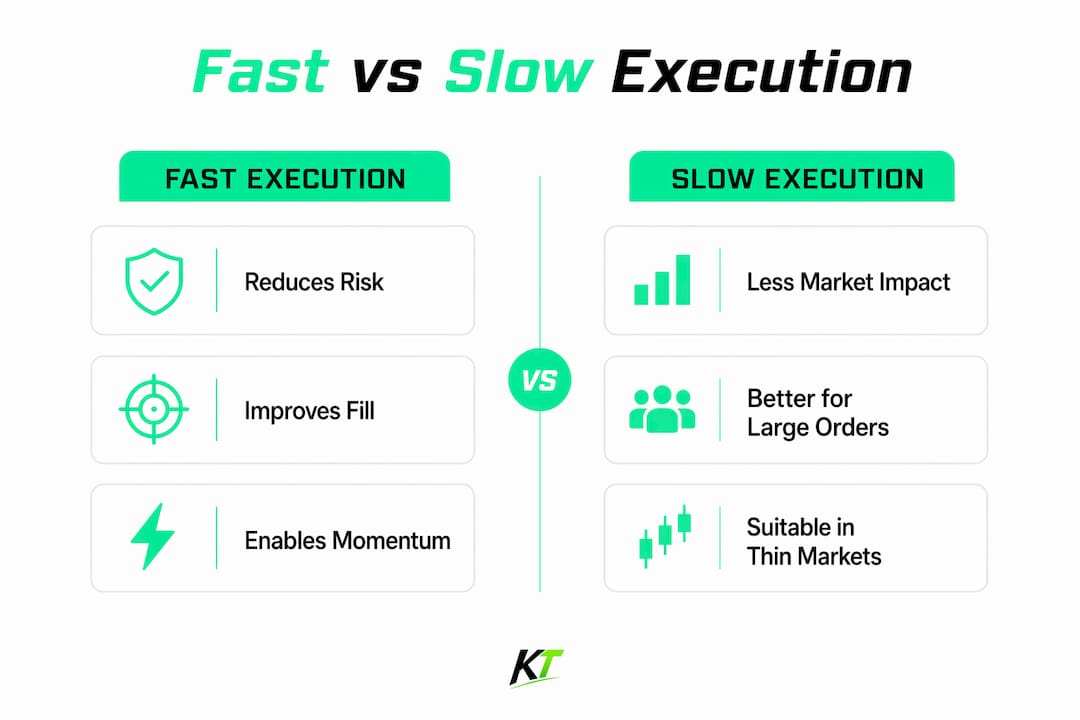
The core trade-off is timing risk versus market impact. For small, liquid orders in fast-moving instruments, timing risk dominates. You want to be fast. For large block orders in less liquid names, market impact dominates. Aggressive speed exposes your full size to the market and moves the price against you before you’re done filling.
Here’s how common trade profiles map to speed posture:
- Market-making and HFT strategies require sub-millisecond execution. Any latency at this horizon is a structural disadvantage.
- Short-horizon alpha capture (momentum, breakout, event-driven) needs fast execution, typically targeting round-trip latency under 10ms for electronic venues. Timing risk is the primary cost.
- VWAP and TWAP execution for large blocks benefits from controlled, slower participation. The goal is minimizing market impact by spreading size over time, not racing to fill.
- Macro event-driven entries (Fed announcements, earnings) require fast execution at the moment of the event, then patience. The entry window is seconds wide; the position may be held for days.
Pre-trade decision checklist:
- What is the order size relative to average daily volume? Above 1%, lean slower.
- Is the signal time-sensitive (decays in seconds) or durable (holds for minutes or hours)?
- How liquid is the instrument at this time of day?
- Is this a risk-reducing trade (exit) or alpha-seeking (entry)? Exits often justify more urgency.
- What is the current spread? Wide spreads penalize aggressive orders more.
Pro Tip: Participation rate is one of the most underused levers on a desk. Most desks set it once per strategy and leave it. Treating it as a dynamic parameter, adjusting intraday based on spread, volume, and signal decay, can meaningfully reduce both timing risk and market impact without a single infrastructure change.
How do trading desks actually achieve faster execution?
The execution stack has multiple latency contributors, and fixing the wrong one wastes engineering time. The chain runs roughly: trader UI → order management system (OMS) → execution management system (EMS) → FIX gateway → smart order router (SOR) → direct market access (DMA) → exchange matching engine.
Each hop adds latency. A poorly configured OMS can add 5–15ms. A broker with extra routing hops can add another 10–30ms. Co-location at the exchange data center can reduce network latency to under 1ms. The gains compound, but so do the costs.
“Desks that lack co-location and low-latency routing effectively supply liquidity to faster participants. Co-location and broker routing hop reduction are the two most consistently cited differentiators in practitioner accounts of execution quality improvement.” — Traders Magazine
Algorithmic levers matter too. Order slicing reduces market impact by breaking large orders into smaller child orders. Adaptive participation adjusts the slice size and timing based on real-time volume and spread. Opportunistic crossing routes orders to dark pools or internal crossing networks when available, avoiding exchange fees and reducing information leakage.
Workflow controls are the unglamorous part that desks underinvest in. Pre-trade risk checks must be low-latency themselves; a risk check that adds 20ms defeats the purpose of a fast gateway. Automated kill switches need to be tested regularly, not just documented. Connectivity testing should run on a scheduled cadence, not only after an incident.

For TCA integration, every order needs accurate timestamps at entry, routing, and fill. Feed timestamps and order timestamps must be aligned to the same clock source. Per-venue instrumentation, not just aggregate metrics, is the only way to identify which venue is underperforming. The cTrader trade management features guide covers platform-level integration notes that are directly applicable here.
How market structure and fragmentation created a speed arms race
The U.S. equity market now has 16 registered equities exchanges, up from 11 approximately 12 years ago, according to the SEC’s proposed Regulation Best Execution. That fragmentation is not accidental. Exchange competition on speed lowers access costs and encourages innovation, but in fragmented markets it also creates incentives for duplicated infrastructure investment that desks must navigate.
The stakeholders and their incentives:
- Exchanges compete on matching-engine speed, co-location pricing, and proprietary data feeds. Their revenue depends on order flow, so they invest in speed infrastructure to attract it.
- High-frequency trading firms build the fastest possible connections to capture arbitrage opportunities across fragmented venues. Their presence tightens spreads but also creates adverse-selection risk for slower participants.
- Brokers differentiate on routing logic, pre-trade risk check latency, and venue relationships. A broker with suboptimal SOR logic can cost a desk more in implicit costs than its commission saves.
- Buy-side desks face the optimization problem of choosing venues, brokers, and algorithms that minimize total execution cost, not just commission. Speed is one input into that optimization, not the only one.
Matching-engine designs vary by venue. Protocols like iLink 3 (CME), ETI (Deutsche Börse), and OUCH/ITCH (Nasdaq) have different latency characteristics and require venue-specific calibration. A single optimization pass across all venues leaves the worst-performing venue gaps unaddressed.
How do you measure execution quality accurately?
The minimum metrics a desk should instrument:
- Implementation shortfall: the difference between the decision price (when you decided to trade) and the actual average fill price, expressed in basis points. This is the most complete measure of total execution cost.
- Realized slippage: the difference between the order arrival price and the fill price. Faster to calculate than implementation shortfall, useful for intraday monitoring.
- Fill-through rate: the percentage of orders that fill at or better than the arrival price. A declining fill-through rate is an early warning of adverse selection.
- Queue position metrics: for limit orders, where in the queue your order sits and how often it gets filled before the price moves away.
- Round-trip latency (p50/p95): the median and 95th-percentile round-trip time from order submission to acknowledgment. P95 matters more than p50 for risk management.
- Per-venue adverse-selection indicators: fill quality broken out by venue, not just in aggregate. Venue-specific latency problems create measurable adverse selection that aggregate metrics hide entirely.
Implementation shortfall calculation (simplified):
IS = (Average Fill Price − Decision Price) / Decision Price × 10,000 basis points
For a buy order: if the decision price was $100.00 and the average fill was $100.08, IS = 8 basis points. For a 10,000-share order at $100, that’s $800 in implicit cost on a single trade.
A desk should produce a daily post-trade table with at a minimum: instrument, order side, decision price, average fill price, implementation shortfall in bps, venue(s) used, round-trip latency p50/p95, and a flag for any fill that exceeded a pre-set slippage threshold. This table is the foundation of any credible TCA process.
For prop trader performance improvement, this measurement discipline is especially important because implicit costs directly reduce the net P&L that determines funding continuation.
How do you evaluate execution partners and implicit costs?
The implicit cost levers to evaluate when selecting or reviewing a broker:
- Pre-trade risk check latency: SEC Rule 15c3-5 requires brokers to have pre-trade risk controls, but the rule says nothing about how fast those checks must run. A broker whose risk checks add 25ms is a structural disadvantage for any short-horizon strategy.
- Routing hops: every additional network hop between your OMS and the exchange adds latency. Ask brokers for their routing topology and measure it independently.
- SOR logic: does the broker’s smart order router optimize for speed, fill rate, or fee rebates? These objectives conflict. Know which one your broker prioritizes.
- Payment for order flow (PFOF): brokers that route retail order flow to wholesalers for PFOF may not be optimizing for best execution. The SEC’s proposed Regulation Best Execution specifically addresses this conflict.
Broker evaluation checklist:
- Request execution quality statistics broken out by venue and instrument class.
- Run synthetic order tests: submit identical orders at identical times through different brokers and compare fills.
- Stress-test during known volatility events (Fed announcements, major earnings). Fill quality during normal conditions tells you little about performance when it matters most.
- Review fill-through rates monthly. A broker that looks fine in aggregate may be underperforming on your specific instruments.
For a practical framework on execution best practices, the monthly baseline test plus event-driven stress test cadence is the minimum credible monitoring program.
What operational controls does fast execution require?
Speed without guardrails is how desks create their own flash events. The operational controls that matter:
Pre-trade controls must be low-latency themselves. A risk check that validates position limits, order size, and price reasonableness should add no more than a few microseconds for co-located systems, or a few milliseconds for hosted solutions. Hardware-based risk checks (FPGA-level) are available for the most latency-sensitive strategies.
Kill switches need to be tested, not just installed. A monthly test that actually fires the kill switch and verifies that all open orders are canceled within a defined time window is the standard. Documented but untested kill switches are a compliance checkbox, not a real control.
Monitoring should run at three levels: per-venue latency dashboards updated in real time, instrument-level adverse-selection alerts that flag when fill quality on a specific instrument degrades, and automated reconciliation pipelines that catch position or fill discrepancies within minutes of occurrence.
Flash event planning is where most desks are underprepared. Feed paralysis (when market data stops updating but orders can still be submitted) and synchronization failures (when your clock drifts from the exchange clock) are both real failure modes. These scenarios belong in runbooks with defined responses, not just in post-incident reviews. The NinjaTrader risk management hardware setup guide covers hardware redundancy considerations that apply broadly across desk environments.
Practical checklist: what should your desk do this week?
Immediate (this week):
- Audit timestamp hygiene. Verify that order entry, routing, and fill timestamps are all sourced from the same synchronized clock. Misaligned timestamps make TCA meaningless.
- Establish a latency baseline. Measure p50 and p95 round-trip latency to each venue you use. If you don’t have this number, you can’t improve it.
- Verify broker routing. Ask your broker for a routing topology diagram and confirm the number of hops between your OMS and each exchange.
30–60 days:
- Build per-venue adverse-selection metrics. Break out fill quality by venue, not just in aggregate. This is the single most common gap in desk measurement programs.
- Automate your daily TCA table. Manual post-trade review doesn’t scale and introduces errors. A simple automated pipeline that produces the implementation shortfall table daily is achievable in most EMS environments.
- Run your first synthetic order stress test. Pick a high-volatility event and compare fill quality across your brokers.
60–90 days:
- Evaluate co-location for your highest-frequency strategies. The latency reduction from co-location is substantial for sub-second strategies and marginal for strategies with multi-minute holding periods. Match the investment to the strategy.
- Assess FPGA or kernel-bypass networking only if your strategy time horizon is genuinely sub-second. Platform and infrastructure optimization follows steep diminishing returns: moving from a browser-based UI to a native desktop application can produce 100x processing improvements, while exotic networking yields marginal gains for anything above a one-second horizon.
- Implement per-instrument adverse-selection monitoring with automated alerts. This is the operational upgrade most desks delay the longest and regret the most.
Does hardware actually affect execution latency?
It depends entirely on where your latency bottleneck sits. The law of diminishing returns applies sharply here.
The biggest gains come from stack-level changes: switching from a browser-based trading interface to a native desktop application, moving from a hosted OMS to a co-located one, or eliminating unnecessary routing hops. These changes can reduce latency by orders of magnitude. By contrast, upgrading from standard Ethernet to microwave networking only matters if your strategy operates in the sub-millisecond range and you’ve already addressed every other latency source.
For most professional desks, the human interface layer is a meaningful and underaddressed latency source. A trader who needs three clicks and a keyboard confirmation to submit an order is adding 300–800ms of human reaction and motor time to every trade. That’s irrelevant for a VWAP algorithm running autonomously, but it’s a real cost for a discretionary trader executing momentum entries or managing risk manually.
This is where a dedicated trading keypad fits into the stack. Key-trade trading keypads are physical hardware devices with programmable buttons mapped to specific order actions: submit, modify, partial close, set break-even, adjust stop-loss. Instead of navigating a software interface under pressure, a trader presses a single button. The action is immediate and repeatable.
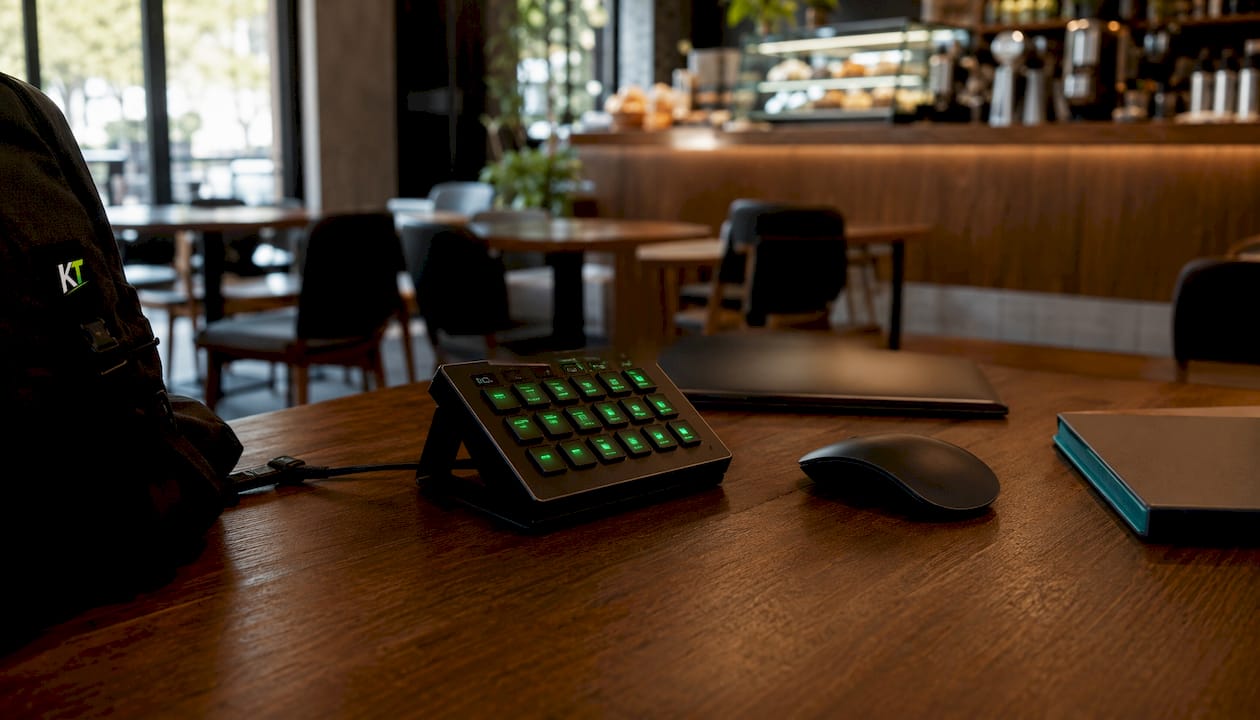
Key-trade keypads integrate with TradingView, MetaTrader 4 and 5, cTrader, NinjaTrader, SierraChart, Thinkorswim, and Tradovate. No custom coding is required for deployment. For a discretionary trader or a desk running manual execution alongside automated strategies, the reduction in human interface latency and the elimination of mis-click errors are both measurable. For NinjaTrader traders specifically, the platform’s order management depth makes hotkey-based execution especially effective.
Pro Tip: Before investing in co-location or exotic networking, measure your human interface latency separately from your network latency. If a trader is adding 500ms per trade through the UI, fixing the network first is the wrong priority. Hardware ergonomics and interface design belong in the latency audit.
Key Takeaways
Fast execution reduces timing risk and implicit costs across every trade type, but the right speed profile depends on strategy, order size, and instrument liquidity.
| Point | Details |
|---|---|
| Speed reduces timing risk | Every millisecond of delay is an open window for adverse price movement and adverse selection by faster participants. |
| Optimal clearing range | SEC research identifies an optimal clearing frequency for a typical U.S. stock between 0.2 and 0.9 seconds. |
| 31% price impact from latency | Practitioner analysis attributes 31% of price impact to latency-arbitrage dynamics, making per-venue measurement critical. |
| Measure implementation shortfall | Track IS, realized slippage, fill-through rate, and per-venue adverse selection daily, not just aggregate p50/p95 latency. |
| Key-trade keypads reduce UI latency | For manual execution, Key-trade trading keypads cut human interface latency and eliminate mis-click errors across major platforms. |
What experienced desks actually focus on
The desks that execute well share one habit: they measure before they invest. The instinct to buy co-location or upgrade networking is understandable, but the desks that get the best ROI on speed investments are the ones that first identified exactly where their latency was coming from, which venue was generating the most adverse selection, and which strategies were actually sensitive to the improvements they were considering.
Per-instrument adverse-selection monitoring is the most commonly skipped step. Most desks aggregate their fill quality across instruments and venues and conclude that execution is “fine.” But a desk trading 20 instruments across 4 venues can have one venue that’s systematically generating 15 basis points of adverse selection on two specific instruments, and that signal disappears entirely in the aggregate. The fix is targeted and cheap once you find it. The cost of not finding it compounds daily.
The other pattern worth naming: desks that treat execution speed as a one-time infrastructure project rather than an ongoing measurement discipline. Markets change, venues update their matching engines, and broker routing logic evolves. A desk that ran a thorough TCA audit 18 months ago and hasn’t revisited it is operating on stale data. The measurement cadence matters as much as the initial setup.
Key-trade trading keypads: a direct upgrade for manual execution
If your desk runs any manual execution alongside automated strategies, the human interface layer is almost certainly your largest unaddressed latency source. Key-trade trading keypads are physical hotkey devices built specifically for this problem.
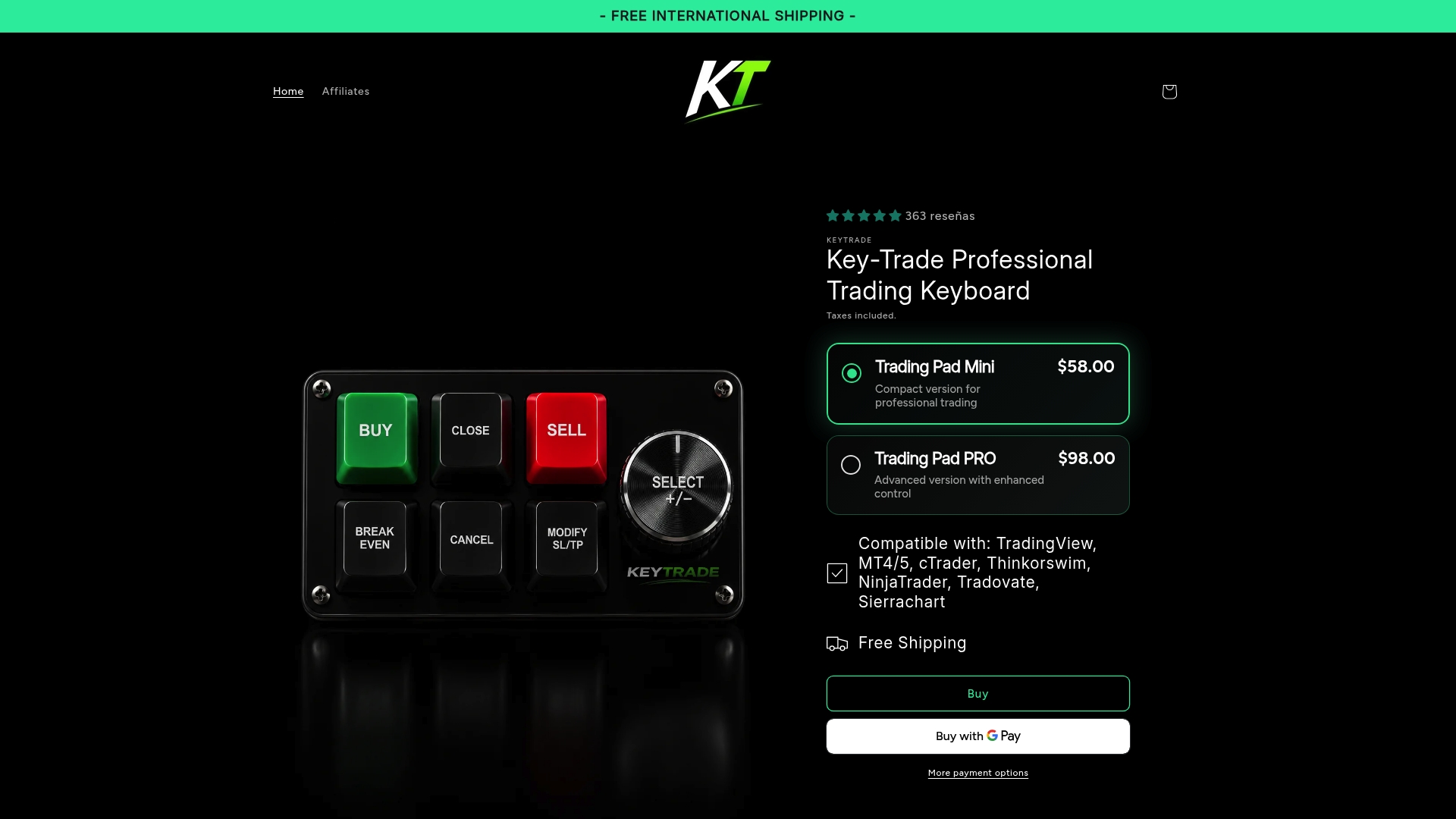
Each keypad maps programmable buttons to order actions: submit a market order, close a partial position, move a stop to break-even, adjust a target. One button press replaces a multi-click software sequence. The result is faster execution, fewer errors under pressure, and a more consistent process across the trading session. Key-trade keypads work with TradingView, MetaTrader 4 and 5, cTrader, NinjaTrader, SierraChart, Thinkorswim, and Tradovate, with no technical setup required. They’re compatible with both live and prop trading accounts, and Key-trade ships worldwide.
This is a complementary control, not a replacement for infrastructure and algorithmic solutions. But for discretionary traders and desks with manual execution workflows, it addresses a real and measurable latency source that co-location and SOR upgrades don’t touch. Evaluate it the same way you’d evaluate any execution improvement: measure your current UI-to-order latency, deploy the keypad, measure again. The Key-trade trading keyboard product page has full compatibility details and ordering information.
Useful sources and further reading
The research and practitioner sources that ground this article are worth bookmarking for ongoing TCA work and desk engineering reviews.
Primary research and regulatory sources:
- SEC — Optimal Market Speed (DERA Working Paper): the foundational quantitative analysis of clearing frequency and market quality, with the 0.2–0.9 second optimal range for U.S. equities.
- SEC — Proposed Regulation Best Execution: the regulatory framework for broker-dealer best execution obligations, including speed of execution as an explicit factor.
- NYU Stern — Competing on Speed (Philippon & Pagnotta): the academic analysis of exchange competition on speed, fragmentation effects, and buy-side cost implications.
Practitioner and industry sources:
- Barclays — Trading, Fast and Slow: the most practically useful industry report on strategy-specific speed tuning, with ML-backed rules of thumb for when to trade fast versus slow.
- HFT Advisory — Venue-Specific Latency: detailed practitioner guidance on per-venue calibration, protocol-level differences, and the 31% price-impact finding from latency-arbitrage dynamics.
- Traders Magazine — Execution Matters: desk-level accounts of co-location and routing as execution differentiators, with practitioner interview material.
- Nexusfi — Platform Latency and Execution Speed: the clearest available analysis of diminishing returns on latency investments, with the 100x improvement example from stack-level changes.
FAQ
Why does execution speed matter for trading desks?
Execution speed reduces timing risk, the gap between order intent and fill, during which price can move against you. Slow execution also increases adverse selection, where faster participants reprice liquidity before your order arrives.
What is implementation shortfall in trading?
Implementation shortfall measures the difference between the decision price and the actual average fill price, expressed in basis points. It’s the most complete measure of total execution cost and the standard metric in transaction cost analysis (TCA).
What is the optimal execution speed for U.S. stocks?
SEC research identifies an optimal clearing frequency range for a typical U.S. stock between 0.2 and 0.9 seconds. Markets that clear faster or slower than this range show degraded market quality.
Which broker has the fastest execution?
No single broker is universally fastest. The right evaluation is per-instrument and per-venue: run synthetic order tests, measure fill-through rates under stress conditions, and review pre-trade risk check latency. Broker routing topology and SOR logic matter as much as raw speed.
How can a trading keypad improve execution speed?
A trading keypad like the Key-trade device maps single button presses to order actions, replacing multi-click software sequences. For manual execution, this reduces human interface latency by hundreds of milliseconds and eliminates mis-click errors under pressure.
Recommended
- Trading Desk Efficiency Improvement Guide for Pros – Key-Trade Trading Keyboards
- What Is a Trading Desk? Explained for Professionals – Key-Trade Trading Keyboards
- Why NinjaTrader Traders Need Fast Execution – Key-Trade Trading Keyboards
- How to Execute Trades Faster on TradingView in 2026 – Key-Trade Trading Keyboards