

cTrader Trade Management Features: Complete 2026 Guide
TL;DR:
- cTrader trade management includes native tools and third-party plugins that help control entries, exits, and risk. Combining server-side protections with automated risk enforcement improves discipline and reduces emotional errors.
cTrader trade management is defined as the full set of native and third-party tools that control how you enter, protect, scale, and exit positions on the cTrader platform. The types of cTrader trade management features span server-side stop protections, multi-level take profit automation, one-click execution interfaces, and plugin-based risk enforcement. Together, these tools reduce emotional decision-making, protect open trades during connectivity loss, and give you institutional-grade control at the retail level. This guide covers every major feature category so you can build a faster, more disciplined trading workflow in 2026.
1. Types of cTrader trade management features: an overview

cTrader’s trade management toolkit divides into two clear layers. The first is native features built directly into the platform. The second is third-party plugins and cBots available through the cTrader marketplace. Both layers serve different purposes, and the most effective traders use both together.
Native features handle the core mechanics: stop loss placement, take profit targets, trailing stops, and partial closes. Third-party tools extend those mechanics with rule enforcement, real-time drawdown monitoring, and automated position sizing. Understanding which layer handles which job is the starting point for building a reliable trading workflow.
2. Multi-level take profit for automated partial closes
cTrader’s Advanced Take Profit supports scaling out at up to 5 distinct price levels, allowing automated partial profit-taking without manual intervention. Each level closes a defined percentage of the position when price reaches the target. This means you can lock in early profits while keeping a portion of the trade running toward a larger target.
The practical benefit is significant. You no longer need to watch the screen and manually close portions of a trade. The platform handles each partial close automatically, which removes the hesitation that costs traders money at key price levels. For traders managing multiple positions at once, this feature alone reduces screen time and cognitive load considerably.
Pro Tip: Set your first take profit level at a 1:1 risk-to-reward ratio to immediately reduce position risk. Let the remaining portion run with a break-even stop.
3. Server-side stop loss and take profit protection
Server-side trade management means your stops and limits stay active even if your internet drops or your device shuts down. Features managed on the broker’s server ensure trade protections remain in effect during connectivity loss or hardware failure. Client-side platforms cannot offer this guarantee.
This distinction matters most during high-volatility events like central bank announcements or major economic data releases. A client-side stop loss disappears the moment your connection fails. A server-side stop loss executes regardless. For professional traders and prop firm participants, this is a non-negotiable protection layer.
The server-side advantage also applies to take profit orders, trailing stops, and break-even triggers. All of these run on the broker’s infrastructure, not your local machine. That reliability is one of cTrader’s strongest differentiators compared to client-side-only platforms.
4. Trailing stop loss functionality
cTrader’s native trailing stop adjusts your stop loss automatically as price moves in your favor. The stop follows price by a fixed pip distance and locks in gains without requiring manual updates. This is particularly useful for trend-following strategies where you want to ride momentum without watching every tick.
The trailing stop runs server-side, which means it continues to function after you close the app. That is a meaningful operational advantage for traders who cannot monitor positions continuously. The stop only moves in one direction: it trails price upward on a long trade and never moves back down, protecting accumulated profit.
For more precise control, third-party plugins offer configurable trailing stops with specific pip offsets or equity-based triggers. These go beyond the native implementation and are critical for prop-firm compliance where drawdown rules are strict.
5. Break-even stop management
A break-even stop moves your stop loss to your entry price once the trade reaches a defined profit level. cTrader supports this natively, and it runs server-side like the trailing stop. The result is a risk-free trade once the break-even trigger fires.
Break-even management removes one of the most common emotional mistakes in trading: letting a winning trade turn into a loss. Once your stop is at entry, the worst outcome is a scratch trade. That psychological shift changes how you manage the rest of the position, typically allowing you to hold longer and capture more of a move.
Combining break-even stops with multi-level take profit creates a layered exit strategy. The first take profit level reduces position size, and the break-even stop protects the remaining portion. This is a standard workflow among professional traders using cTrader.
6. Third-party risk management plugins
Third-party plugins extend cTrader’s native tools with automated risk enforcement that the platform does not provide out of the box. Risk management plugins typically offer 5 distinct risk modes, including % Equity, % Balance, % Free Margin, Fixed $, and Fixed Lots. Each mode calculates position size automatically based on your account parameters.
These plugins also monitor daily and maximum drawdown limits in real time. When a limit is reached, the plugin can close all positions, block new entries, or alert you immediately. For prop firm traders operating under strict drawdown rules, this automated enforcement is the difference between passing and failing a funded account challenge.
- % Equity mode: Sizes each trade as a percentage of your current account equity.
- % Balance mode: Calculates risk based on your account balance, ignoring open trade fluctuations.
- Fixed $ mode: Risks a set dollar amount per trade regardless of account size.
- Fixed Lots mode: Trades a fixed lot size, useful for manual position sizing strategies.
- Real-time drawdown monitoring: Tracks daily and maximum drawdown against your defined limits continuously.
Pro Tip: Use % Equity mode during drawdown periods. It automatically reduces your position size as your account shrinks, slowing the rate of loss without requiring manual adjustments.
7. Automated stop-loss discipline enforcement
Some cTrader cBots go beyond monitoring and actively enforce stop-loss rules. StopLoss-RiskControlPro locks your initial risk and reverts any unauthorized widening of stops within 1–3 seconds. This acts as a digital discipline firewall that prevents emotional decisions from increasing your risk mid-trade.
The enforcement is one-directional by design. You can tighten a stop loss to reduce risk, but the cBot blocks any attempt to widen it beyond the original placement. This asymmetric control is exactly what prop firm rules require and what disciplined retail traders need to maintain consistency.
Automated partial profit taking and stop loss modification reduce emotional decision-making and screen time demands. Removing the ability to make impulsive changes during a live trade is one of the most underrated performance improvements available to active traders.
8. Fast and precise order execution methods
cTrader supports one-click and double-click trading interfaces for rapid order entry. One-click trading sends a market order instantly at the current price. Double-click adds a confirmation step, which suits traders who want a brief pause before execution. Both interfaces are configurable based on your workflow preference.
Market Range orders reject or limit executions if price moves beyond a specified slippage tolerance in pips. This gives scalpers and intraday traders direct control over fill quality during fast-moving markets. Setting a tight Market Range on a volatile pair means you either get filled within your tolerance or the order is rejected entirely, preventing bad fills.
How cTrader order execution works also includes full transparency. Execution statistics include order latency in milliseconds and slippage in pips, giving you the data to assess your broker’s fill quality objectively. That transparency builds informed decisions about when and how to enter trades.
- Select your order type: market, limit, stop, or Market Range.
- Set your slippage tolerance in pips for Market Range orders.
- Confirm your position size using the built-in risk calculator or a plugin.
- Execute with one click and monitor latency and slippage in the execution stats panel.
9. cTrader position management workflows
The cTrader position management workflow covers everything that happens after a trade is open. Traders can close specific portions of positions and reverse a current position with one click, managing risk effectively without navigating multiple menus. This speed matters when price is moving against you and every second counts.
Partial close functionality lets you reduce exposure without fully exiting a trade. You specify the lot size or percentage to close, and the platform executes it immediately. The remaining position stays open with its original stop loss and take profit intact, unless you choose to adjust them.
The one-click reverse position feature closes your current position and opens an equal position in the opposite direction in a single action. This is useful when your read on the market changes quickly and you want to flip direction without two separate order entries.
| Workflow Action | How it works | Primary benefit |
|---|---|---|
| Partial close | Close a defined lot size or percentage of the position | Reduce exposure while staying in the trade |
| Scale out | Use multi-level take profit to close portions at set targets | Lock in profits at multiple price levels |
| Break-even stop | Move stop to entry after reaching a profit threshold | Eliminate downside risk on winning trades |
| Reverse position | Close current trade and open opposite in one click | Fast directional change without two orders |
| Trailing stop | Stop follows price by a fixed pip distance automatically | Protect gains during trending moves |
Key Takeaways
cTrader’s most effective trade management combines server-side native protections with third-party plugin enforcement to automate discipline and reduce emotional errors.
| Point | Details |
|---|---|
| Server-side protection | Stops and limits stay active even when your device is offline or the app is closed. |
| Multi-level take profit | Scale out of positions at up to 5 price levels automatically without manual intervention. |
| Plugin risk enforcement | Third-party cBots enforce stop-loss rules and monitor drawdown limits in real time. |
| Execution transparency | cTrader displays latency and slippage data for every order, letting you verify fill quality. |
| Position workflow speed | Partial close and one-click reverse features reduce reaction time during fast market moves. |
Why server-side automation changed how I think about trade management
Most traders focus on entry signals. The real edge is in what happens after the entry, and cTrader’s server-side architecture makes that clear. When I first started using platforms where stops only existed client-side, I lost trades during connectivity drops that should have been protected. Moving to a server-side platform removed that category of loss entirely.
The plugin ecosystem is where things get genuinely interesting. Locking stop-loss widening with a cBot sounds restrictive, but it removes a specific failure mode that costs traders real money. Emotional stop widening during a drawdown is one of the most common ways traders blow accounts. Automating the prevention of that behavior is not a limitation. It is a performance tool.
The execution transparency on cTrader also changed how I evaluate brokers. Seeing latency and slippage data per order makes it impossible to ignore poor fill quality. That data forces better broker selection decisions, which compounds over thousands of trades.
My recommendation: use native server-side features as your baseline protection layer, then add a risk management plugin for position sizing and drawdown monitoring. The combination covers both the mechanical and the psychological sides of trade management.
— keytrades
How Key-trade keyboards accelerate cTrader trade management
Managing cTrader’s full feature set, from partial closes to trailing stop adjustments, requires fast, repeatable actions under pressure. The Key-trade Professional Trading Keyboard puts those actions on programmable physical buttons, removing the need to click through menus during live trades.
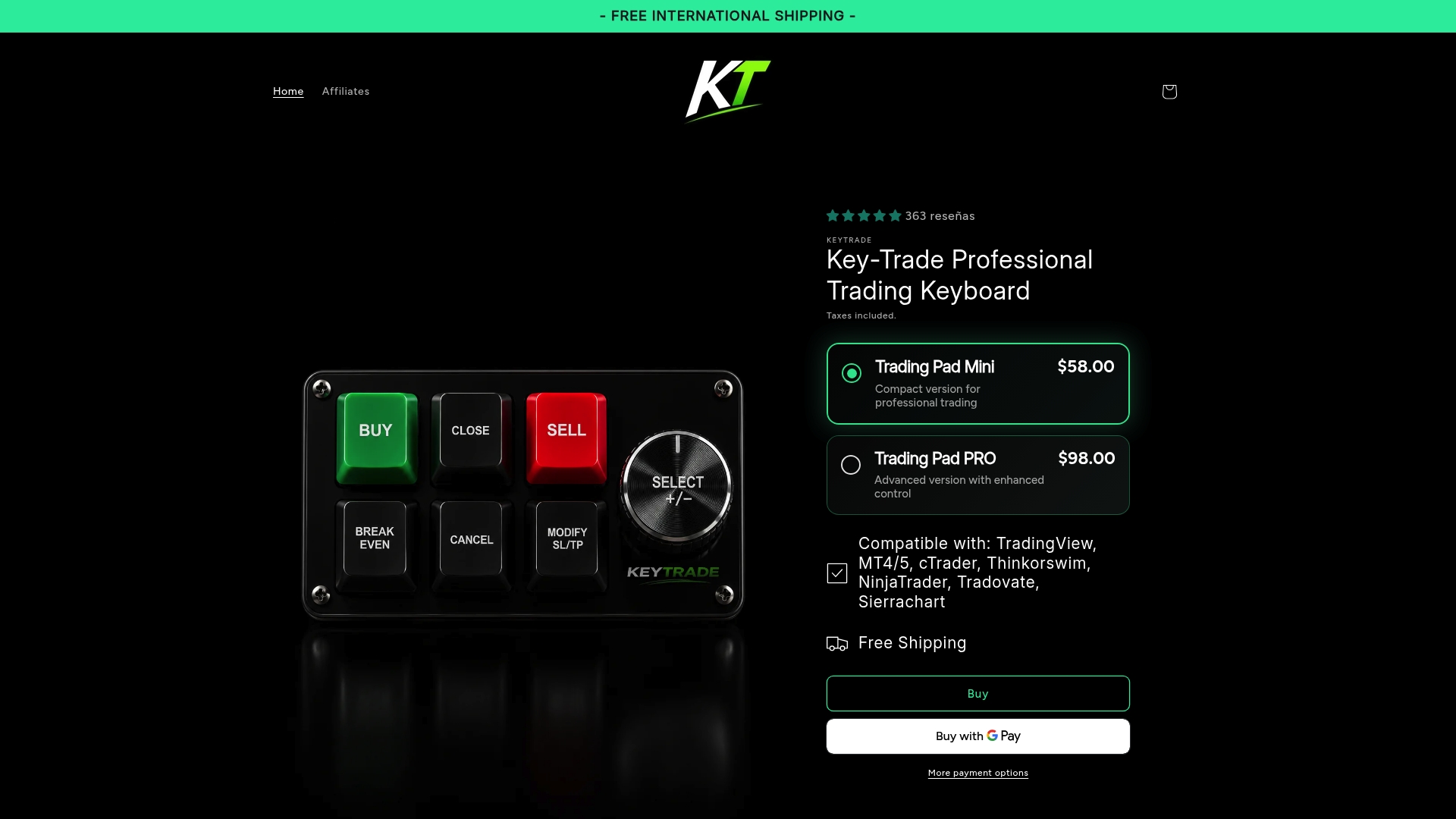
Key-trade keyboards integrate directly with cTrader, giving you instant access to order entry, break-even triggers, partial close commands, and stop loss adjustments from a single device. Professional traders and prop firm participants use these keyboards to cut execution time and reduce input errors when markets move fast. If you manage multiple positions or trade high-frequency setups, a Key-trade trading keyboard gives your hands the same speed advantage your strategy demands.
FAQ
What is the cTrader trade management panel?
The cTrader trade management panel is the interface where you monitor and modify open positions, including stop loss, take profit, partial close, and reverse position controls. It provides real-time position data and one-click access to all active trade management functions.
How does cTrader trailing stop work?
The cTrader trailing stop follows price by a fixed pip distance and adjusts automatically as the trade moves in your favor. It runs server-side, so it remains active even if the app is closed or your connection drops.
What is the cTrader stop loss feature?
The cTrader stop loss feature is a server-side order that closes your position automatically if price reaches a defined loss level. Server-side execution means the stop remains active regardless of your device or connection status.
How does cTrader handle multiple positions?
cTrader displays all open positions in a unified panel and supports individual or bulk management actions. Traders can apply partial closes, stop loss adjustments, and take profit modifications to individual positions or across the full book simultaneously.
What are the best cTrader trade management tools for prop firm traders?
The best tools for prop firm traders combine cTrader’s native server-side stops with third-party risk management plugins that enforce daily drawdown limits and block stop-loss widening. This combination automates compliance with funded account rules and reduces the risk of rule violations during volatile sessions.