

Compliant Trade Execution Setup: A Guide for US Traders
What makes a trade execution setup truly compliance-friendly?
A compliance-friendly trade execution setup is a hardware and software infrastructure built to process orders at high speed while satisfying US regulatory standards, specifically Regulation SCI and FINRA’s execution quality rules. Speed without compliance is a liability. The two have to be engineered together from the start.
The core components of any compliant setup include:
- Hardware layer: Physical input devices, servers, and networking equipment configured for low latency and redundancy
- Software layer: Trading platforms (TradingView, MetaTrader 4/5, cTrader, NinjaTrader, SierraChart, Thinkorswim, Tradovate) with pre-trade and post-trade controls
- Monitoring layer: Real-time surveillance for systems disruptions, compliance breaches, and unauthorized access
- Audit trail layer: Unique order identifiers and event logs capturing every manual and automated action
- Resilience layer: Business continuity and disaster recovery plans capable of restoring critical systems within two hours of a wide-scale disruption
Professional traders and proprietary trading firms are the primary stakeholders here. Key-trade trading keypads fit squarely into the hardware layer, giving traders programmable physical controls that generate auditable order events across all major platforms.
Table of Contents
- US regulatory requirements shaping your compliant trading system design
- How to integrate compliance controls into hardware-based trading systems
- Common compliance risks in high-speed hardware trading setups
- How Key-trade’s trading keypads support compliant, high-speed execution
- Key Takeaways
- FAQ
US regulatory requirements shaping your compliant trading system design
Two frameworks dominate US trade execution compliance: Regulation SCI from the SEC and FINRA’s execution quality standards.
Regulation SCI requires SCI entities to maintain written policies covering system capacity, integrity, resiliency, availability, and security. The rule mandates periodic capacity stress tests, regular vulnerability reviews of backup systems, and business continuity plans designed to achieve next-business-day resumption of trading and two-hour resumption of critical systems after a wide-scale disruption. Systems must also be monitored continuously to identify potential SCI events, including disruptions, compliance failures, and unauthorized intrusions.
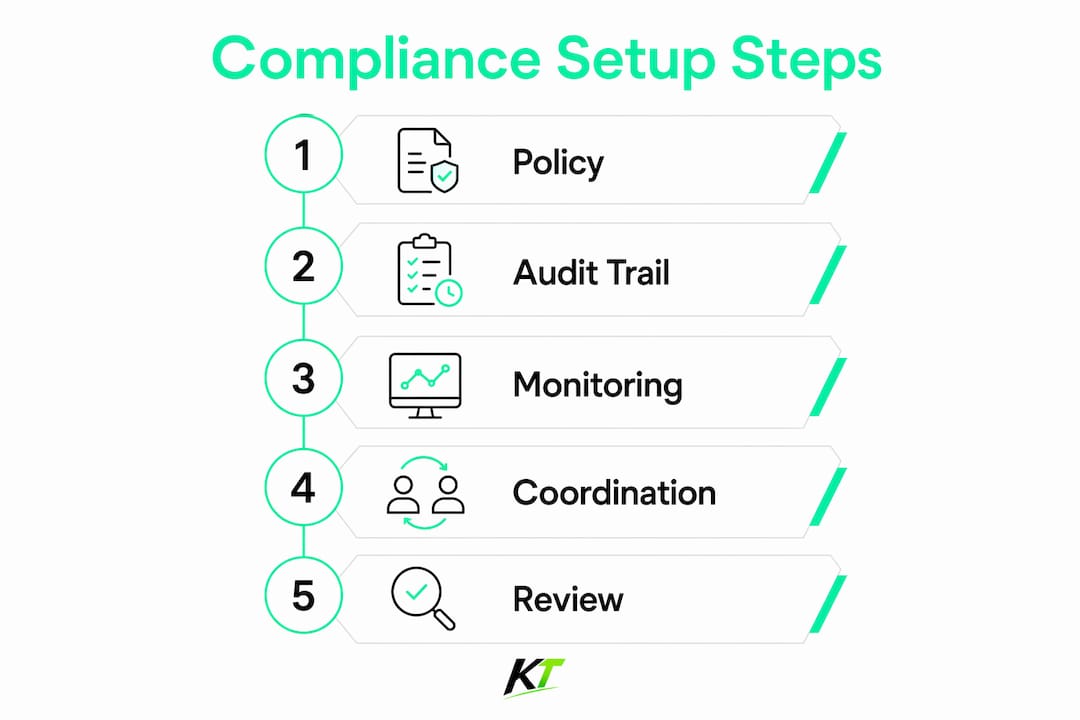
FINRA Regulatory Notice 15-46 sets the bar for execution quality reviews. Broker-dealers must conduct regular and rigorous reviews, with order-by-order analysis increasingly required for larger-sized orders. Some firms have moved beyond quarterly reviews to more frequent analysis to satisfy best execution obligations.
Additional requirements shaping compliant system design:
- Audit trail completeness: FIX protocol specifications require manual order events to carry unique identifiers (ComplianceID) so regulators can reconstruct the full lifecycle of every order
- Pre-implementation testing: All system changes must be tested before deployment, with internal controls governing every update
- Coordination between regulatory and technical personnel: Written policies must include a communication plan between compliance staff and system developers
- Data security standards: Systems must meet current SCI industry standards for encryption and access control, consistent with guidance from recognized US governmental or industry bodies
Key regulatory benchmark: Regulation SCI’s business continuity standard requires backup and recovery capabilities that are geographically diverse and resilient enough to achieve two-hour resumption of critical SCI systems following a wide-scale disruption.
How to integrate compliance controls into hardware-based trading systems
Hardware speed tools are not inherently compliant. FINRA Regulatory Notice 15-09 is explicit: effective compliance requires active collaboration between trading strategy developers and compliance teams. A physical keypad that executes orders in milliseconds but sits outside your surveillance framework is a regulatory blind spot, not an asset.
The integration challenge has three dimensions: audit trail generation, monitoring coverage, and team coordination.
Audit trail generation starts at the hardware level. Every button press on a physical trading keypad must trigger an event that the underlying platform logs with a unique identifier. Under FIX protocol, that means assigning a ComplianceID to each manual order event so the full order lifecycle, from initiation through modification or cancellation, remains traceable. Configure your platform’s API or plugin layer to capture these identifiers automatically whenever a keypad action fires.

Monitoring coverage means your compliance surveillance system sees hardware-generated events the same way it sees software-generated ones. If your risk management platform monitors algorithmic order flow but ignores keypad-triggered orders, you have a gap that regulators will find before you do. Extend your real-time monitoring to cover all input sources.
Team coordination is where most firms fall short. Periodic joint reviews between trading desks and compliance teams, combined with documented logic for every programmable hardware key, are what keep a fast setup defensible under scrutiny. Document what each button does, what platform action it triggers, and which compliance control governs it.
Additional configuration steps for a compliant hardware setup:
- Map each programmable key to a specific, documented order action before going live
- Verify that SL/TP modifications and partial closures generate distinct, tagged events in your audit log
- Test hardware interactions with your compliance monitoring system in a staging environment before deployment
- Establish escalation procedures so responsible personnel are notified immediately when a hardware-related systems event occurs
Pro Tip: Document the logic for every programmable key in a version-controlled file. When compliance audits your setup, that document is the difference between a clean review and a remediation order.
Common compliance risks in high-speed hardware trading setups
Speed creates pressure points where compliance breaks down. These are the risks that catch professional traders and prop firms off guard.
1. Untagged manual order events
A keypad press that bypasses your platform’s standard order entry flow may not automatically inherit a ComplianceID. If the underlying software does not assign a unique identifier to that event, the order is invisible to regulators reconstructing your audit trail. Fix this at the platform configuration level, not after the fact.
2. Hardware acting as a shadow execution point
Traders and compliance officers must prevent hardware tools from functioning as unmonitored execution channels. Any device that can submit, modify, or cancel orders must be fully integrated into compliance processes and audit systems. An isolated keypad, however fast, creates the exact surveillance gap that regulators flag.
3. Conflicts between multiple simultaneous algorithms
FINRA has noted that the interaction between multiple algorithms and manual overrides creates compliance blind spots when not comprehensively monitored. A manual keypad override mid-algorithm can produce order states that neither the algorithm nor the compliance system anticipated. Firms running multiple strategies simultaneously need monitoring logic that accounts for these interactions explicitly. For deeper coverage of this risk, the prop trader performance tools guide covers surveillance techniques relevant to multi-algorithm environments.
4. Unauthorized system access
Physical hardware introduces physical access risk. A keypad left active on an unattended desk is an open execution channel. Implement session-locking protocols and access controls at the hardware level, not just the software level.
5. Inadequate disaster recovery for hardware components
A disaster recovery plan that covers your servers but not your input devices leaves a gap. If a keypad fails during a volatile session, traders need a documented fallback. Test hardware failover procedures with the same rigor you apply to software backup systems.
6. Infrequent execution quality reviews
Quarterly reviews may not satisfy FINRA’s expectations for active trading desks. Firms with high order volume should consider monthly or order-level review cycles. The trading desk efficiency guide outlines how to embed compliance monitoring into daily trading workflows.
How Key-trade’s trading keypads support compliant, high-speed execution
Key-trade builds physical trading keypads specifically for professional traders who cannot afford to choose between speed and compliance. The hardware integrates directly with TradingView, MetaTrader 4/5, cTrader, NinjaTrader, SierraChart, Thinkorswim, and Tradovate, with additional platform support in development.
| Feature | Compliance benefit |
|---|---|
| Programmable buttons for order entry | Each action maps to a documented, auditable platform event |
| SL/TP modification keys | Risk management changes generate distinct, tagged log entries |
| Partial closure controls | Granular position management with traceable order events |
| Break-even automation | Reduces manual error and creates consistent, reviewable execution patterns |
| Multi-platform compatibility | Single hardware layer works across your full trading stack |
| No software installation required | Reduces attack surface and simplifies security compliance |
The keypad’s programmable architecture means compliance teams can review and document exactly what each button does before deployment, satisfying FINRA’s expectation for documented executable logic. For traders on NinjaTrader, the NinjaTrader risk management hardware setup guide covers hardware configuration specifics for compliant risk controls.
Key-trade ships worldwide and supports both live and prop trading accounts, making it practical for US proprietary firms operating under FINRA oversight. The hardware requires no technical background to configure, which matters when compliance teams, not just developers, need to verify what the device does.
Pro Tip: Before deploying any Key-trade keypad in a live environment, run a full audit trail test: execute a sample order sequence using the keypad, then pull the platform log and verify that every action carries a unique identifier. If any event is missing a tag, fix the platform configuration before going live.
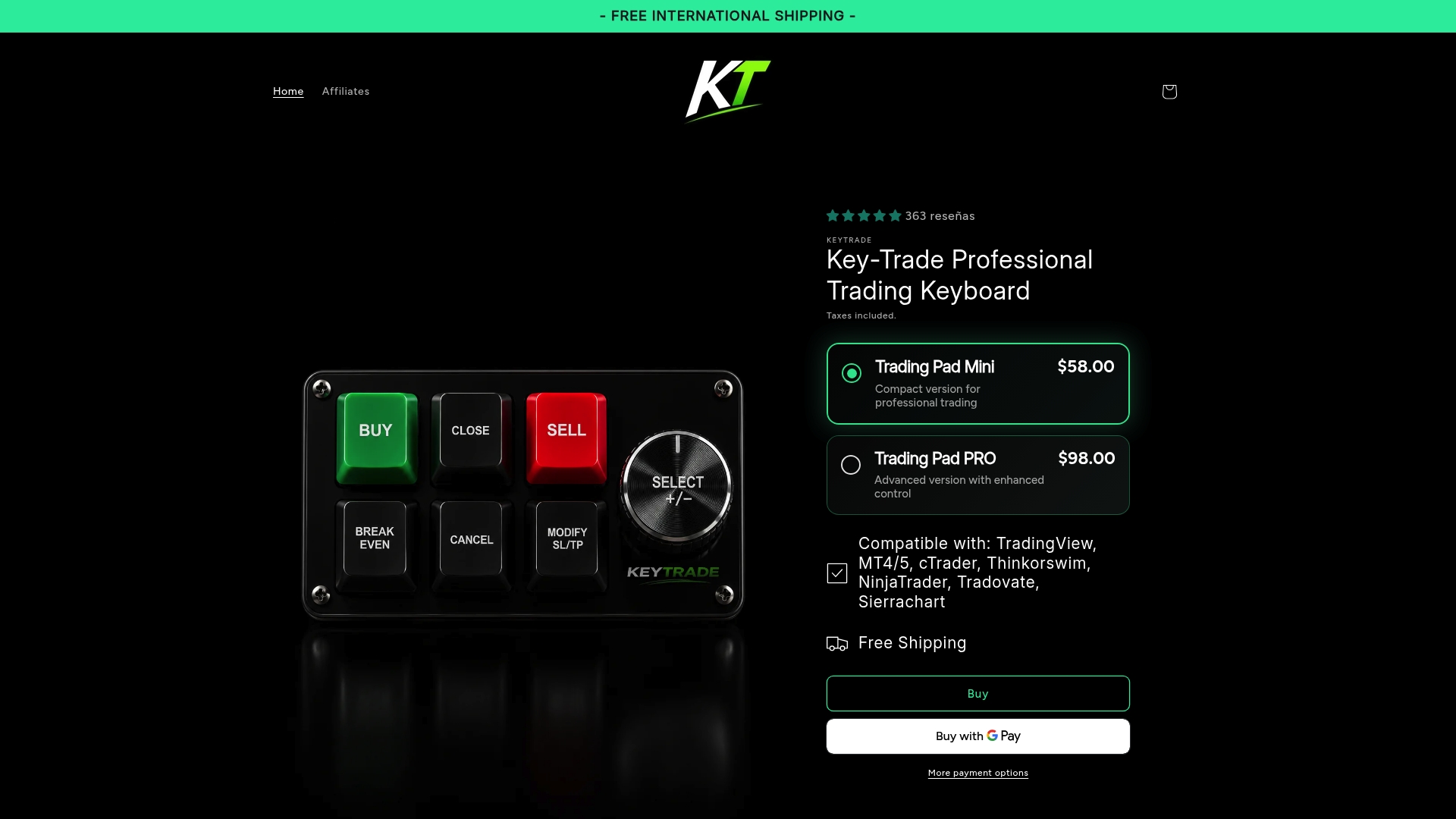
The Key-trade trading keyboard is built for traders who need execution speed and a defensible compliance record at the same time. For firms building or upgrading their regulatory trade setup in 2026, it belongs in the hardware layer of any serious compliant trading system.
Key Takeaways
A compliance-friendly trade execution setup requires hardware, software, monitoring, and audit trail components working together under Regulation SCI and FINRA standards from day one.
| Point | Details |
|---|---|
| Regulation SCI sets the baseline | Written policies must cover capacity, integrity, resiliency, availability, and security for all SCI systems. |
| Audit trails start at the hardware layer | Every keypad action must generate a unique ComplianceID under FIX protocol to satisfy FINRA audit requirements. |
| Hardware needs compliance integration | Physical trading devices that operate outside surveillance frameworks create regulatory blind spots. |
| Joint reviews are non-optional | FINRA expects periodic reviews between trading desks and compliance teams, with documented logic for all hardware controls. |
| Disaster recovery covers hardware too | Business continuity plans must include hardware failover procedures, not just software backup systems. |
FAQ
What is a compliance-friendly trade execution setup?
It is a hardware and software infrastructure designed to execute trades at high speed while meeting US regulatory standards, including Regulation SCI capacity and integrity requirements and FINRA execution quality rules.
Does a physical trading keypad need to generate audit trail data?
Yes. Under FIX protocol, manual order events from hardware devices must carry unique identifiers such as ComplianceID so regulators can reconstruct the full order lifecycle for compliance verification.
How often should execution quality reviews happen?
FINRA Regulatory Notice 15-46 requires regular and rigorous reviews; some high-volume desks may need more frequent analysis than quarterly cycles to satisfy best execution obligations.
What is the biggest compliance risk with hardware trading tools?
Hardware that operates outside your compliance surveillance framework becomes an unmonitored execution channel. Every physical device that can submit or modify orders must be fully integrated into your audit and monitoring systems.
Does Regulation SCI apply to proprietary trading firms?
Regulation SCI applies directly to SCI entities such as exchanges and certain ATSs, but the standards it sets for system integrity, resilience, and audit trails represent the baseline that FINRA-regulated broker-dealers and prop firms are expected to meet for their own trading systems.
Recommended
- cTrader Trade Execution Speed Tips That Actually Work – Key-Trade Trading Keyboards
- Trading Desk Efficiency Improvement Guide for Pros – Key-Trade Trading Keyboards
- How to Execute Trades Faster on TradingView in 2026 – Key-Trade Trading Keyboards
- cTrader Trade Management Features: Complete 2026 Guide – Key-Trade Trading Keyboards