

Why Traders Choose cTrader Platform: 2026 Guide
TL;DR:
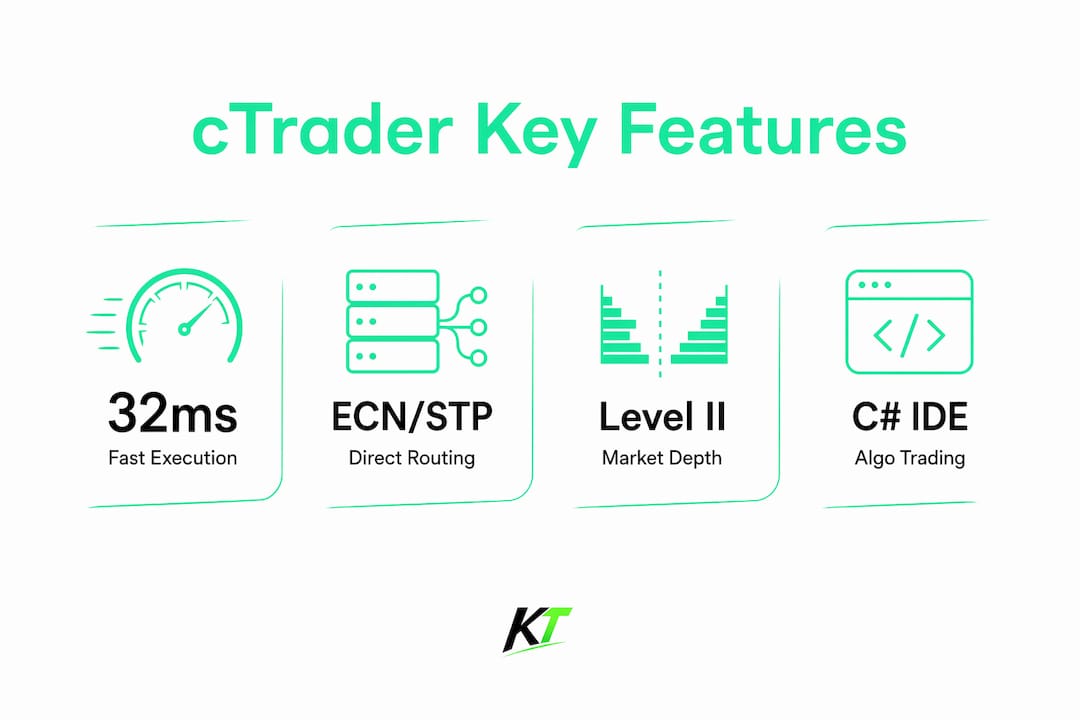
- cTrader is a professional trading platform built on ECN/STP architecture, offering Level II market depth and sub-32ms execution speeds. It emphasizes transparency and direct order routing to liquidity providers, reducing re-quotes and slippage. The platform supports C# algorithmic trading, low-latency infrastructure, and advanced tools for scalpers, intraday traders, and developers.
cTrader is defined as a professional trading platform built on native ECN/STP architecture, delivering genuine Level II pricing, full Depth of Market visibility, and sub-32ms execution speeds that legacy platforms cannot match. The reason why traders choose cTrader platform comes down to one core principle: execution transparency. Scalpers, algorithmic developers, and intraday professionals all gain from a design that removes dealing desk layers, shows real order book depth, and supports C# strategy development inside a single integrated environment. Key-trade users running cTrader report that hardware speed matters far less when the platform itself is the bottleneck. cTrader removes that bottleneck.
Why traders choose cTrader platform: execution and transparency first
cTrader’s defining advantage is its genuine ECN/STP model, which routes orders directly to liquidity providers without a dealing desk in between. No dealing desk means no re-quotes, no price manipulation, and no hidden markup layered onto your fills. For scalpers working on one to five pip targets, that difference is the margin between a profitable session and a losing one.
The platform’s “Traders First” philosophy shapes every design decision. Transparency over convenience is the guiding rule, which is why cTrader shows you the actual spread, the actual fill price, and the actual slippage on every trade. Older platforms often abstract this data away. cTrader puts it front and center.
Execution quality also depends on infrastructure. cTrader brokers typically run co-located servers near major liquidity hubs, which keeps round-trip latency low. Traders who have switched from legacy platforms often describe the difference as moving from dial-up to fiber. The fills are faster, the spreads are tighter, and the order book is real.
What is cTrader Depth of Market and why does it matter?
Level II pricing shows the full order book, not just the best bid and ask. cTrader’s Depth of Market (DoM) panel displays actual volume available at each price tier, giving traders a live map of where liquidity sits before they place an order.
This matters most for two trader types. Scalpers use DoM to identify thin liquidity zones where large orders will cause slippage. Order flow analysts use it to spot institutional activity, such as large limit orders stacking at a specific price level, which often signals a support or resistance zone before it shows up on a price chart.
Older platforms typically display a simplified price feed with only the top-of-book bid and ask. That single-tier view hides the true cost of executing a large position. cTrader’s full DoM removes that blind spot entirely.
- Volume at each price level: See exactly how many lots are available before your order moves the market.
- Bid and ask depth: Identify where liquidity thins out and where it clusters.
- Order flow signals: Spot large resting orders that indicate institutional interest.
- Slippage prediction: Estimate fill quality before you click, not after.
Pro Tip: Set your DoM panel to display at least 10 price levels on each side. Watching how those levels refresh in real time tells you more about market intent than most indicators.
How cTrader delivers ultra-fast execution and lower latency
Sub-32ms fill times are a verified benchmark for cTrader in ECN-style environments. That speed matters because a 100ms delay on a scalp trade can mean the difference between entering at the intended price and chasing a move that has already happened.

cTrader achieves this through its native STP/ECN routing. Orders go straight to the liquidity provider without passing through a dealing desk layer. Each additional layer in an order chain adds latency and introduces the possibility of re-quotes. cTrader eliminates both.
The platform also supports one-click trading directly from the chart or the DoM panel. That removes the confirmation dialog that many legacy platforms insert between intent and execution. For intraday traders, every millisecond of interface friction adds up across dozens of trades per session.
Pro Tip: Use cTrader’s execution speed tips to configure your order panel for single-click fills. Pair that with a hardware keypad to cut your order entry time to under one second.
Broker infrastructure also plays a role. Traders who choose cTrader brokers with co-located servers near liquidity hubs get the full benefit of the platform’s low-latency design. A fast platform on a slow server still underperforms.
What makes cTrader ideal for algorithmic traders and developers?
cTrader Automate, formerly known as cAlgo, is the platform’s built-in algorithmic trading environment. It uses C# with an integrated IDE that includes code completion, real-time debugging, and a backtesting engine, all inside the platform itself.
That integration is the key advantage. Algorithmic traders on legacy platforms often write code in an external editor, compile it, import it, and then run backtests through a separate interface. cTrader Automate collapses that entire workflow into one window. Developer efficiency improves because context-switching between tools disappears.
C# itself is a significant upgrade over proprietary scripting languages. It is a mainstream, object-oriented language with extensive documentation, a large developer community, and access to third-party libraries. Traders who already know C# can build production-grade strategies on day one. Those who are learning get access to far more learning resources than any proprietary language offers.
Key advantages of cTrader’s algo environment:
- Full C# support: Write strategies using a professional language, not a platform-specific script.
- Integrated backtesting: Test strategies on historical data without leaving the platform.
- Real-time debugging: Identify logic errors while the strategy runs, not after a failed live session.
- API integration: Connect external data feeds, risk systems, or execution layers through cTrader’s open API.
- cBot framework: Package strategies as cBots that run automatically, manage positions, and respond to market conditions without manual input.
A cTrader cBot explained simply is an automated strategy written in C# that executes trades based on coded rules. It runs inside cTrader Automate, has full access to market data and order functions, and can be backtested before going live.
What additional professional features attract traders to cTrader?
cTrader’s modern interface design sets it apart from platforms built in the early 2000s. It supports dark mode, customizable layouts, smooth chart animations, and detachable chart windows. Traders who spend eight hours a day in front of a platform notice the difference in eye strain and workflow speed.
The platform also includes a native copy trading system. Signal providers publish their trades in real time, and followers receive fills at the same speed as the original order. This is not a delayed mirror system. It is live execution, which means followers do not suffer the slippage that typically plagues third-party copy trading services.
Native FIX API support gives institutional traders direct connectivity to their broker without requiring a bridge or middleware layer. That direct connection reduces latency and removes a potential failure point. Brokers on legacy platforms often require third-party bridges to enable FIX connectivity, which adds cost and complexity.
| Feature | Benefit for traders |
|---|---|
| Level II Depth of Market | Full order book visibility at every price tier |
| Sub-32ms ECN execution | Faster fills with no dealing desk interference |
| cTrader Automate (C#) | Professional algo development inside the platform |
| Native FIX API | Institutional-grade connectivity without middleware |
| Built-in copy trading | Real-time trade mirroring with live execution |
| Modern UI with dark mode | Reduced eye strain and faster workflow navigation |
Who benefits most from using cTrader?
Scalpers and execution-sensitive intraday traders gain the most from cTrader’s ECN model and DoM visibility. Their edge depends on entering and exiting at specific prices with minimal slippage. cTrader’s architecture is built for exactly that use case.
Algorithmic developers benefit from the C# environment and integrated IDE. If your trading strategy lives in code, cTrader gives you a professional development environment that most retail platforms do not offer.
Traders who prioritize transparency over indicator variety will also prefer cTrader. The platform shows you what the market is actually doing, not a simplified version of it. That transparency has a cost: cTrader is supported by approximately 50 brokers, compared to thousands for legacy platforms. Broker choice is more limited.
Prop firm traders face an additional consideration. Platform licensing adds $20–$30 per challenge account at many prop firms that support cTrader. That cost is real and should factor into your decision. For traders who need cTrader’s execution quality to pass a challenge, the fee is worth it. For traders who are indifferent to platform features, it may not be.
Traders who should evaluate cTrader seriously:
- Scalpers trading tight spreads on forex majors
- Intraday traders who need one-click execution from the chart
- Algorithmic developers building automated strategies in C#
- Institutional traders requiring native FIX API connectivity
- Traders who want full order book visibility before every entry
Use the cTrader efficiency checklist to audit your current setup against cTrader’s capabilities before switching brokers.
Key Takeaways
cTrader’s core advantage is its native ECN/STP architecture, which delivers genuine Level II market depth, sub-32ms execution, and a professional C# algo environment that execution-focused traders cannot get from legacy platforms.
| Point | Details |
|---|---|
| ECN/STP execution | No dealing desk means faster fills, tighter spreads, and no re-quotes. |
| Level II Depth of Market | Full order book visibility helps scalpers predict slippage before entering. |
| C# algo environment | cTrader Automate integrates coding, debugging, and backtesting in one window. |
| Broker availability trade-off | Only about 50 brokers support cTrader, so choice is narrower than legacy platforms. |
| Prop firm cost factor | Expect $20–$30 extra per challenge account at cTrader-supporting prop firms. |
What I’ve learned from watching traders switch to cTrader
Most traders underestimate how much a dealing desk costs them. They see the spread on screen and assume that is their total cost. What they do not see is the re-quote, the delayed fill, and the price improvement that never happened. cTrader makes all of that visible, and once you see it, you cannot unsee it.
The traders who benefit most from cTrader are not necessarily the most sophisticated. They are the most honest about what their strategy actually needs. A scalper who admits their edge depends on fill quality will switch to cTrader and never look back. A swing trader who holds positions for days will care less about sub-32ms execution and more about indicator availability.
The algo trading environment is where cTrader genuinely surprises people. C# is a real programming language. The IDE is a real development environment. Traders who have spent years fighting with proprietary scripting languages describe cTrader Automate as the first platform that treats them like developers, not hobbyists.
The broker ecosystem is the honest limitation. Fifty brokers is not two thousand. If your preferred broker does not support cTrader, you face a real choice. For most execution-focused traders, the right broker with cTrader beats the wrong broker with any other platform. Prioritize execution quality, then find the broker that delivers it.
— Key-trade
Speed up your cTrader execution with the right hardware
cTrader removes software latency from your order chain. The next bottleneck is your input device.
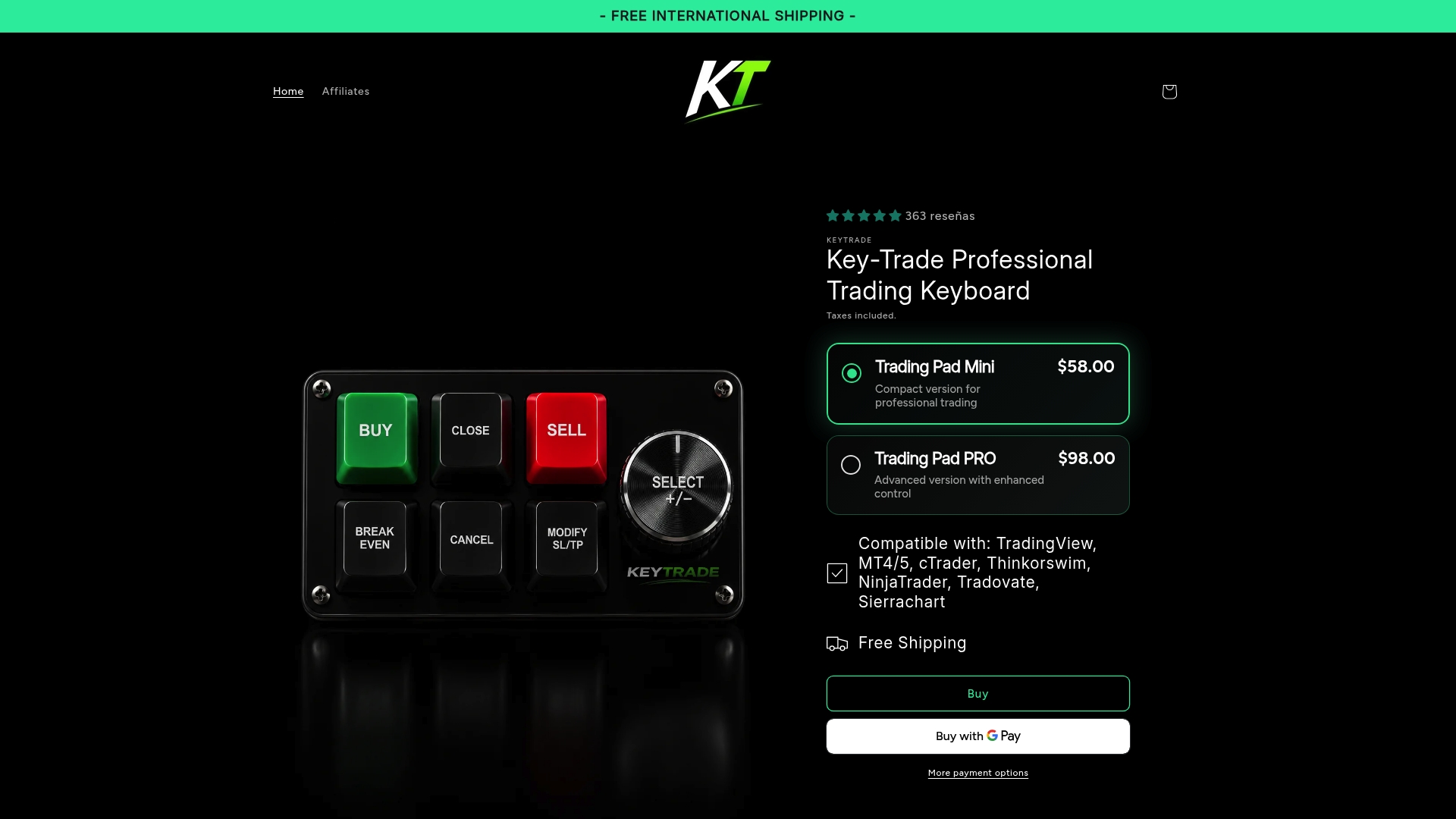
Key-trade builds physical trading keypads designed specifically for platforms like cTrader. Programmable buttons handle order entry, partial closes, stop-loss adjustments, and break-even moves in a single press. No mouse clicks, no keyboard shortcuts to memorize, no hesitation between decision and execution. The Key-trade trading keyboard ships worldwide and works with live and prop trading accounts. If cTrader’s execution speed is your edge, Key-trade makes sure your hands keep up with the platform.
FAQ
What is cTrader ECN execution?
cTrader ECN execution routes orders directly to liquidity providers without a dealing desk. This removes re-quotes and reduces slippage, which is why scalpers prefer cTrader for tight-spread trading.
What is cTrader Depth of Market?
Depth of Market in cTrader displays the full order book, showing volume available at each price level on both the bid and ask side. Traders use it to assess liquidity and predict fill quality before entering a position.
What is a cTrader cBot?
A cBot is an automated trading strategy written in C# that runs inside cTrader Automate. It executes trades, manages positions, and responds to market conditions based on coded rules, with full backtesting support built into the platform.
How does cTrader differ from legacy platforms?
cTrader offers native ECN/STP execution, Level II Depth of Market, and a C# development environment, while most legacy platforms use proprietary scripting languages and simplified price feeds. The trade-off is that cTrader has fewer brokers supporting it.
Is cTrader good for prop firm traders?
cTrader works well for prop firm traders who need execution quality, but licensing adds $20–$30 per challenge account at most supporting firms. Traders should weigh that cost against the execution advantages before choosing.
Recommended
- cTrader Platform Efficiency Checklist for Traders – Key-Trade Trading Keyboards
- cTrader Trade Management Features: Complete 2026 Guide – Key-Trade Trading Keyboards
- cTrader Trade Execution Speed Tips That Actually Work – Key-Trade Trading Keyboards
- NinjaTrader Chart Trader: A Complete Guide for Traders – Key-Trade Trading Keyboards