

cTrader Platform Efficiency Checklist for Traders
TL;DR:
- Maintaining peak cTrader performance requires regular resource management, execution monitoring, and infrastructure optimization. Traders should review resource usage, track execution metrics, and ensure low-latency VPS co-location to stay competitive and avoid missed opportunities. Continuous adjustments and scheduled reviews help sustain stable automation and trading efficiency over time.
The cTrader platform efficiency checklist is defined as a structured set of configuration, resource, and automation checks that traders run to maintain peak platform performance. cTrader delivers advanced execution transparency and algorithmic trading tools that most platforms cannot match, but it demands more from your hardware and setup than lighter alternatives. This guide covers hardware requirements, workspace organization, cBot management, VPS co-location, and execution monitoring. Each section gives you a concrete action to take, not a vague suggestion. If you trade actively or run automated strategies, this checklist is the difference between a stable setup and one that costs you fills.
1. The cTrader platform efficiency checklist: start with resource management
Resource consumption is the first thing to audit on any cTrader efficiency guide. A single cTrader instance consumes 600–800MB of RAM, compared to 300–500MB for a MetaTrader 4 instance. That gap matters when you run multiple terminals, several charts, and active cBots at the same time.

Closing unused charts is the fastest way to free RAM. Every open chart loads historical price data, indicator calculations, and rendering threads. Limit your active charts to only the instruments you are trading right now.
Disabling animations, visual themes, and unused symbols reduces CPU and GPU load noticeably, especially on VPS servers without dedicated graphics hardware. Sound notifications also consume processing cycles. Turn them off unless they serve a direct trading purpose.
- Close all charts not tied to an active trade or strategy
- Disable sound alerts and visual animation effects in platform settings
- Limit historical data load per chart to the minimum your strategy requires
- Remove symbols from the watchlist that you are not actively monitoring
Pro Tip: Open the Performance Monitor inside the cTrader Automate tab to see real-time CPU and memory use per bot. Any bot running above 40% CPU is a risk to your execution quality.
2. How to use execution statistics to monitor broker performance
cTrader records execution time in milliseconds, slippage in pips, and order rejection rates for every trade you place. These metrics are filterable by period, which makes quarterly broker performance reviews straightforward. Most traders ignore this data entirely. That is a mistake.
Scalpers and high-frequency traders depend on sub-10ms execution. If your quarterly review shows average execution times creeping above 50ms, your broker’s infrastructure or your own network is the bottleneck. Act on that data before it costs you real money.
- Check average execution time monthly, not just when something feels wrong
- Filter slippage data by instrument to identify which markets fill worst
- Track rejection rates over time to spot broker-side deterioration
- Compare execution stats before and after any VPS or network change
For a deeper look at how execution speed affects outcomes, the Key-trade blog covers specific techniques for reviewing and acting on these metrics.
3. Optimizing cBots and automation for stability
The ‘OnBar’ event method is significantly less CPU-intensive than ‘OnTick’ when tick-level precision is not required by your strategy. Switching from ‘OnTick’ to ‘OnBar’ in your cBot code is one of the highest-impact changes you can make for platform stability. Most trend-following and swing strategies do not need tick data at all.
Running too many cBots inside a single workspace compounds resource problems fast. Dedicated workspace profiles for different bot strategies reduce RAM and CPU consumption by up to 40% compared to mixing all bots in one session. That reduction directly lowers the risk of missed signals and slippage during high-volatility periods.
Spotware’s own research shows that continuously optimizing bot parameters rather than copying preset configurations can improve performance by over 600%. Copying someone else’s cBot settings without adapting them to your broker’s spread and execution profile is one of the most common efficiency killers.
- Use ‘OnBar’ instead of ‘OnTick’ unless your strategy requires tick precision
- Create separate workspace profiles for scalping bots, swing bots, and monitoring tools
- Run copy trading strategies on a dedicated VPS to prevent local interruptions
- Review bot performance in the Performance Monitor weekly
Pro Tip: On a VPS session, minimize cTrader windows rather than closing them. Closing the window terminates active bots. Minimizing keeps them running while reducing rendering overhead.
4. How to reduce latency through VPS co-location
Network latency is the single biggest infrastructure variable in cTrader performance. A VPS co-located in the same data center as your broker’s matching engine delivers round-trip latency under 1 millisecond. A VPS in the same city produces 5–30ms. A VPS on a different continent produces 60–300ms. That range translates directly into slippage and missed fills.
The practical step is to ask your broker which data center hosts their matching engine. Most brokers use Equinix NY4, LD4, or TY3 facilities. Match your VPS provider’s location to that data center. The latency difference between a co-located setup and a home internet connection is not marginal. It is structural.
Hardware specs matter too. Professional cTrader VPS setups require at least 8GB of RAM to handle multiple terminals, active bots, and high-volatility periods without degradation. A 4GB VPS is a technical floor, not a working solution for active multi-bot trading.
| Setup type | Typical latency | Suitable for |
|---|---|---|
| Co-located VPS | Under 1ms | Scalping, HFT strategies |
| Same-city VPS | 5–30ms | Day trading, active swing |
| Different continent | 60–300ms | Position trading only |
| Home internet | Variable, 20–150ms+ | Manual trading, low frequency |
For a full breakdown of how infrastructure choices affect trading desk performance, the Key-trade efficiency guide covers the topic in detail.
5. Workspace organization and multi-chart layout best practices
A disorganized workspace is a cognitive tax on every trading decision you make. Grouping your watchlists by market session, asset class, or active strategy reduces the time you spend searching for instruments. Forex majors, indices, and commodities each behave differently across sessions. Keeping them in separate groups prevents confusion during fast markets.
Saving indicator and drawing templates is one of the most underused cTrader features. Once you have your moving averages, RSI settings, and support/resistance tools configured on one chart, save that as a template. Apply it to any new chart in two clicks. This eliminates setup time and keeps your analysis consistent across instruments.
Chart synchronization across timeframes is the correct approach for multi-timeframe analysis. Linking a 15-minute chart and a 4-hour chart so that they scroll together saves time and prevents the common error of analyzing the wrong time period. Limit your active symbols to only the instruments you are currently trading. Every additional symbol in your feed consumes processing resources and screen space.
- Group watchlists by session: London open, New York open, Asian session
- Save a base template for each strategy type and apply it to new charts
- Sync charts across timeframes for consistent multi-timeframe analysis
- Detach charts to a second monitor for cleaner workspace separation
Pro Tip: Detaching a chart from the main cTrader window and moving it to a second monitor does not increase resource use. It gives you a dedicated analysis space without cluttering your primary execution view.
6. Backtesting settings that reflect real trading conditions
Backtesting with unrealistic inputs produces false confidence. Setting spreads to your broker’s actual values and slippage to 2–4 pips in cTrader’s backtester gives you results that reflect live conditions. Using default or zero-spread settings inflates strategy performance and leads to poor live results.
The backtester’s tick data quality setting also matters. Using “Open prices only” is fast but inaccurate for intraday strategies. Using “Every tick” is the most accurate mode but the slowest. Match the data quality to your strategy’s timeframe. A daily swing strategy does not need tick-level backtesting. A 1-minute scalper does.
Validate every strategy against at least two years of historical data across different market conditions. A strategy that only works in trending markets will fail during range-bound periods. Spotware’s research confirms that continuous parameter optimization rather than static presets is what separates profitable bots from losing ones over time.
Key Takeaways
The most effective cTrader efficiency setup combines hardware-level resource control, execution monitoring, disciplined bot management, and low-latency infrastructure to produce consistent, reliable trading performance.
| Point | Details |
|---|---|
| Control RAM and CPU first | A single cTrader instance uses 600–800MB RAM; close unused charts and disable visual effects immediately. |
| Monitor execution metrics quarterly | Filter slippage, execution time, and rejection rates by period to catch broker-side deterioration early. |
| Use workspace profiles for bots | Separate bot strategies into dedicated profiles to cut resource consumption by up to 40%. |
| Co-locate your VPS | Match your VPS location to your broker’s data center to achieve sub-1ms latency and reduce slippage. |
| Backtest with real broker data | Set actual spreads and 2–4 pip slippage in the backtester to avoid false performance assumptions. |
The efficiency work never stops
Traders treat platform optimization as a one-time setup. That is the wrong mindset, and it costs them over time. Markets change, broker infrastructure shifts, and bot strategies drift out of alignment with current conditions. The traders who maintain an edge are the ones who schedule quarterly reviews of their execution statistics, resource usage, and workspace configurations.
What I have found working with active traders is that the biggest efficiency losses are not dramatic. They are slow. Execution times creep up by 5ms per month. A bot that used to run at 20% CPU now runs at 55%. A workspace that started with four charts now has fourteen. None of these changes trigger an alarm. They just quietly erode performance until a bad fill or a missed signal makes the problem obvious.
The fix is a scheduled review, not a reactive one. Set a calendar reminder every quarter to run through this checklist. Check your Performance Monitor data, pull your execution statistics, and audit your workspace. Adapt your bot configurations as your trading style evolves. The prop trader performance tools that separate top performers from the rest are not exotic. They are consistent habits applied to a well-maintained setup.
Balancing automation with manual judgment is also part of this. A cBot running in a trending market may need its parameters adjusted when volatility compresses. Treating your bots as set-and-forget tools is how you end up with a strategy that worked six months ago and fails today.
— Key-trade
What a professional trading keyboard adds to your cTrader setup
A fully optimized cTrader configuration still depends on how fast and accurately you can act on what the platform shows you. Physical input speed matters at the execution layer.
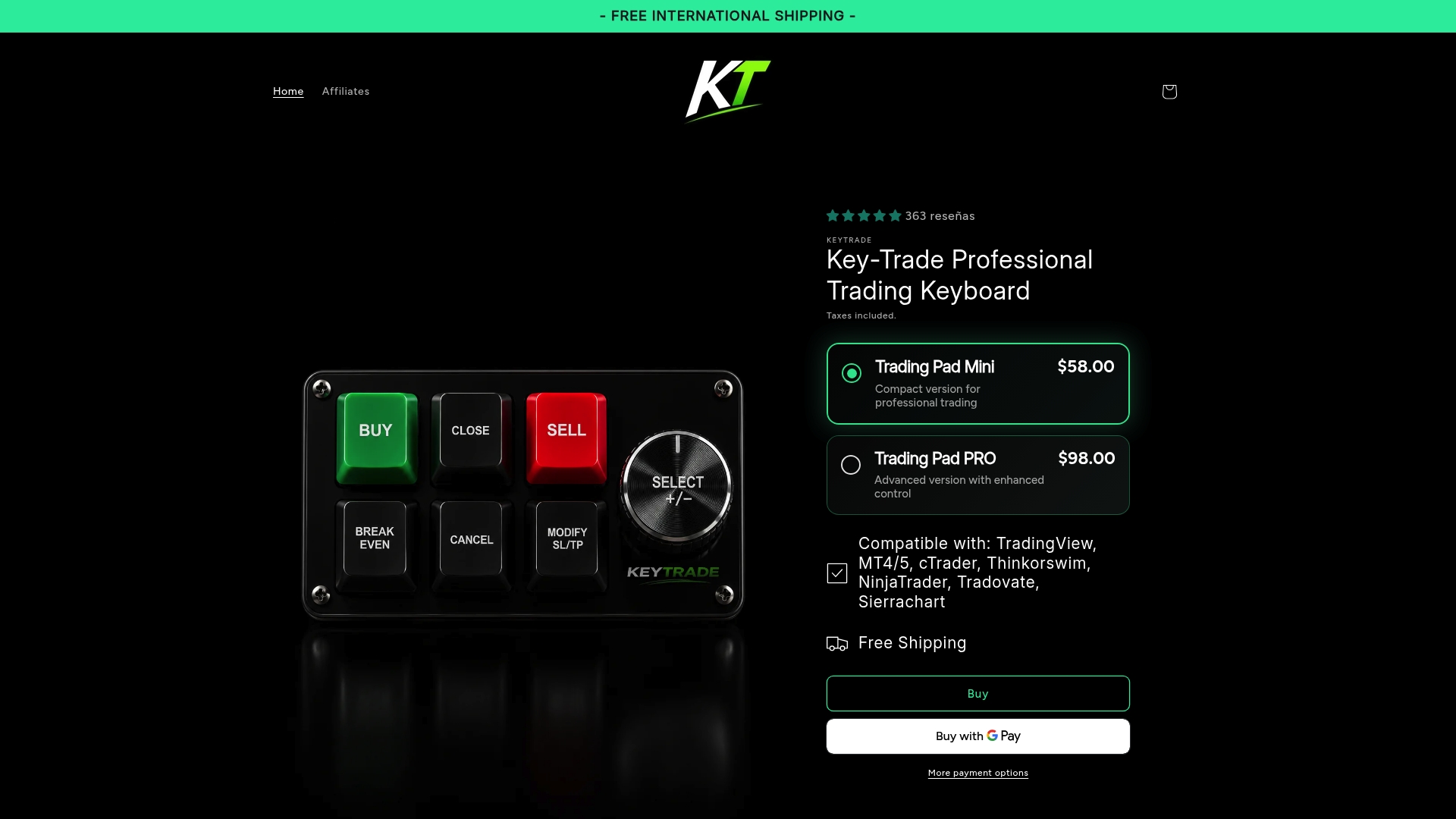
Key-trade builds programmable trading keyboards designed specifically for active traders on platforms including cTrader. Each button maps directly to a trade action: market order, partial close, break-even, stop-loss adjustment, or position size change. You execute without navigating menus or clicking through dialog boxes. For traders who have already tightened their platform settings, VPS latency, and bot configurations, a Key-trade trading keyboard is the final layer of execution speed that software alone cannot provide. Key-trade ships worldwide and requires no technical setup to get started.
FAQ
How much RAM does cTrader need for professional use?
A single cTrader instance uses 600–800MB of RAM. Professional setups running multiple terminals and active bots require at least 8GB of RAM on a VPS.
What is the best VPS latency for cTrader trading?
Co-located VPS servers in the same data center as your broker’s matching engine deliver latency under 1ms. Same-city VPS setups produce 5–30ms, which is acceptable for most day trading strategies.
How do I reduce CPU load from cBots?
Switch your cBot’s event method from ‘OnTick’ to ‘OnBar’ when tick-level precision is not required. Also separate bots into dedicated workspace profiles to cut combined resource use by up to 40%.
How often should I review cTrader execution statistics?
Review execution time, slippage, and rejection rate data at least quarterly. Monthly reviews are better for active scalpers or traders running high-frequency strategies.
What backtesting settings should I use in cTrader?
Set spreads to your broker’s actual values and slippage to 2–4 pips. Use “Every tick” data quality for intraday strategies and at least two years of historical data for reliable results.
Recommended
- Trading Desk Efficiency Improvement Guide for Pros – Key-Trade Trading Keyboards
- cTrader Trade Execution Speed Tips That Actually Work – Key-Trade Trading Keyboards
- cTrader Trade Management Features: Complete 2026 Guide – Key-Trade Trading Keyboards
- Prop Trader Performance Improvement Tools for 2026 – Key-Trade Trading Keyboards