

Intraday Trading Workflow: A Step-by-Step Guide for Beginners
Intraday trading means opening and closing a position within the same trading session, betting on short-term price moves rather than holding overnight. The full workflow runs in a fixed sequence every trading day: pre-market prep, building a tight watchlist, executing on defined entry rules, managing the trade actively while it’s open, closing everything out before the bell, and reviewing the results afterward.
That’s the whole loop. Skip a step and the rest tends to fall apart, usually right when a trade goes against you.
Here’s the sequence in practice:
- Pre-market prep: scan the economic calendar, check overnight gaps, note sector movers
- Build a watchlist: narrow to 5 to 10 names you actually understand
- Entry: wait for your predefined trigger, not a hunch
- Trade management: adjust stops, scale out, respect your risk limit
- Exit: close every position before the market closes
- Review: journal the trade the same day, not “eventually”
One thing beginners underestimate: leverage and margin can produce losses that exceed the money you deposited, and frequent trading racks up commissions fast. Investor is worth reading before you fund an account, and it’s smart to understand how SIPC protects your brokerage assets if a firm fails, though it does not cover trading losses.
Key Takeaways
A repeatable intraday workflow, pre-market prep, disciplined entries, active risk management, and same-day closure, matters more to long-term survival than any single strategy choice.
| Point | Details |
|---|---|
| Same-day rule | Every intraday position opens and closes within one session; no exceptions for overnight holds. |
| Fixed risk per trade | Risk 0.25% to 1% of account equity per trade and size shares to your stop distance, not conviction. |
| Watchlist discipline | Limit your list to 5 to 10 liquid names so you can act on predefined triggers instead of chasing noise. |
| Journal every session | Log setup, entry, exit, and one lesson daily; review weekly to catch repeated mistakes early. |
| Hardware reduces friction, not risk | Key-Trade’s programmable keypads speed up entries, partial closes, and daily loss cutoffs across platforms like TradingView and NinjaTrader. |
Table of Contents
- What Is Intraday Trading, Really?
- Step-by-Step Intraday Trading Workflow
- Which Intraday Strategies Should Beginners Learn First?
- How Do You Manage Risk in Intraday Trading?
- What Tools and Order Types Do You Actually Need?
- How Should You Practice Before Trading Real Money?
- Common Mistakes Beginners Make (and How to Fix Them)
- What a Realistic Learning Curve Actually Looks Like
- Faster Execution Starts With the Right Setup
- Sources
- FAQ
What Is Intraday Trading, Really?
Intraday trading covers any position opened and closed within a single session, no exceptions. That’s what separates it from swing trading or long-term investing, where you might hold for days, weeks, or years. Traders apply it across stocks, ETFs, futures, forex, and crypto, though the mechanics shift slightly by asset class.
A few things define the intraday style:
- Holding periods measured in minutes to hours, never overnight
- Frequent order placement and constant monitoring during market hours
- Heavy reliance on execution speed, since a few seconds of delay can wreck a scalp
- Charts set to short timeframes, typically 1, 5, or 15 minutes, per Investopedia’s definition of intraday trading
Picture two quick examples. A morning breakout play buys a stock the instant it clears its opening range high on strong volume. A midday range scalp does the opposite: it buys near the bottom of a stock’s sideways channel and sells near the top, betting the stock stays boxed in rather than breaking out.
Step-by-Step Intraday Trading Workflow
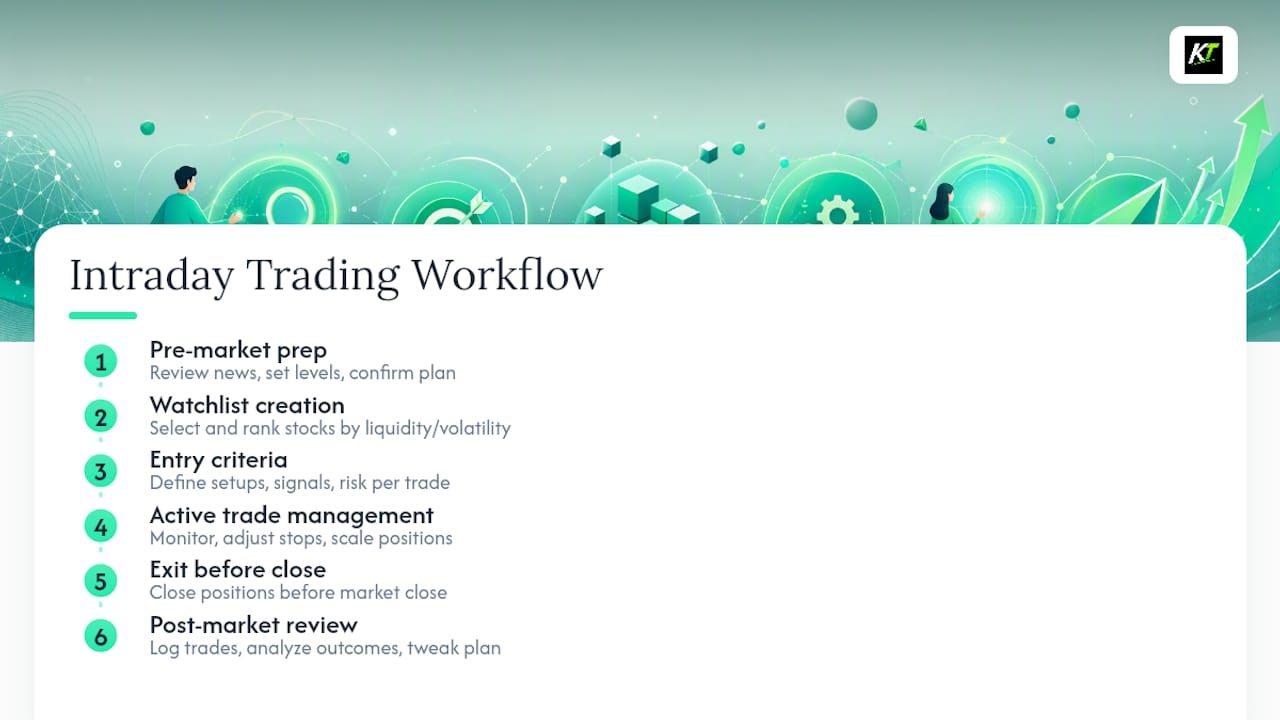
This is the operational core of the whole process, the part that actually turns “I want to day trade” into a repeatable routine you can run in a demo account before risking real money.
1. Pre-market routine (30 to 60 minutes before the open)
- Check the economic calendar for scheduled news (jobs data, Fed announcements, earnings)
- Scan overnight gaps and premarket volume leaders
- Mark key support and resistance levels on your charts from the prior session
- Set price alerts at those levels so you’re not staring at charts all morning
- Limit your watchlist to 5 to 10 names, tradable and liquid, nothing you have to force a story onto
A cluttered watchlist is one of the fastest ways to freeze up right when the opening bell rings. A tighter list built around a single decision framework, where every alert maps to a specific action, consistently outperforms a scattershot approach, according to one breakdown of intraday workflow design.
2. The opening phase (9:30 to 9:45 AM ET, or your market’s open)
The first 15 minutes are often the noisiest and least reliable. Most experienced traders watch, rather than trade, until they see how volume behaves relative to the opening range and where price sits versus VWAP (volume-weighted average price). Only then do predefined entry triggers, not gut feel, get the green light.
3. Intraday trade management
Once you’re in a position, the job shifts from “find a trade” to “manage a trade.” That means:
- Placing stops based on chart structure (below a swing low, outside a range) instead of an arbitrary dollar figure
- Scaling out in pieces, taking partial profit at a first target and letting the rest run with a trailing stop
- Sizing every trade as a fixed percentage of account equity or a fixed dollar risk, so no single trade can hurt you disproportionately
Pro Tip: Write your stop and target on paper (or in a note) before you click buy. If you can’t state both numbers before entering, you’re not ready to enter.
4. Exit and close
Every intraday position gets closed before the market shuts, full stop. Holding overnight “just this once” is how a defined-risk day trade turns into an accidental swing trade with no plan behind it. Set a hard daily loss limit (many traders use a fixed dollar amount or a percentage of the account) and if you hit it, you’re done for the day, regardless of what setup shows up next.
5. Post-market review
Journal every trade the same day: the setup, entry price, exit price, result, and one lesson. A simple weekly review, scanning five days of journal entries for repeated mistakes, catches bad habits faster than staring at a single trade in isolation ever will.
Which Intraday Strategies Should Beginners Learn First?
Most intraday traders eventually specialize, but nearly everyone starts by sampling the same handful of setups:
- Scalping: dozens of trades a day, holding seconds to minutes, chasing tiny price moves. Requires fast execution and tight spreads.
- Breakout trading: entering when price clears a defined range on strong volume, usually near the open when volatility is highest.
- Range trading: buying support and selling resistance inside a sideways channel, best suited to quiet, low-catalyst sessions.
- Pullback (mean-reversion) trading: buying a dip within an established uptrend, or selling a bounce within a downtrend.
- News trading: reacting to earnings, economic data, or headlines, which demands speed and a high tolerance for slippage.
According to Fidelity’s overview of intraday trading, these strategies share the same goal: capturing short-term price change, and all of them carry meaningful risk and demand real time commitment. Scalping needs the fastest reflexes and often the tightest margin usage; news trading needs the thickest skin, since spreads widen right when you need them narrow.
How Do You Manage Risk in Intraday Trading?
Risk rules aren’t optional extras bolted onto a strategy. They’re the strategy’s skeleton. Most disciplined intraday traders risk somewhere between 0.25% and 1% of account equity per trade, converting that percentage into a specific share or contract count based on stop distance.
Here’s the math: if you have a $20,000 account and risk 0.5% per trade, that’s $100 at risk. If your stop is $0.50 away from your entry, you can buy 200 shares ($100 ÷ $0.50). Wider stop, smaller size. Tighter stop, larger size. The dollar risk stays constant.
- Set stops based on structure (a swing low, a range boundary), never a round number that “feels right”
- Cap your daily loss at a fixed amount and walk away once you hit it
- Limit yourself to a small number of open positions at once, so one bad sector day can’t compound across five trades
- Remember that margin and leverage can produce losses larger than your deposit, a point Investor.gov hammers for good reason
Pro Tip: Many platforms let you set a hard daily loss cutoff that disables new orders once you hit it. If your setup allows it, program a dedicated “flat and done” button so a bad morning can’t turn into a worse afternoon.
What Tools and Order Types Do You Actually Need?
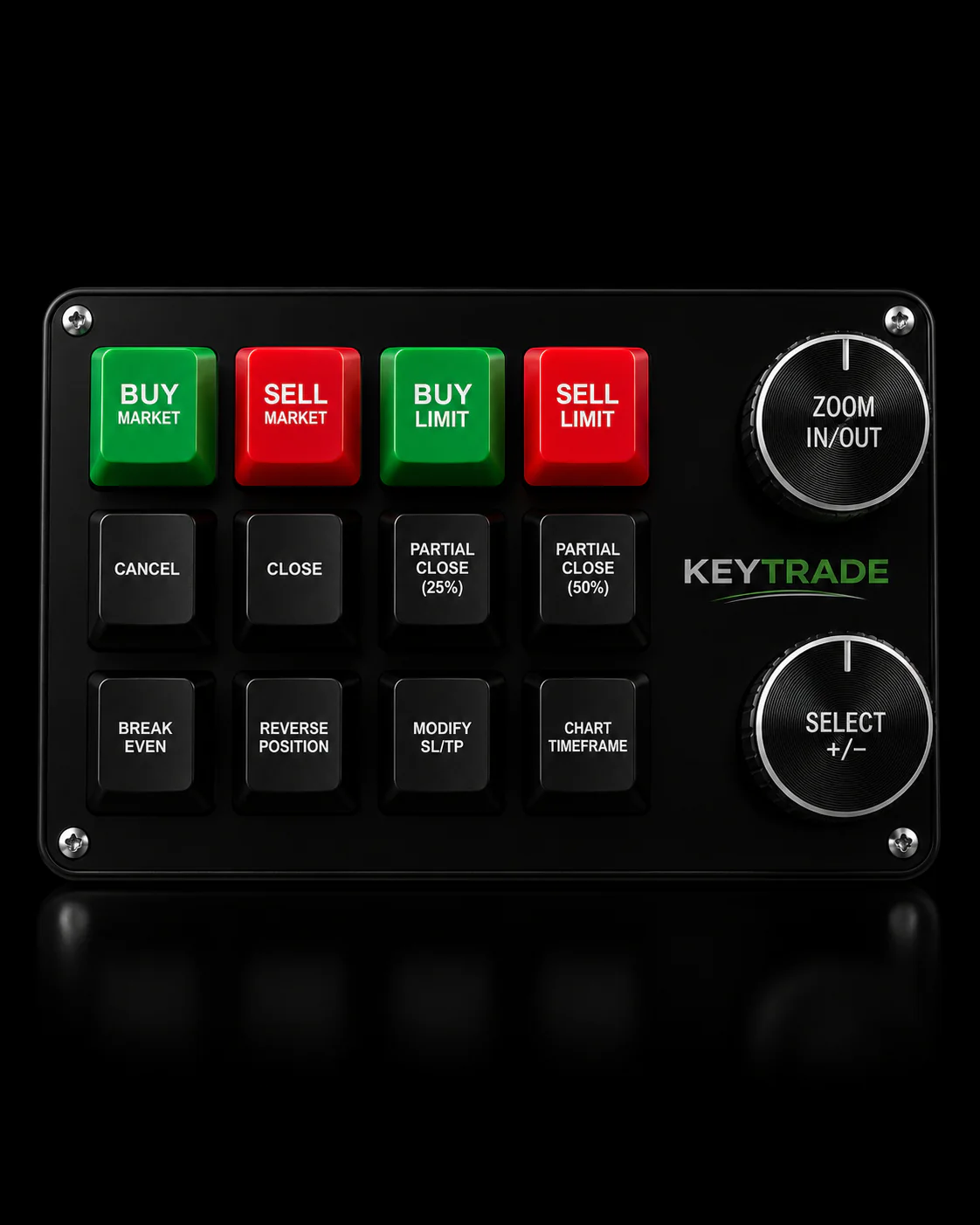
You don’t need an institutional desk to trade intraday well, but a few platform features aren’t optional. Look for real-time quotes, fast charting with multiple timeframes, hotkeys or programmable trade buttons, reliable order routing, and a simulated trading mode for practice runs.
On order types, four cover most situations:
- Market orders: fill immediately at the best available price, useful when speed matters more than exact price
- Limit orders: fill only at your specified price or better, useful for controlled entries
- Stop and stop-limit orders: trigger a market or limit order once price hits a level, the backbone of automated stop-loss management
- OCO (one-cancels-other): pairs a stop and a target so filling one automatically cancels the other
VWAP and TWAP orders help larger orders execute without moving the market much, and Level II data plus time and sales feeds show order flow in real time, both of which sharpen your read on whether a breakout has real volume behind it or is about to fail. Investopedia notes that VWAP in particular has become a standard reference point for intraday entries and exits, not just an institutional metric.
How Should You Practice Before Trading Real Money?
Start in a simulator, not a live account. Platforms like NinjaTrader offer Market Replay and simulated trading modes that let you rehearse setups such as trend-following, breakouts, and scalping against real historical price action with zero financial risk. Scale your size up slowly once you’re consistently following your own rules in the simulator, and keep journaling from day one, that habit is easier to build early than to bolt on later.
Here’s a realistic sample walkthrough:
- Pre-market: You spot a stock up 4% on premarket volume after a earnings beat, and add it to your watchlist
- Trigger: It breaks its opening range high at $52.10 on rising volume
- Entry: You buy at $52.15
- Stop: Placed at $51.65 (below the opening range low), a $0.50 risk per share
- Size: With a $100 risk budget, you buy 200 shares ($100 ÷ $0.50)
- Target and exit: Price reaches $53.15 (a 2:1 reward-to-risk ratio), you scale out half and trail the rest, exiting fully by 11:00 AM
Your journal entry for that trade should capture: setup name, entry price, stop, exit price, dollar result, and one honest lesson, even if the lesson is just “the setup worked exactly as planned.”
Common Mistakes Beginners Make (and How to Fix Them)
The same handful of errors sink most new intraday traders:
- Moving a stop-loss further away “to give it room” instead of accepting the loss
- Revenge trading after a loss, doubling size to “get it back” fast
- Overtrading, taking marginal setups out of boredom rather than conviction
- Trading without a stop at all, or ignoring wide spreads on illiquid names
The fix is almost boring in its simplicity: trade one setup until you’ve mastered it, predefine your risk before every trade, keep your watchlist small, enforce your daily loss cutoff without exception, and journal every single session. Wait for confirmation instead of anticipating a move, and size every position to your risk budget, not your conviction level.
What a Realistic Learning Curve Actually Looks Like
Most traders who reach consistent profitability get there after 12 to 24 months of structured practice, not weeks. That timeline surprises people who expect fast results, and it’s the honest reason most quit early.
Prediction gets you nothing without process. What separates traders who survive from those who blow up an account is whether they track expectancy, follow written rules, and journal relentlessly, rather than chasing the next hot setup. Treat this as a business with real overhead: time, tuition through losses, and emotional wear. That framing alone filters out a lot of bad decisions before they happen.
Faster Execution Starts With the Right Setup
Speed is a variable you can control directly, and that’s where hardware comes in. Key-Trade’s programmable trading keypads turn multistep order actions, adjusting size, scaling out, moving a stop to breakeven, into a single button press, cutting out the clicks and menu navigation that cost precious seconds during a fast move.
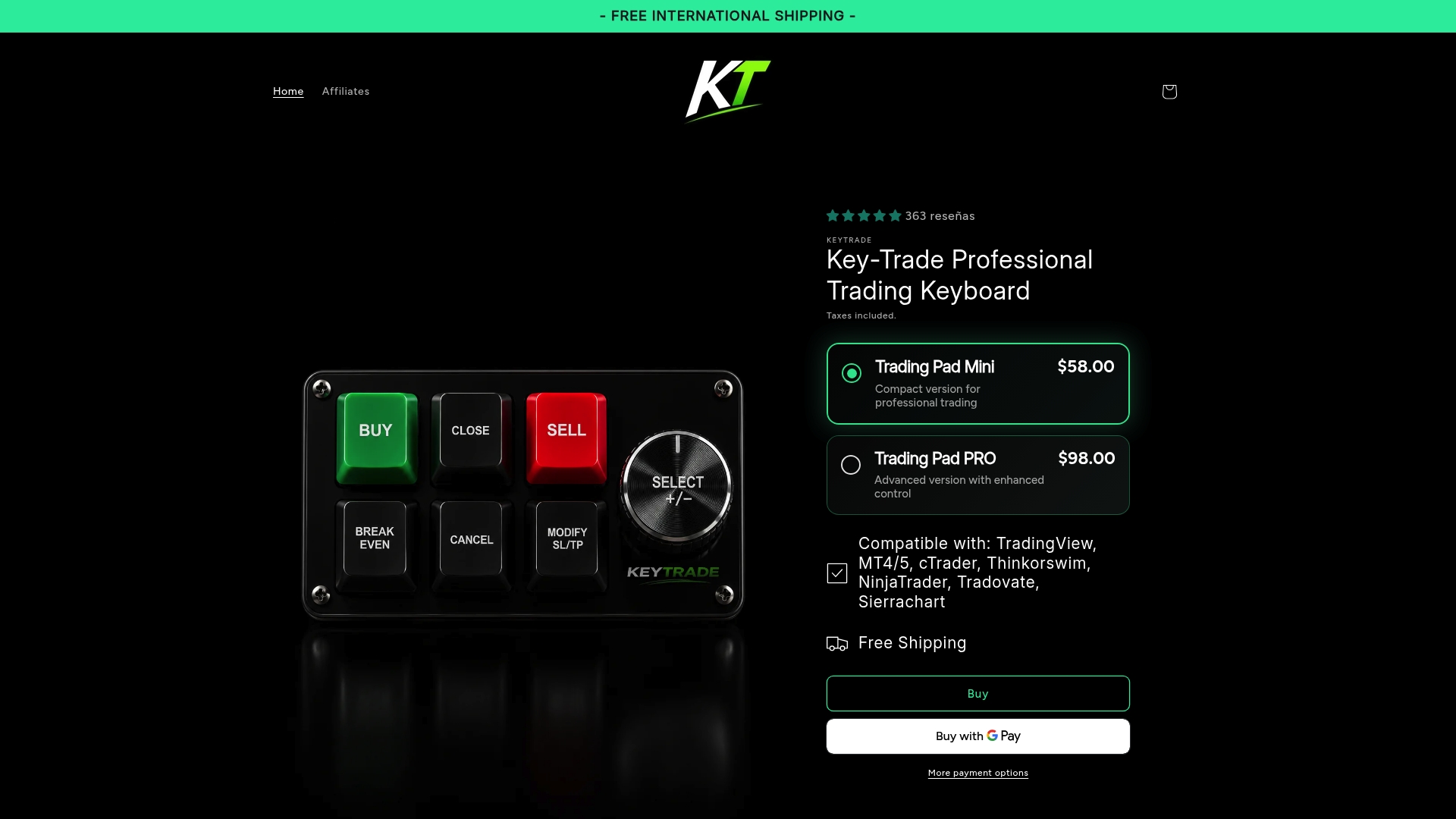
Every rule covered above, from position sizing to the daily loss cutoff, still has to exist in your head or your written plan; a keypad doesn’t build that discipline for you. What it does is remove friction once the plan is set: dedicated buttons for predefined position sizes, one-touch partial closes, and a “panic close” button that flattens everything the instant your daily loss limit hits. Programmable keys integrate with platforms including TradingView, MetaTrader 4 and 5, cTrader, NinjaTrader, SierraChart, Thinkorswim, and Tradovate, letting you execute the exact workflow described here without hunting through software menus mid-trade. A keypad reduces execution lag and manual error. It does not reduce market risk, and it will not replace a written trading plan. If faster, more precise order execution sounds like the missing piece in your current setup, explore Key-Trade’s keypad lineup and see which model matches your platform.
Sources
Before funding any account, verify your broker’s standing through FINRA BrokerCheck and review SIPC’s investor protections. For deeper strategy explainers, Investor.gov’s day trading risk guide and Fidelity’s intraday trading overview cover the fundamentals well.
This article is general information, not a substitute for advice from a qualified financial advisor. Consult a qualified financial professional about your own circumstances before acting on anything here.
- Investor
- Intraday trading - Fidelity
- Intraday Definition - Investopedia
- Intraday Trading Workflow: Alerts, Entries, Risk
FAQ
How do you do intraday trading step by step?
Run pre-market prep, build a watchlist of 5 to 10 names, wait for a predefined entry trigger, manage the trade with structure-based stops, close everything before the market shuts, then journal the result.
What is the 3-5-7 rule in day trading?
Definitions vary by source, but a common version caps risk per trade at 3%, total exposure across open trades at 5%, and total daily loss is usually set as a fixed amount or percentage of account equity, used as a simple guardrail against overexposure.
What does “intraday trading” mean?
It means opening and closing a trading position within the same session, aiming to profit from short-term price moves rather than holding overnight.
Is intraday trading profitable?
It can be, but it’s high risk and time-intensive; most traders who reach consistent profitability need 12 to 24 months of structured, journaled practice, and many lose money due to leverage and poor discipline.
What tools do I need to start intraday trading?
A platform with real-time quotes, fast charting, reliable order routing, and a simulator mode covers the basics; programmable hardware like Key-Trade’s keypads can speed up execution once your strategy and risk rules are set.
Recommended
- Trading Desk Efficiency Improvement Guide for Pros – Key-Trade Trading Keyboards
- How to Execute Trades Faster on TradingView in 2026 – Key-Trade Trading Keyboards
- TradingView Risk Management Setup Tips for Pro Traders – Key-Trade Trading Keyboards
- TradingView Trade Management Tools: 2026 Guide – Key-Trade Trading Keyboards