

YouTube.com Alternatives for Traders: Choose by Goal
TL;DR:
- Using social platforms like TikTok and Twitch helps traders reach a wider audience efficiently. Hosting demos and training content on ad-free services like Vimeo or Wistia safeguards conversions and provides better privacy. The Split Strategy recommends combining discovery reach with secure hosting to optimize marketing and sales efforts.
The right platform depends entirely on what you’re trying to accomplish. For discovery and live community, TikTok and Twitch are your primary options. For ad-free, brand-controlled hosting of demos and training content, Wistia or Vimeo are the professional standard. For maximum autonomy from centralized moderation, Odysee and PeerTube exist, though with real trade-offs.
The Split Strategy: Use social platforms (TikTok, Twitch) for reach and discovery. Host your critical trading demos, onboarding videos, and proprietary content on ad-free platforms (Wistia, Vimeo) so prospects stay on your site, not YouTube’s recommendation engine.
Quick shortlist by objective:
- Reach and discovery: TikTok, Twitch
- Brand-controlled hosting: Wistia, Vimeo
- Decentralized autonomy: Odysee, PeerTube
YouTube is free but inserts competitor ads and related videos that pull viewers away from your landing page at exactly the wrong moment.
Table of Contents
- Which YouTube alternative fits your goal?
- Quick comparison: six platforms at a glance
- Hosting service vs. distribution network: why the difference matters
- Decentralized options: what Odysee and PeerTube actually offer
- How to migrate content off YouTube: a practical checklist
- Monetization and analytics: what to expect by platform type
- U.S. content policy and moderation: what traders need to know
- Key Takeaways
- Why Key-Trade recommends the Split Strategy
- Useful sources
- FAQ
Which YouTube alternative fits your goal?
Match the platform category to your actual business objective before evaluating features.
Audience growth and discovery. Algorithmic platforms like TikTok surface content to people who don’t follow you yet. That’s the core value. Short-form clips demonstrating your trading setup, keypad workflow, or market commentary can reach thousands of traders who would never find your website organically. YouTube remains the dominant search-based discovery channel, but TikTok’s algorithm-first model is now a genuine competitor for top-of-funnel reach.
Live community and two-way engagement. Twitch supports long-form live sessions with subscriptions, interactive chat, and community tools built specifically for sustained viewer relationships. For traders running live analysis sessions or Q&A streams, Twitch’s infrastructure is purpose-built for that format.

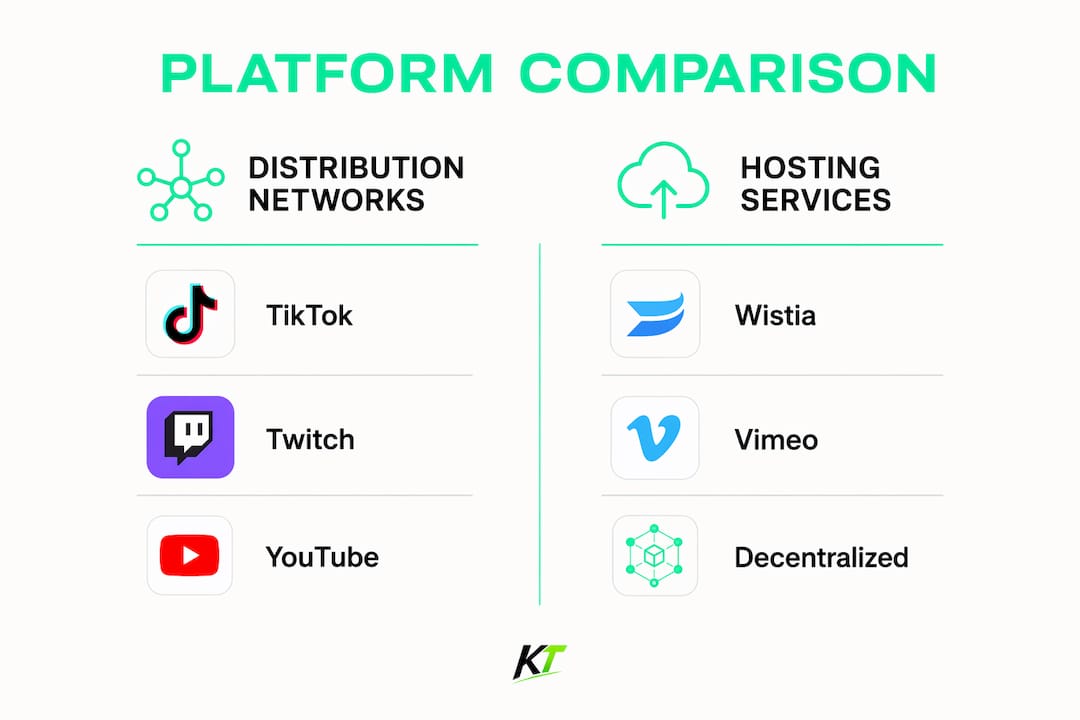
Professional demos and conversion. Wistia and Vimeo are not distribution networks. They’re hosting services. Experts recommend both for professional hosting where brand control and analytics matter. No ads, no competing content in the sidebar, no recommendation engine pulling your prospect toward a competitor’s video.
Autonomy from centralized moderation. Odysee and PeerTube offer creator control and censorship resistance. The trade-off is a smaller, niche audience and fewer business integrations.
Pro Tip: Don’t pick one platform for everything. The traders who get the most out of video use social platforms for top-of-funnel reach and a dedicated host for on-site conversion content. Trying to do both jobs with one platform means doing neither well.
Quick comparison: six platforms at a glance
| Platform | Best For | Discovery / Reach | Live Streaming | Ad-Free Hosting | Monetization | Analytics | Cost | Moderation |
|---|---|---|---|---|---|---|---|---|
| TikTok | Short-form discovery | Very high (algorithmic) | Yes (limited) | No | Creator fund, gifts | Basic | Free | Centralized, strict |
| Twitch | Live community | High (live-first) | Yes (core feature) | No | Subscriptions, bits | Moderate | Free | Centralized |
| Wistia | Business hosting | Low (no discovery) | No | Yes | Gated/paywall | Deep (heatmaps, CRM) | Paid subscription | Minimal (you control) |
| Vimeo | Pro hosting / events | Low | Yes (paid plans) | Yes | Direct sales | Strong | Paid subscription | Minimal (you control) |
| Odysee | Decentralized reach | Moderate | Limited | Partial | Crypto tips, LBC | Basic | Free / optional | Decentralized |
| PeerTube | Self-hosted autonomy | Very low | Instance-dependent | Yes (self-hosted) | None native | Minimal | You control | None centralized |
Key trade-offs that matter specifically for trading content:
- YouTube embeds on landing pages show related videos after playback, creating referral leakage and increasing bounce rate.
- Lightweight embed players protect Core Web Vitals; heavy social embeds can degrade page load scores on high-performance trading sites.
- Wistia and Vimeo provide privacy controls (password protection, domain restrictions) that social platforms don’t offer.
- Bandwidth caps on paid hosting plans are a real budget consideration for libraries of high-resolution trading demos.
Hosting service vs. distribution network: why the difference matters
Most traders conflate these two categories, and that mistake costs conversions.
A distribution network (TikTok, Twitch, YouTube) is built to maximize reach. The algorithm decides who sees your content. The player is designed to keep viewers on the platform, not on your site. After your video ends, the platform serves related content, often from accounts you’d rather your prospect not visit.
A hosting service (Wistia, Vimeo) is built to keep viewers on your page. Vimeo offers an ad-free player, password protection, time-coded comments, and enterprise collaboration tools. Wistia goes further for marketing: heatmaps, viewer-level data, and direct CRM integrations that feed lead-nurturing workflows. Neither platform has a recommendation engine working against you.
For trading businesses, the practical difference shows up in three places. First, onboarding videos embedded on a product page should never send a new buyer to a competitor’s content. Second, password-protected strategy videos or paid training need access controls that YouTube simply doesn’t provide. Third, time-coded comments and granular access controls protect intellectual property when sharing strategy reviews with a team.
Pro Tip: If you’re embedding a product demo for a trading keypad on your landing page, use Wistia or Vimeo. A YouTube embed there is handing your prospect a remote control pointed at your competitors.
Decentralized options: what Odysee and PeerTube actually offer
Creators choose Odysee and PeerTube primarily to escape centralized algorithmic moderation, not because the platforms offer superior reach or monetization. That’s an important distinction.
Odysee runs on the LBRY protocol and offers crypto-based tipping and some monetization tools. Its global traffic rank sits around 7,039 (Similarweb), which is meaningful for a decentralized platform but a fraction of YouTube’s reach. PeerTube is federated and self-hosted, meaning you run your own instance or join an existing one. There’s no central discovery engine, no native monetization, and analytics depend entirely on what your instance supports.
For trading publishers: Decentralized platforms work well as an archive layer for market commentary or opinion content you want preserved outside centralized systems. They are a poor choice as the primary host for paid training or product demos where conversion tracking, CRM integration, and reliable uptime matter.
Pro Tip: Think of Odysee or PeerTube as a backup broadcast channel, not a sales tool. Publish there for autonomy; host for conversion elsewhere.
How to migrate content off YouTube: a practical checklist
- Audit your existing videos and analytics. Identify which videos drive traffic and which are embedded on landing pages or product pages.
- Segment by purpose. Discovery content (market commentary, short tutorials) can stay on YouTube or TikTok. Demos, onboarding videos, and paid training should move to a hosting service.
- Export metadata and captions. Download your YouTube captions (SRT files) and video descriptions before migrating. Captions protect SEO and accessibility on the new host.
- Set up your hosting account and configure privacy controls. Choose your plan based on library size and bandwidth needs. Review bandwidth caps before committing.
- Upload, embed, and test player performance. Confirm load times on your actual landing pages. A slow embed hurts Core Web Vitals and frustrates traders on fast connections.
- Update landing pages and implement a canonical/redirect strategy. For any YouTube video that ranks in search, keep the YouTube version live and add a canonical reference or 301 redirect where appropriate.
- Repoint subscriptions and update all links. Update email sequences, social bios, and any course platform links that pointed to the old YouTube URLs.
- Communicate the change to your audience. A short post or email explaining where to find content prevents confusion and preserves watch time on the new host.
For a small library (under 20 videos), expect one to two weeks for a clean migration. A full course library with captions, redirects, and CRM reconnection typically takes four to six weeks.
Monetization and analytics: what to expect by platform type
Social platforms (TikTok, Twitch) offer native creator monetization through ads, tipping, and subscriptions. These tools are discovery-friendly but provide limited viewer data for conversion funnels. You’ll know view counts and rough demographics, but not which viewers watched 80% of your demo and then visited your product page.
Hosting services change that equation. Wistia provides heatmaps and viewing metrics that pass directly to marketing systems for lead nurturing. You can see exactly where viewers drop off, which segments they rewatch, and tie that behavior to individual contacts in your CRM. For a trading hardware business running product demos, that data directly improves conversion. Vimeo’s enterprise plans add direct sales and paywall tools for gated training content.
Decentralized platforms offer sparse analytics and limited monetization infrastructure. Odysee has crypto tipping; PeerTube has essentially nothing native. For archive publishing, that’s acceptable. For conversion-focused content, it’s a significant gap.
U.S. content policy and moderation: what traders need to know
Platform moderation policies vary significantly, and the differences matter when you’re publishing proprietary trading strategies or market commentary.
- TikTok and Twitch enforce centralized content policies. Financial content, trading strategy promotion, and certain market commentary can trigger review or removal without warning. Keep backup copies of everything.
- Wistia and Vimeo give you control. You set access permissions, decide who can view, and aren’t subject to algorithmic moderation. Review each platform’s terms of service for restrictions on financial content before uploading paid training.
- Privacy and data for paid training: If you’re gating access to strategy videos, store user authentication data on your own LMS or CRM, not solely on the video platform. SSO integration (available on Vimeo and Wistia enterprise plans) keeps access control in your hands.
- DMCA and takedown procedures: On centralized platforms, a DMCA claim can remove your content instantly. On self-hosted PeerTube, you control the response. For paid training with proprietary content, consult legal counsel on your terms of service before publishing.
- Practical step: Before migrating any paid course or strategy content, review the destination platform’s terms of service for financial content restrictions and confirm your data-handling obligations under applicable U.S. privacy frameworks.
Key Takeaways
The Split Strategy is the most practical framework for trading businesses: use social platforms for reach and host conversion-critical content on ad-free platforms.
| Point | Details |
|---|---|
| Match platform to objective | Social platforms for discovery; hosting services for demos and paid training. |
| Ad-free hosting protects conversions | YouTube embeds show competitor content after playback; Wistia and Vimeo don’t. |
| Decentralized platforms are archive tools | Odysee and PeerTube offer autonomy but lack the analytics and integrations needed for conversion. |
| Migration takes planning | Segment videos by purpose, export captions, test embed performance, and update all links before going live. |
| Analytics quality varies sharply | Wistia and Vimeo provide heatmaps and CRM-ready data; social platforms offer basic aggregate metrics only. |
Split Strategy in one line: Publish for reach on social; host for conversion on ad-free platforms.
Why Key-Trade recommends the Split Strategy
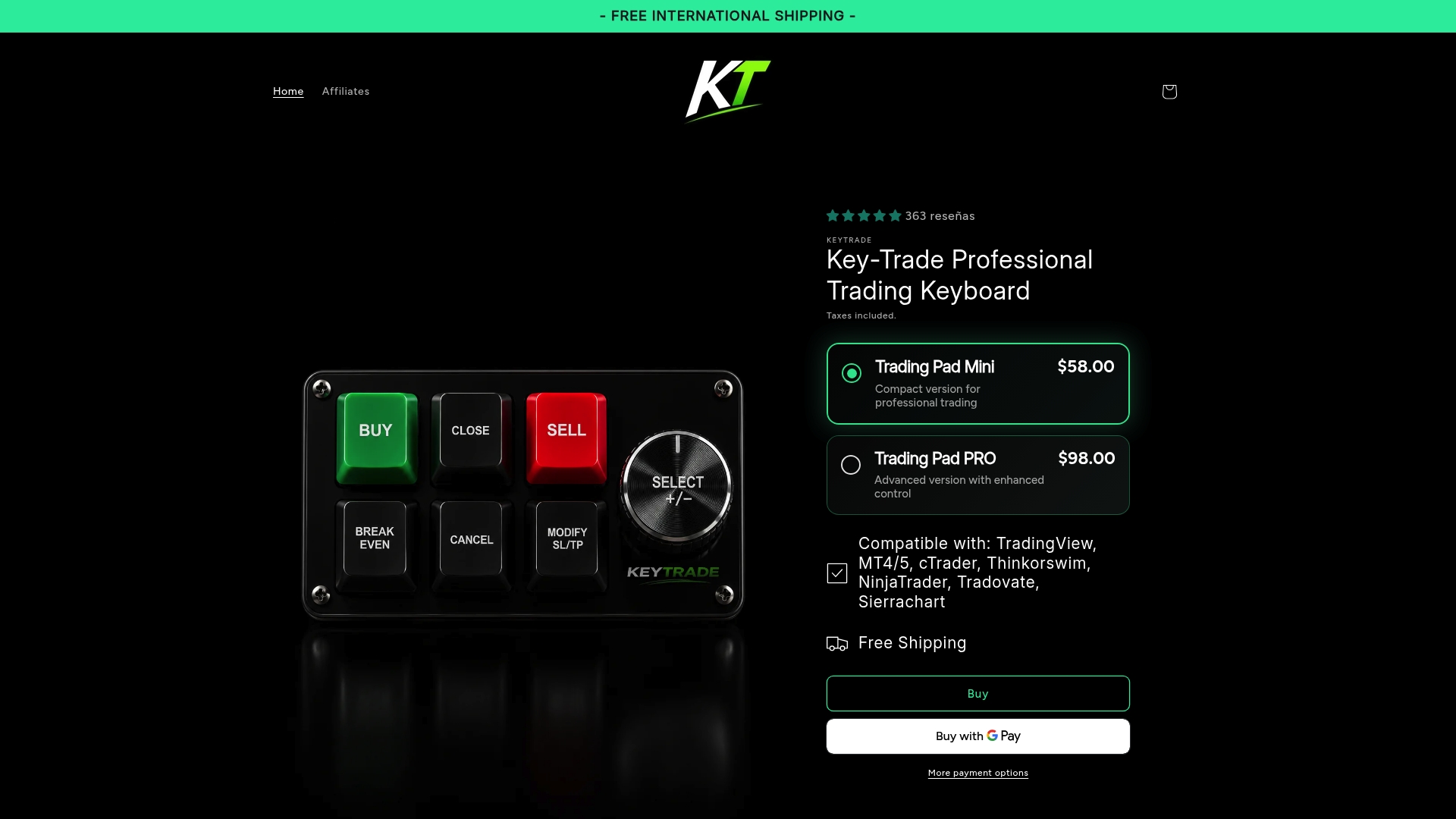
The traders who buy and use Key-Trade keypads are not casual viewers. They’re professionals evaluating a hardware purchase that changes how they execute orders on TradingView, MetaTrader, cTrader, and other platforms. A product demo for that audience needs to show the device in action, clearly, without a competitor’s ad playing before it or a “related video” pulling the viewer away at the moment of decision.
Key-Trade uses ad-free hosting for product demos and onboarding content precisely because the buyer’s attention is the asset. A clean embed on the product page, with no recommendation engine running in the background, keeps that attention where it belongs. For traders ready to see the hardware in action, the Key-Trade trading keyboard page hosts those demos directly.
Useful sources
- Vimeo — official feature docs for privacy controls, live events, and enterprise plans.
- Wistia — official docs for heatmaps, CRM integrations, and marketing analytics.
- Swarmify: YouTube Competitors — market commentary on platform trade-offs and the Split Strategy for businesses.
- Fourthwall: Best YouTube Alternatives — platform-by-platform breakdown covering Twitch, Odysee, and professional hosting options.
- Wikipedia: List of Online Video Platforms — comprehensive reference for traffic rankings and platform categories.
- PeerTube on GitHub — technical documentation for self-hosted federated video instances.
Swarmify and Fourthwall are strongest for market commentary and platform comparisons. Vimeo and Wistia official docs are the authoritative source for feature specifications and pricing tiers.
FAQ
What is the best YouTube alternative for professional traders?
For on-site demos and training, Wistia or Vimeo are the strongest choices because they offer ad-free hosting, privacy controls, and CRM-ready analytics. Use TikTok or Twitch for discovery and top-of-funnel reach.
How do I upload videos online without YouTube ads showing up?
Host your videos on Wistia or Vimeo instead of YouTube. Both platforms provide ad-free embeds with no recommendation engine, so viewers stay focused on your content.
Are decentralized video platforms like Odysee and PeerTube worth using?
They’re worth using as an archive or backup channel for content you want outside centralized moderation. For conversion-focused content like product demos or paid training, their limited analytics and monetization tools make them a poor primary host.
What is the Split Strategy for video hosting?
The Split Strategy means publishing discovery content (short clips, market commentary) on social platforms like TikTok or Twitch, while hosting demos, onboarding, and paid training on ad-free platforms like Wistia or Vimeo to protect conversions.
How long does a YouTube migration take?
A small video library (under 20 videos) typically takes one to two weeks to migrate cleanly. A full course library with captions, redirects, and CRM reconnection usually requires four to six weeks.
Recommended
- Top 6 tradekey.com Alternatives for 2026 – Key-Trade Trading Keyboards
- Why Traders Choose cTrader Platform: 2026 Guide – Key-Trade Trading Keyboards
- 5 Hardware Trading Alternatives 2026 – Key-Trade Trading Keyboards
- Best magickeys.trade Alternatives for Forex Traders in 2026 – Key-Trade Trading Keyboards