

What Is a Trading Journal and Why It Matters
TL;DR:
- A trading journal records detailed reasons and emotions behind each trade to improve decision-making. It accelerates pattern recognition and reveals psychological triggers hidden in profit data. Consistent journaling transforms raw experience into repeatable trading skills and better emotional control.
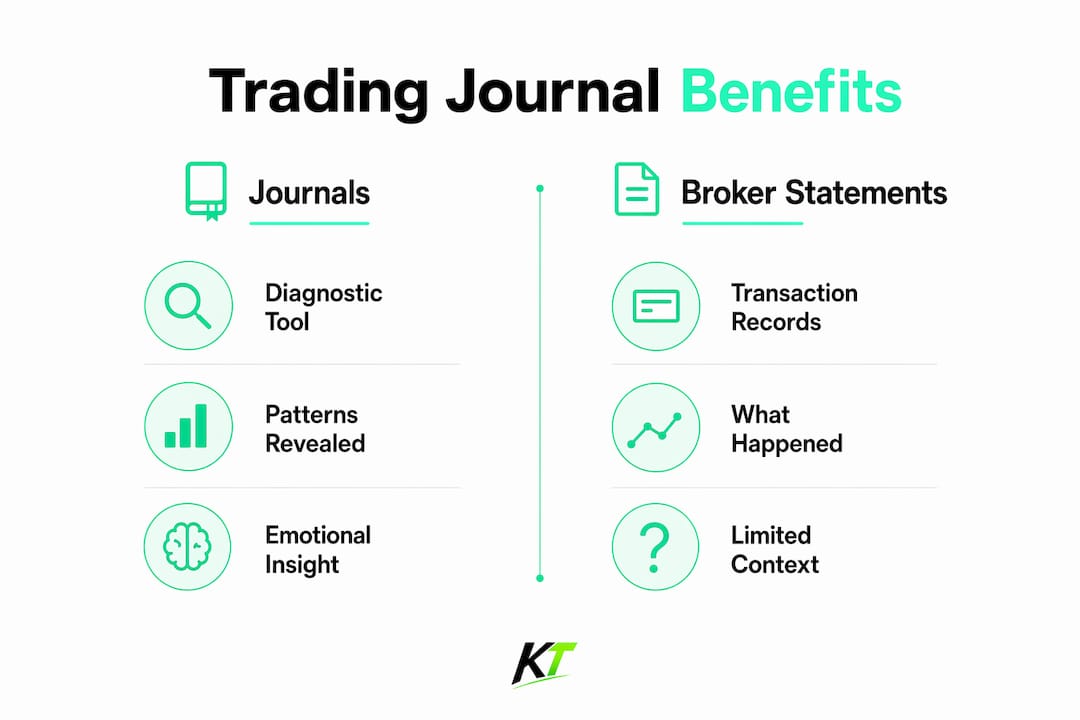
A trading journal is defined as a structured, trade-by-trade record that captures not just what happened, but why you made each decision, including your reasoning, emotional state, and rule compliance. Broker statements show your profit and loss. A trading journal shows your thesis, emotions, and execution details required to calculate expectancy and separate strategy flaws from execution errors. That distinction is the entire point. Traders who skip journaling are flying blind, reviewing outcomes without understanding the decisions that produced them. The practice of keeping a trade log, sometimes called performance journaling in professional circles, is the single most reliable method for turning raw experience into repeatable skill.
What is a trading journal and how does it differ from a broker statement?
A trading journal is a diagnostic tool, not a record-keeping formality. Broker statements answer “what happened.” A journal answers “why it happened and whether you should repeat it.” That shift in perspective changes everything about how you learn from your trades.

The five core elements every journal entry must contain are: the trade setup and thesis, entry and exit prices, position size, rule adherence grade, and your emotional state before and after the trade. Without all five, you cannot distinguish between a good trade that lost money and a bad trade that got lucky. Both outcomes teach you nothing useful if you only look at the P&L column.
Journaling also forces you to articulate your reasoning before the market gives you feedback. Writing “I entered because price broke the 200-period moving average with volume confirmation” is fundamentally different from writing “I had a feeling.” The act of writing sharpens your thinking and creates a paper trail your future self can audit.
How does a trading journal accelerate pattern recognition?
Traders using structured journals identify recurring performance patterns in 1–2 weeks, while traders relying on memory alone may take over a year to spot the same patterns. That compression of the learning cycle is the most underappreciated benefit of journaling. Patterns that repeat 3–5 times become visible quickly when documented. Without documentation, those same mistakes persist unseen for months.
The reason memory fails traders is straightforward. Human memory rewrites itself to be coherent. After a losing week, your brain smooths over the specific moments where discipline broke down. A journal does not smooth anything over. It preserves the raw, uncomfortable details exactly as they were.
Journaling also surfaces patterns that raw P&L data never will. Consider these common examples made visible only through consistent documentation:
- Revenge trading after two consecutive losses. The journal shows a clear spike in position size on trade three after two red trades.
- Overtrading in the first hour. Entry timestamps reveal a cluster of low-quality setups between 9:30 AM and 10:00 AM.
- Exiting winners too early on Fridays. Weekly review shows average winner duration drops by 40% heading into the weekend.
- Ignoring stop-loss rules after a big winning day. Rule adherence scores drop measurably the session after a strong P&L day.
Pro Tip: Tag each trade with a setup type (breakout, pullback, reversal) from day one. After 30 trades, filter by tag and compare win rates. You will know within a month which setups you actually execute well versus which ones you only think you execute well.
What are the best practices for maintaining an effective trading journal?
The dual-review cycle is the most effective journaling structure for active traders. Daily entries take 5–10 minutes and capture emotional state, trade grade, and a brief narrative. Weekly reviews go deeper, analyzing metrics like win rate, average risk-to-reward, and rule adherence across all trades from that week. The daily entry keeps the data fresh. The weekly review finds the signal in the noise.
The five data points every journal entry must capture are listed below. Missing even one creates blind spots that undermine the entire review process.
- Trade thesis. Write one sentence explaining why you entered. If you cannot write it, you should not have taken the trade.
- Entry and exit prices with timestamps. Exact numbers, not approximations. Approximations introduce errors that compound over time.
- Position size and risk amount. This reveals whether your sizing is consistent or whether emotions are influencing your risk.
- Rule adherence grade. Score the trade from 1–10 based on how well it followed your written trading plan, independent of outcome.
- Emotional state. One or two words before entry (calm, anxious, bored, confident) and one or two words after exit (relieved, frustrated, indifferent).
Professionals grade trades by rule adherence before considering financial outcome. This practice eliminates outcome bias, the cognitive error that makes you feel a losing trade was a bad trade and a winning trade was a good trade. A trade that followed every rule and lost money is a good trade. A trade that broke every rule and made money is a bad trade. Your journal must reflect that distinction.
Pro Tip: Keep a “parking lot” section in your journal for thoughts that arise mid-session but do not belong in a trade entry. Market observations, emotional spikes, and rule questions all go there. Review the parking lot during your weekly session. Patterns in your off-trade thinking are just as revealing as patterns in your trades.
The table below contrasts two common journaling approaches by their practical tradeoffs.
| Approach | Strengths | Weaknesses |
|---|---|---|
| Spreadsheet journal | Full customization, no subscription cost | High manual effort, easy to abandon |
| Automated broker sync | Low friction, consistent data capture | Misses narrative depth and emotional context |
The most valuable journaling insights come from free-text narrative notes, not from automated data fields. Automation handles the numbers. You handle the psychology. Both layers are necessary, and neither replaces the other.
Why does a trading journal matter for managing trading psychology?
Journaling reveals emotional triggers that statistics alone cannot detect. A trader whose win rate looks acceptable may be masking a pattern of large losses driven by anger or overconfidence. The numbers hide it. The narrative exposes it.
Immediate journaling within 5 minutes of closing a trade preserves the accurate emotional and logical state critical for effective review. Waiting even a few hours allows memory to rewrite the experience. After a week, the original reasoning is largely reconstructed rather than recalled. The journal entry made at the moment of the trade is the only reliable version.
“Trading journals are best viewed as objective compasses guiding traders through emotional challenges, not as ledgers of regret. The goal is not to punish yourself for losses but to build a data set that makes future decisions less emotional and more deliberate.”
That reframe matters practically. Traders who approach their journal as a tool for self-punishment stop writing in it. Traders who approach it as a feedback system keep writing. The shift from reactive to data-driven decisions is what separates traders who improve year over year from those who repeat the same mistakes indefinitely.
How to implement a trading journal into your daily routine
Most traders quit journaling within one week because the system they chose was too complex. The fix is to start with the minimum viable journal. One sentence of thesis, one rule adherence score, and one emotional word per trade. That takes under two minutes. Complexity can be added after the habit is established, not before.
The following daily and weekly structure works for traders across all styles, from scalpers to swing traders:
- Before the session: Write your mental state and any market bias you are carrying into the day. This creates a baseline for post-session comparison.
- After each trade: Log the five core data points within five minutes of closing. Do not wait until end of day.
- End of session: Write two sentences. One on what you did well. One on what you would change.
- Weekly review (Sunday or Monday morning): Pull all trades from the week. Calculate win rate, average risk-to-reward, and rule adherence score. Identify the single biggest pattern, positive or negative, and write one sentence on what you will test next week.
- Monthly review: Compare this month’s rule adherence score to last month’s. Track whether your edge is improving, degrading, or stable.
Syncing broker data automatically removes the biggest friction point in journaling. Many platforms, including MetaTrader 4, MetaTrader 5, cTrader, and TradingView, allow trade history exports that feed directly into spreadsheet or dedicated journal tools. Automation handles the data. You add the narrative layer on top.
For traders using TradingView chart trading, annotating charts at the moment of entry and exit creates a visual record that complements written notes. A screenshot of the chart at entry, saved with the journal entry, is worth more than a paragraph of description written from memory.
Pro Tip: Focus your weekly review on one testable variable at a time. If you are testing whether your win rate improves when you skip the first 15 minutes of the session, track only that for two weeks. Changing multiple variables simultaneously makes it impossible to know what caused any improvement.
Key Takeaways
A trading journal is the most direct tool for converting trading experience into measurable, repeatable improvement.
| Point | Details |
|---|---|
| Journal vs. broker statement | Journals capture reasoning and emotions; broker statements only show profit and loss. |
| Pattern recognition speed | Structured journaling reveals recurring mistakes in 1–2 weeks versus over a year without it. |
| Rule adherence grading | Grade every trade on rule compliance before considering financial outcome to eliminate outcome bias. |
| Immediate entry timing | Log each trade within 5 minutes of closing to preserve accurate emotional and logical context. |
| Start simple | Begin with the minimum viable entry and add complexity only after the journaling habit is established. |
The one habit that separates serious traders from everyone else
At Key-trade, we work with traders across platforms including TradingView, MetaTrader 4 and 5, cTrader, and NinjaTrader. The single clearest differentiator between traders who improve and traders who plateau is not their strategy. It is whether they journal consistently.
The beginner friction point is real. The first week of journaling feels like extra homework with no immediate payoff. That feeling is exactly why most traders quit before the data gets useful. The patterns do not appear after five trades. They appear after 30, and they are unmistakable when you see them.
What I have observed repeatedly is that traders who stick with journaling for 60 days stop thinking of it as a chore. It becomes the part of the session they look forward to, because it is the only moment where they are in full control. The market cannot be controlled. Your documentation of how you responded to it can be.
The psychological shift that journaling produces is not motivational. It is structural. You stop making decisions based on how you feel and start making them based on what your data shows. That is not a mindset change. It is a process change, and process changes stick.
Journaling is not a beginner tool you graduate from. The traders I respect most have journals going back years. They treat those records the way a surgeon treats case notes: as the foundation of professional practice, not optional documentation.
— Key-trade
How Key-trade keyboards support your trading workflow
A well-kept journal requires fast, accurate trade execution so your entries reflect your actual decisions, not the slippage caused by slow order placement. Key-trade’s professional trading keyboard gives you programmable buttons for instant order execution, break-even moves, partial closes, and stop-loss adjustments across TradingView, MetaTrader 4 and 5, cTrader, NinjaTrader, and more.
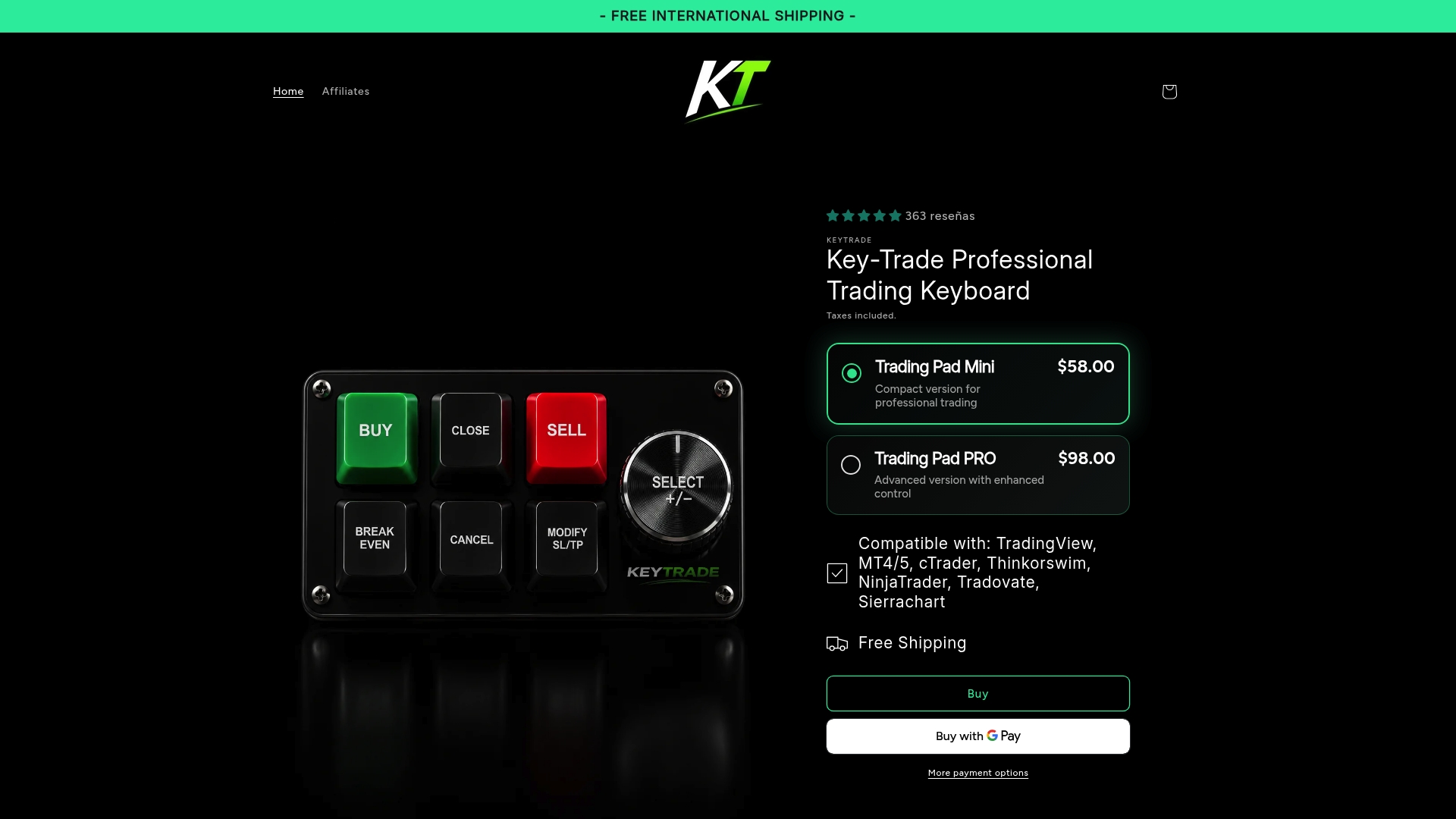
When execution is fast and precise, your journal entries reflect your strategy, not your reaction time. The Key-trade keypad removes the gap between decision and action, so what you log is what you actually intended. Traders using the trading keyboard and hotkey pad report cleaner trade data and fewer execution errors to explain away in their journals. That cleaner data makes the weekly review sharper and the patterns easier to act on.
FAQ
What is a trading journal used for?
A trading journal records each trade’s thesis, execution details, and emotional state to help traders identify patterns, measure rule adherence, and improve decision-making over time. It goes beyond profit and loss by capturing the reasoning behind every trade.
What should I include in a trading journal?
Every entry should include your trade thesis, entry and exit prices with timestamps, position size, a rule adherence grade, and your emotional state before and after the trade. Free-text narrative notes add the psychological layer that numbers alone cannot capture.
How often should I review my trading journal?
Daily entries take 5–10 minutes and should be completed within 5 minutes of closing each trade. Weekly reviews analyze metrics like win rate and rule adherence across all trades from that week, focusing on one testable variable at a time.
Can beginners benefit from keeping a trading journal?
Beginners benefit most from journaling because it compresses the learning cycle dramatically. Traders using structured journals identify recurring performance patterns in 1–2 weeks, compared to over a year without documentation.
Does a trading journal help with trading psychology?
Journaling directly improves trading psychology by revealing emotional triggers and behavioral patterns invisible in raw P&L data. Writing entries immediately after trades preserves accurate emotional context and shifts decision-making from reactive to data-driven.
Recommended
- What Is a Trading Desk? Explained for Professionals – Key-Trade Trading Keyboards
- TradingView Chart Trading: A Complete 2026 Guide – Key-Trade Trading Keyboards
- TradingView Trade Management Tools: 2026 Guide – Key-Trade Trading Keyboards
- Trading Desk Efficiency Improvement Guide for Pros – Key-Trade Trading Keyboards