

Traders: Platform Agnostic Reverse Position Hotkey With Keypad Tips
A reverse-position hotkey flips your current position by submitting an opposite-side order sized to reverse the position, full or partial, in one keystroke. It cuts the time between decision and execution compared with manual order entry, but most platforms default to a market order, so testing in simulation and adding safeguards before going live matters.
TL;DR:
- Most reverse hotkeys default to market orders, so testing in simulation and adding safeguards before live trading is essential.
- The reverse action uses tokens like Pos to define order size and SEND=REVERSE to automate submission of the opposite position.
- A reliable hotkey layout clusters actions and uses modifier keys or tactile feedback to prevent accidental trades during fast execution.
- Confirm order types, sizes, and interactions with attached OCO or ATM orders in a simulated environment before live deployment.
- Physical keypads designed for trading platforms can enhance safety and speed, especially when mapping reverse hotkeys to dedicated, tactile controls.
Table of Contents
- Step-by-step setup for a reverse-position hotkey
- Platform command patterns and how to read them
- Building a hotkey layout that holds up under pressure
- Testing checklist before you go live
- How programmable keypads handle reverse hotkeys
- When a reverse hotkey earns its place in your workflow
- A keypad built for reverse hotkeys and fast flips
- Where to check the official rules and documentation
- Sources
- FAQ
Step-by-step setup for a reverse-position hotkey
Every major platform builds this action the same way underneath, even when the menus look different. Follow this sequence and you can replicate it almost anywhere.
- Open the global hotkeys or shortcuts panel and create a new action, usually labeled “Reverse” or “Flip Position.”
- Set the size token to match your current position, often written as Share=Pos or an equivalent variable that reads your live quantity.
- Choose the time-in-force, routing destination, and whether the order requires manual send or transmits instantly.
- Pick the order type: market for speed, limit for price control, and save a default template if your platform supports one.
- Decide whether instant transmit stays on or off while you are still learning the mapping, and test the whole sequence in a simulated account first.
Interactive Brokers documentation describes the Reverse Position hotkey action as creating an opposite-side order sized to flip your current holding, noting that some configurations require a manual transmit step rather than an automatic send. That distinction between manual and instant transmit is the single most common source of a hotkey firing when a trader only meant to preview it.
Pro Tip: Build the reverse hotkey with instant transmit turned off for your first week, then flip the switch once the muscle memory feels automatic.
Platform command patterns and how to read them
Reverse hotkeys share a small vocabulary of tokens across platforms, and once you can read one script, you can adapt most others to your own keypad or software.
- Pos represents your current position size, so Share=Pos closes the exact quantity you hold.
- SEND=REVERSE or a similar flag tells the platform to submit the opposite side automatically once the size token resolves.
- Share=Pos*2 doubles the reversing order so the fill both closes the existing position and opens a new one of equal size in the other direction.
- ROUTE= and TIF= set the destination exchange or market maker and the time-in-force, which matter more on thinly traded symbols.
Trader forums circulate ready-made versions of these scripts. A thread on the Bear Bull Traders forum shows Share=Pos and SEND=REVERSE combinations used to flip long or short positions with one key, but contributors there also flag that many of these templates default to market orders and need testing before live use.
Community-sourced hotkey templates frequently rely on market orders by default, according to the same forum thread, which means a snippet built for a liquid large-cap can behave very differently on a stock with a wide spread. If you are mapping these tokens to a programmable keypad, assign each variable to a labeled macro button so the physical key mirrors the software logic exactly, and confirm how your platform handles partial fills or attached OCO orders before you rely on the reverse action in a live session.
Building a hotkey layout that holds up under pressure
A reverse hotkey is only as reliable as the layout around it. Cluster related actions so your hand does not have to jump across the keyboard mid-trade, and use a modifier layer, such as holding Shift or Alt, for anything that sends a live order.
- Keep your first hotkey set small: buy, sell, flatten, cancel-all, and reverse, then expand once those five are automatic.
- Practice new mappings in a simulated account before touching a funded one.
- Use hardware feedback such as LEDs or distinct tactile switches to confirm which action a key triggers before you press it.
- Write down your mapping in a simple reference sheet and revisit it whenever you add a new hotkey.
Pro Tip: Assign reverse to a key you cannot reach without a deliberate stretch, not the one your fingers rest on by default.
Testing checklist before you go live
Run through this sequence in a paper or simulated account for several sessions before enabling any reverse hotkey on a funded one.
- Confirm the order type and size the hotkey submits matches what you configured, not just what the label says.
- Test behavior when only part of your position has filled, since a reversal built on a stale size figure can overshoot.
- Check how the reverse action interacts with any attached ATM or OCO orders, since NinjaTrader’s documentation notes these interactions can affect a reverse order’s outcome.
- Bind flatten and cancel-all to keys you can hit without looking, as your emergency exit.
- Keep confirmation prompts on during your first sessions, and add a price offset or layered send for anything with a wide spread.
Experienced traders often recommend starting with a five-button core set, buy, sell, flatten, cancel-all, and reverse, and drilling it in simulation until each press is automatic, according to a NinjaTrader productivity guide.
How programmable keypads handle reverse hotkeys
A physical keypad turns the same software logic into a dedicated button instead of a key combination buried in a menu. That separation matters because a labeled, tactile key is harder to hit by accident than a shortcut layered under three modifiers on a standard keyboard.
Mapping a reverse action to a keypad button follows the same tokens as the software version: size, order type, transmit behavior, all assigned to one physical control. Many devices support a hold-and-press safety layer, so the button only fires after a deliberate two-step motion, and multiple saved profiles let you switch between platforms like TradingView, MetaTrader, or NinjaTrader without rebuilding the mapping each time. Before committing, check that the device supports your platform’s driver, that profiles export and import cleanly, and that you can still test the mapping in simulation before it touches a live account.

When a reverse hotkey earns its place in your workflow
Reverse hotkeys make sense for scalps, quick strategy flips, and fast reactions to a signal you have already validated. They are a poor fit on illiquid names, wide-spread instruments, or any setup you have not drilled enough to trust your hand over your hesitation. A confirmation prompt or a modifier key is a small price for avoiding an accidental flip on a position you meant to hold.
A reverse hotkey rewards preparation and punishes improvisation in equal measure.
— key-trade
A keypad built for reverse hotkeys and fast flips
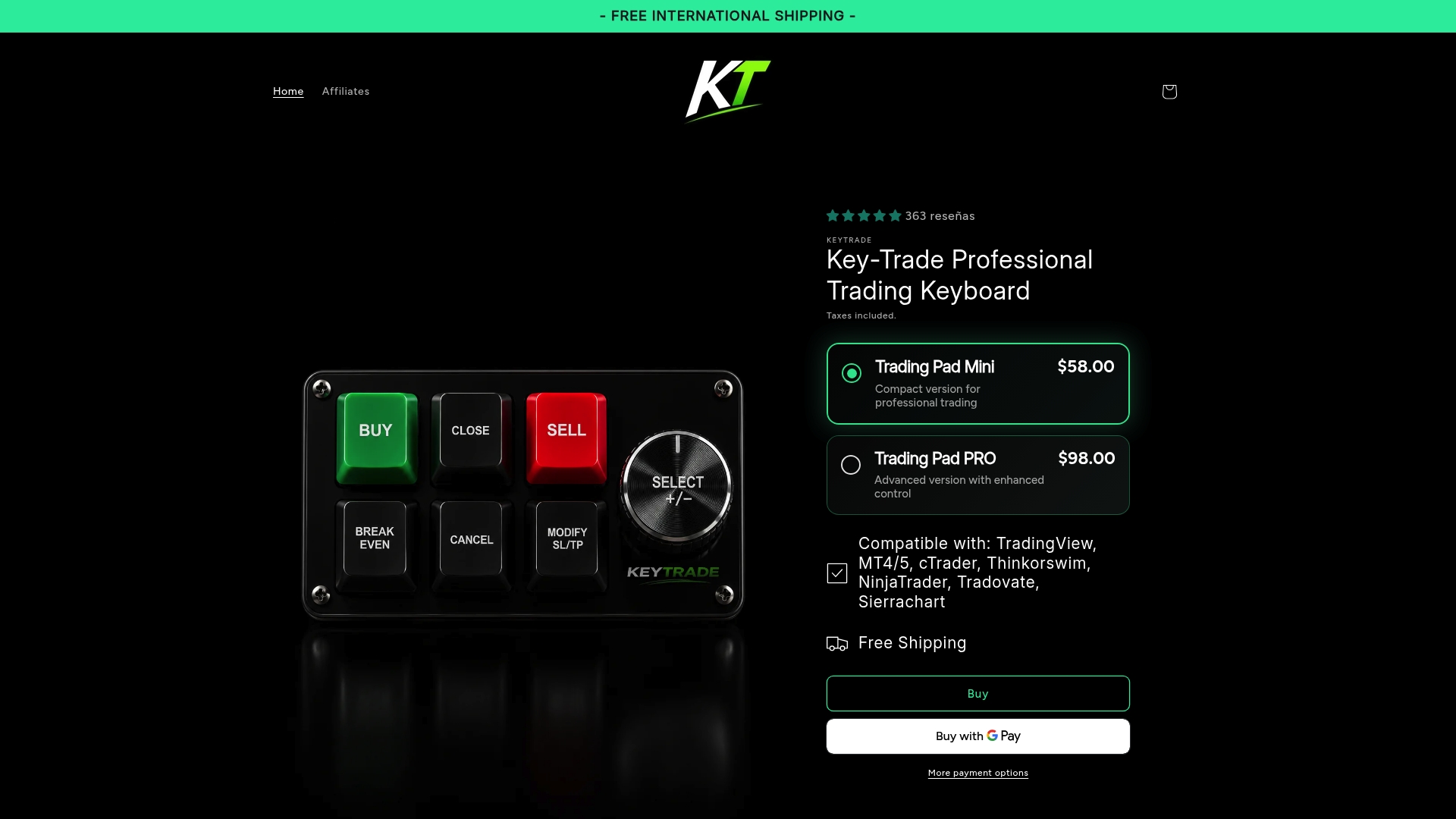
The Key-Trade Professional Trading Keyboard is built around plug-and-play profiles that map reverse, flatten, and cancel-all to dedicated keys across platforms including TradingView, MetaTrader, NinjaTrader, and Tradovate, without any coding.
- Check the product page for your platform’s compatibility before ordering.
- Look for the profile editor and confirm it supports the size and transmit settings you use.
- Test any new mapping in simulation first, on the keypad the same as you would in software.
Browse the full lineup and find the layout that fits your setup.
Where to check the official rules and documentation

Keep Interactive Brokers’ hotkey guide and your platform’s own command reference handy. For broker oversight and market structure questions, the SEC and FINRA sites are the primary references.
Sources
- Hotkey Actions
- Trading with hot keys (NinjaTrader)
- Hotkey command to cover either LONG / SHORT position - Bear Bull Traders forum
- BookTrader Hotkeys - Documentation
FAQ
What is a reverse trading position?
A reverse position means closing your current holding and immediately opening a new position of the same size in the opposite direction. A reverse-position hotkey automates that into a single order, sized to your existing quantity as documented by Interactive Brokers.
What are hotkeys for trading?
Trading hotkeys are keyboard shortcuts mapped to specific order actions, such as buy, sell, flatten, or reverse, so you can execute without clicking through an order ticket. Platforms like NinjaTrader let you assign these actions to custom key combinations or programmable hardware.
How do I close an options position with a hotkey?
Most platforms use a flatten or close hotkey that submits an order equal to your current contract quantity in the opposite direction, similar to how a reverse hotkey works but without opening a new position. Check your platform’s hotkey documentation for the exact token, since options contracts sometimes require a separate close action from the equity or futures reverse command.
What happens if you reverse a position in a trade?
Reversing a position closes your existing order and opens a new one of equal size in the opposite direction, effectively flipping your market exposure in one action. NinjaTrader’s documentation notes this typically submits as a market order by default, which can matter on wide-spread instruments.
Should I test a reverse hotkey before using it live?
Yes, testing in a simulated account for several sessions is the standard recommendation before enabling any reverse hotkey on a funded account. Forum-sourced command templates in particular often default to market orders, so confirming behavior in simulation first helps avoid unexpected fills.