

cTrader Risk Management Tools List for Prop Traders
TL;DR:
- cTrader offers built-in risk tools like Trailing Stop and Break-Even, plus third-party plugins to enforce limits and optimize position sizing. Combining native controls with plugins such as TradeGuard and Risk Manager Pro provides automated protection against excessive drawdowns. Proper setup, continuous monitoring, and manual discipline remain essential for prop firm trading success.
cTrader risk management tools are defined as the platform’s built-in protective features combined with third-party plugins that automate position sizing, enforce loss limits, and maintain trading discipline. The cTrader risk management tools list every serious trader needs covers native controls like Trailing Stop, Break-Even, and Multi-Level Take Profit, plus advanced plugins like TradeGuard and Risk Manager Pro. Together, these tools form a complete risk assessment system that protects capital without removing the trader from the decision-making process. Prop firm traders especially depend on this combination, since a single uncontrolled loss can end a funded account.
1. What built-in cTrader risk management tools are available?
cTrader ships with several native risk controls that work server-side, meaning they stay active even after you log out. This is a critical distinction from client-side tools that stop working the moment your platform closes.
The core built-in features include:
- Trailing Stop: Automatically moves your stop loss as price moves in your favor, locking in profit without manual adjustment.
- Break-Even: Shifts your stop loss to your entry price once a trade reaches a defined profit level, eliminating downside risk on that position.
- Multi-Level Take Profit: Lets you set multiple profit targets on a single trade, so you can scale out of positions systematically.
- Margin and Free Margin Indicators: Displayed in real time on the trading panel, these show how much of your account is committed and how much remains available.
These tools provide essential protection for any cTrader trade management workflow. The server-side execution means your Trailing Stop or Break-Even will trigger correctly even during a connectivity issue on your end.
Pro Tip: Combine native server-side tools with manual margin checks every 30 minutes during active sessions. Automation handles the mechanics, but you catch the context errors automation cannot.

2. Top third-party risk management plugins for cTrader
Risk management plugins do not generate trade signals. They enforce discipline and help traders survive long term. That distinction matters because traders who treat plugins as signal generators misuse them entirely.
TradeGuard
TradeGuard enforces daily and total drawdown limits by automatically blocking further trading once a threshold is breached. Key features include:
- Daily drawdown limit with automatic trading halt
- Maximum total drawdown enforcement
- Centralized control over multiple CBots running simultaneously
- Circuit breaker that stops all activity, including automated robots, after a loss limit is hit
TradeGuard is built for prop firm and copy trading setups where multiple accounts or strategies run in parallel. Its centralized control panel makes it the most practical choice for traders managing more than one position stream.
Risk Manager Pro
Risk Manager Pro delivers real-time lot size calculation based on your defined risk percentage, removing the mental math that causes sizing errors under pressure. Its feature set includes:
- Risk-based lot calculation updated in real time
- Multiple partial Take Profit and Stop Loss levels per trade
- Auto Break-Even that triggers at a user-defined profit threshold
- Trailing stop automation with configurable step sizes
- On-chart drawdown monitoring aligned with prop firm rules
This plugin consolidates what would otherwise require four or five separate manual steps into a single panel. For active day traders running five or more positions per session, that consolidation is the difference between consistent execution and costly mistakes.
Position Risk Manager
Position Risk Manager adds dynamic position sizing with a hard risk lock that physically prevents new trades once your daily loss limit is reached. Additional features include:
- Daily loss guard with hard stop enforcement
- DCA (Dollar Cost Averaging) protection to prevent runaway averaging down
- Intuitive interface built for institutional-grade risk control
- Multi-layered protections that stack on top of native cTrader tools
The DCA guard is particularly valuable. Uncontrolled averaging down is one of the most common ways funded traders blow accounts, and this plugin removes that temptation entirely.
3. How cTrader tools support prop firm and funded traders
Prop firm trading operates under strict drawdown rules that most retail traders never encounter. A breach of daily or maximum drawdown limits ends the challenge or funded account immediately, with no appeal.
Risk limits of 0.5%–2% per trade represent the standard range recommended by prop firm mentors and risk coaches. Staying within that range requires automated enforcement, not willpower, because emotional pressure during a losing streak makes manual discipline unreliable.
The most critical feature for funded traders is automated hard risk locks that stop all trading when defined limits are hit. These circuit breakers remove emotional bias and prevent revenge trading, which is the single most common cause of funded account failure.
Automated circuit breakers do not just protect your account balance. They protect you from yourself during the moments when discipline is hardest to maintain. A prop firm does not care why you exceeded the drawdown limit. The circuit breaker does not care either. That consistency is exactly what makes it effective.
Combined daily P&L monitoring must include unrealized and closed trades together. Tracking only closed trades creates a blind spot where floating losses push you past the drawdown limit before any alert fires. Plugins like TradeGuard and Risk Manager Pro account for both, which is why they align with institutional standards.
Key practices for prop firm traders using cTrader risk tools:
- Set hard daily loss limits at or below the prop firm’s stated maximum
- Monitor combined floating and closed P&L, not just realized results
- Maintain a margin buffer above 500% where possible
- Verify all plugin settings on a demo account before going live
- Never disable circuit breakers mid-session, regardless of market conditions
4. Common pitfalls when using cTrader risk tools
The most widespread misuse of risk tools is the “set and forget” approach. Traders who set risk parameters once and never revisit them are exposed to market condition changes that make their original settings inadequate.
Broker-related conflicts create a second category of problems. Minimum stop distance requirements can conflict with automatic lot sizing, causing trade rejections that leave positions unprotected. Some brokers also impose minimum volume restrictions that interact poorly with risk-based lot calculators. You need to test your specific broker’s constraints before relying on any plugin in live conditions.
Pro Tip: Run every risk plugin configuration on a demo account for at least two full trading weeks before applying it to a live or funded account. Market conditions change, and your settings need to survive volatility spikes, not just normal sessions.
Common pitfalls to avoid:
- Relying on automation without checking margin level and floating P&L manually
- Ignoring broker minimum stop distance rules when configuring lot size plugins
- Using identical risk settings across scalping, day trading, and swing trading strategies
- Disabling Break-Even or Trailing Stop during high-impact news events without a manual plan
- Forgetting to update risk percentages after account balance changes significantly
Setting Stop Loss and Take Profit levels before entering any trade remains the single most critical manual step, regardless of which plugins you run. No plugin compensates for entering a trade with no defined exit.
Pro Tip: Configure partial TP levels differently by style: scalpers benefit from a single tight TP, day traders from two levels at 1:1 and 1:2, and swing traders from three levels spread across larger price targets.
Key Takeaways
The most effective cTrader risk management approach combines server-side native tools with advanced third-party plugins like TradeGuard, Risk Manager Pro, and Position Risk Manager to enforce discipline and protect capital automatically.
| Point | Details |
|---|---|
| Native tools run server-side | Trailing Stop, Break-Even, and Multi-Level TP stay active after logout, protecting open trades. |
| Plugins enforce hard limits | TradeGuard and Risk Manager Pro block trading automatically when daily or max drawdown is breached. |
| Prop firm rules require floating P&L tracking | Monitor unrealized and closed P&L together to avoid unexpected drawdown breaches. |
| Set exits before every entry | Defining Stop Loss and Take Profit before placing a trade is the most critical manual risk step. |
| Test all settings on demo first | Broker constraints and market conditions must be verified before applying plugin configs to live accounts. |
The tools work. The discipline is still yours
After working closely with traders across prop firm challenges and live funded accounts, one pattern stands out clearly. The traders who fail are rarely the ones with the worst tools. They are the ones who trust their tools completely and stop paying attention.
Circuit breakers are genuinely valuable. They remove emotional bias at the exact moment when bias is most dangerous. I have seen traders keep funded accounts alive through brutal drawdown periods specifically because a hard risk lock stopped them from making a third bad trade after two consecutive losses. That is real, measurable protection.
What I find underappreciated is the combination approach. Native cTrader tools handle the mechanics reliably. Third-party plugins like TradeGuard add the institutional-grade enforcement layer that the platform alone does not provide. Using both together gives you redundancy. If one layer fails due to an API issue or a broker constraint, the other layer still holds.
The traders who get the most from this trading desk setup treat their risk tools as a system, not a checklist. They review settings weekly, test changes on demo, and stay aware of their margin level throughout every session. Automation handles the execution. Awareness handles everything else.
— Key-trade
How Key-trade hardware fits your risk management workflow
Risk management in cTrader depends on speed as much as settings. When a position moves against you, the time between recognizing the problem and acting on it determines the outcome.
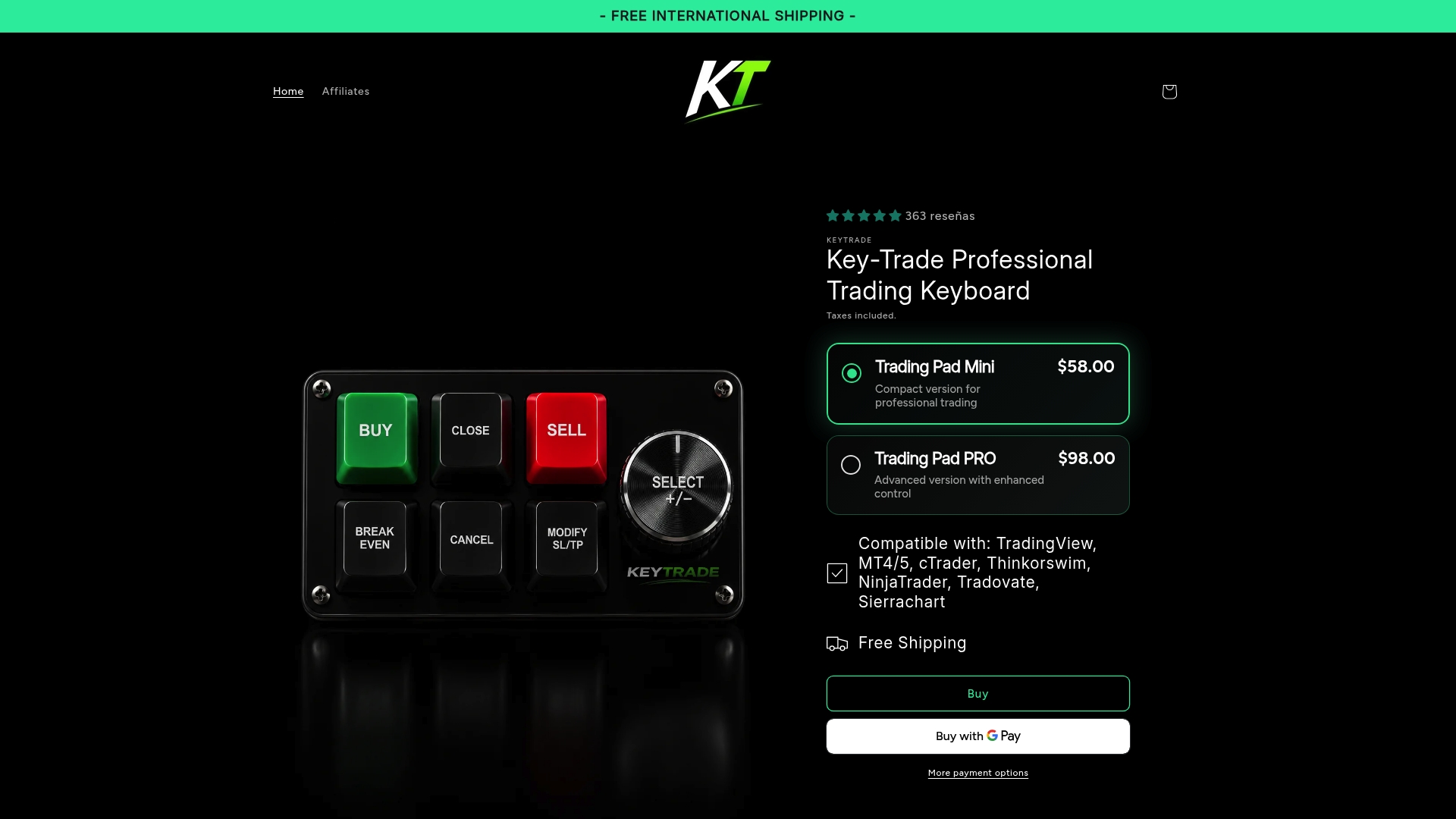
The Key-trade Professional Trading Keyboard puts your most critical risk actions on programmable physical buttons. Break-even, partial close, Stop Loss modification, and full position exit are all one press away, with no mouse movement and no menu navigation. For traders running multiple positions during fast-moving sessions, that speed matters. The keyboard integrates directly with cTrader, so every button press executes the exact action you programmed, every time. Traders using prop firm accounts particularly benefit from the reduced reaction time when a circuit breaker fires and manual intervention is needed immediately.
FAQ
What is the cTrader risk management tools list?
The cTrader risk management tools list includes native platform features like Trailing Stop, Break-Even, and Multi-Level Take Profit, plus third-party plugins like TradeGuard, Risk Manager Pro, and Position Risk Manager that automate drawdown enforcement and position sizing.
How do I set up risk management tools in cTrader?
Configure native tools directly from the order panel when placing trades, then install third-party plugins from the cTrader marketplace and set your daily loss limit, max drawdown threshold, and lot size risk percentage before going live.
What risk percentage should prop firm traders use per trade?
Prop firm experts recommend limiting risk to 0.5%–2% per trade, with automated circuit breakers enforcing the daily maximum to prevent emotional overrides during losing streaks.
Do cTrader risk plugins generate trade signals?
No. Risk management plugins enforce discipline and position sizing rules. They do not analyze markets or generate entry signals, and treating them as signal tools leads to misuse.
Why should I monitor floating P&L alongside closed trades?
Prop firm drawdown rules count unrealized losses as part of your daily drawdown. Tracking only closed trades creates a blind spot that can push you past your limit before any alert fires.
Recommended
- cTrader Trade Management Features: Complete 2026 Guide – Key-Trade Trading Keyboards
- Why Futures Traders Use NinjaTrader: 2026 Guide – Key-Trade Trading Keyboards
- NinjaTrader Chart Trader: A Complete Guide for Traders – Key-Trade Trading Keyboards
- CopyTrader Gratuito para MT4, MT5 y cTrader – Key-Trade Trading Keyboards