

Best Jigsawtrading.com Alternatives for Active Traders 2026
TL;DR:
- NinjaTrader offers the most comprehensive all-in-one replacement for futures traders needing DOM, execution, and charting. TradingView is the best web-based complement for multi-asset charting and community analysis. Sierra Chart caters to serious order-flow traders with flexible data feeds and advanced scripting options.
If you trade futures or equities and need a Jigsaw Trading replacement or complement, the three tools worth testing first are NinjaTrader (best for futures with deep DOM and broker integration), TradingView (best for multi-asset charting and community-driven analysis), and Sierra Chart (best for raw order-flow power and low-latency data feeds). Each covers a gap Jigsaw leaves open, depending on your workflow.
Quick shortlist:
- NinjaTrader — replaces Jigsaw for futures traders who want DOM, execution, and charting in one platform; free to use for sim/charting
- TradingView — complements or replaces Jigsaw for traders who need multi-asset charts, web access, and a large community; free tier available
- Sierra Chart — replaces Jigsaw for serious order-flow traders who want maximum data-feed flexibility and scripting depth; starts at a low monthly fee
- thinkorswim — replaces Jigsaw for equities and options traders already at TD Ameritrade/Schwab; no platform fee
- Quantower — complements Jigsaw for multi-broker setups; modular and free to start
- MotiveWave — replaces Jigsaw for traders who want Elliott Wave, Fibonacci, and advanced charting alongside order-flow tools
- Medved Trader — affordable complement for equities traders who want fast Level II and DOM without a heavy subscription
Keep Jigsaw when order-flow education and the reconstructed tape are your primary training tools. Switch or add a complement when you need broader charting, Mac support, multi-asset coverage, or tighter broker integration.
Table of Contents
- How do the top Jigsaw Trading alternatives compare?
- Which platform should you actually use instead of Jigsaw?
- How to pick the right Jigsaw alternative for your trading
- What does Jigsaw Trading actually offer, and what should you match?
- What are the cancellation and refund policies for these platforms?
- How actively are these platforms being developed?
- Key Takeaways
- The case for adding hardware before switching software
- Key-Trade trading keypads: execution hardware for any platform
- Useful sources
- FAQ
How do the top Jigsaw Trading alternatives compare?
The table below maps each platform against Jigsaw on the dimensions that matter most for active traders. Independent reviewers note that Jigsaw is typically run alongside a full charting suite rather than as a standalone solution, which is exactly what this matrix helps you plan.
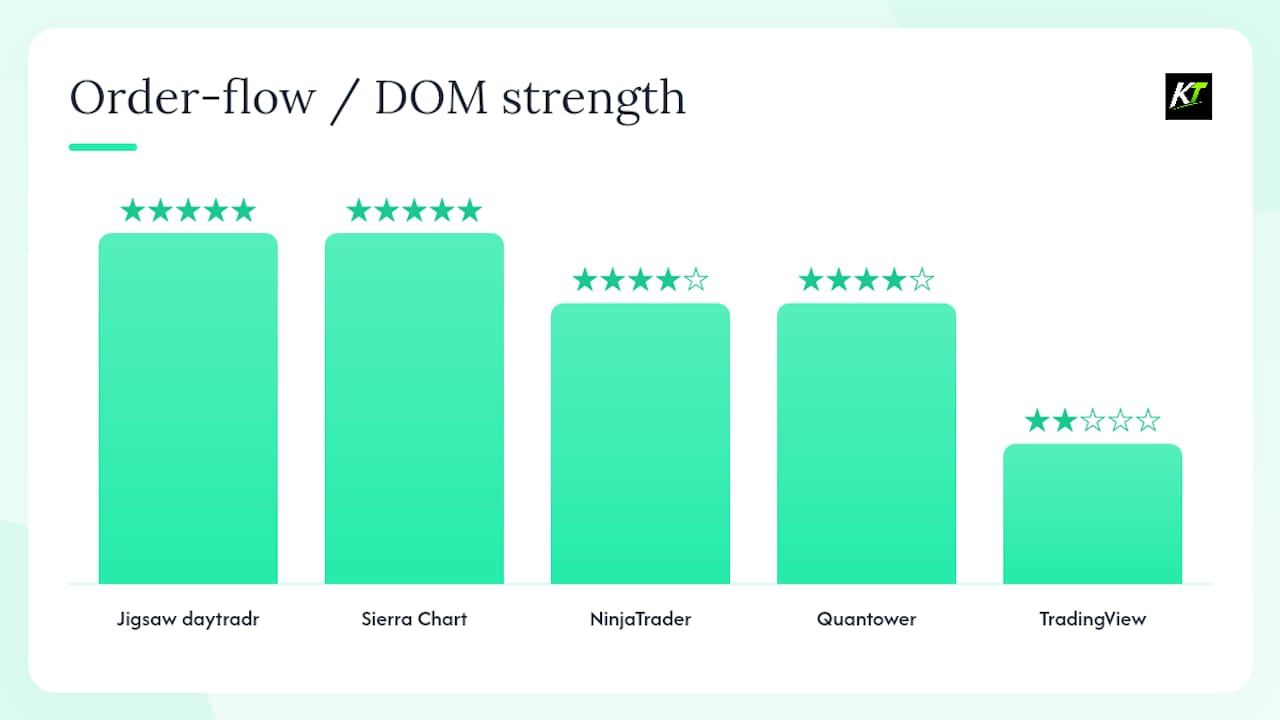
| Dimension | Jigsaw daytradr | NinjaTrader | TradingView | Sierra Chart | Quantower | MotiveWave | Medved Trader |
|---|---|---|---|---|---|---|---|
| Order-flow / DOM | ★★★★★ | ★★★★☆ | ★★☆☆☆ | ★★★★★ | ★★★★☆ | ★★★☆☆ | ★★★☆☆ |
| Charting & indicators | ★★☆☆☆ | ★★★★☆ | ★★★★★ | ★★★★☆ | ★★★★☆ | ★★★★★ | ★★★☆☆ |
| Execution / broker integration | ★★★☆☆ | ★★★★★ | ★★☆☆☆ | ★★★★☆ | ★★★★☆ | ★★★★☆ | ★★★☆☆ |
| Best for | Futures scalpers, order-flow learners | Futures, NFA-regulated brokers | Multi-asset, discretionary, swing | Futures, algo, low-latency | Multi-broker, modular setups | Discretionary, wave analysis | Equities, Level II traders |
| Platform compatibility | Windows | Windows | Web, iOS, Android | Windows | Windows, Web | Windows, Mac | Windows |
| Pricing model | One-time + optional $50/mo | Free / $1,099 lifetime | Free tier / — | ~$3–$56/mo | Free / modular add-ons | $499–$1,499 one-time | $29.95/mo |
| Scripting / API | Limited | NinjaScript (C#) | Pine Script | ACSIL (C++) | C# API | Java API | Limited |
| Simulated trading / replay | ★★★★★ | ★★★★☆ | ★★★☆☆ | ★★★★☆ | ★★★☆☆ | ★★★☆☆ | ★★☆☆☆ |
Three trade-offs stand out immediately:
- TradingView wins on charting breadth and accessibility but has minimal DOM depth — pairing it with a dedicated order-flow tool makes sense for discretionary traders.
- Sierra Chart matches Jigsaw on order-flow and beats it on scripting flexibility, but the ACSIL (C++) learning curve is steep.
- NinjaTrader is the most complete single-platform replacement for futures traders, covering DOM, execution, and charting in one installation.
On pricing, the spread is wide: TradingView and Quantower offer free entry tiers, NinjaTrader’s lifetime license costs $1,099, and Sierra Chart runs as low as a few dollars per month. Jigsaw’s entry-level Independent package is $579 as a one-time purchase, with an optional $50/month or $500/year execution subscription on top.
Which platform should you actually use instead of Jigsaw?
NinjaTrader
NinjaTrader is the most direct functional replacement for futures traders and integrates well with AI-driven execution tools like TradeAiFi’s AI Trading Platform. Its SuperDOM handles order-flow visualization well, and the platform connects natively to Rithmic, CQG, Interactive Brokers, and a dozen other brokers. The free tier covers charting and sim trading indefinitely. The $1,099 lifetime license unlocks live execution and advanced features. NinjaScript (C#) gives algo traders a real development environment, and the NinjaTrader ecosystem includes third-party add-ons for footprint charts and order-flow overlays that close the gap with Jigsaw’s reconstructed tape. The community is large, documentation is thorough, and support tickets get answered. Windows only.
TradingView
TradingView is not a Jigsaw replacement for order-flow traders. It is, however, the best complement if you want multi-asset charting, a web-based interface, and access to a massive community of published strategies and indicators. Pine Script makes it easy to prototype ideas without a compiler. The free tier is genuinely usable; the paid plans add more indicators per chart and faster data refresh. If you scalp futures with Jigsaw’s DOM open on one monitor and want a clean chart on another, TradingView fills that role without friction.
Sierra Chart
Sierra Chart is what serious order-flow traders graduate to when they outgrow Jigsaw’s scope. The platform supports footprint charts, volume profile, bid/ask delta, and a full DOM with depth-of-market history. Data feed flexibility is unmatched: Rithmic, CQG, Denali, and direct exchange feeds all work. The ACSIL C++ scripting environment is powerful but not beginner-friendly. Pricing starts low and scales by service package. Community comparison pages confirm Sierra Chart’s edge on broker connectivity and scripting depth versus most alternatives. Windows only, but the interface is dated by modern standards.
thinkorswim
thinkorswim (TD Ameritrade/Schwab) is the right call for equities and options traders. There is no platform fee. The DOM and Level II are solid for stocks; the options chain tools are best-in-class for retail. It is not built for futures scalping the way Jigsaw is, and the order-flow tools are shallower. But if your primary market is equities or options and you want a free, broker-integrated platform with strong charting and thinkScript for custom studies, thinkorswim is hard to beat.
Quantower
Quantower’s modular design is its main advantage. You start free and add paid modules (footprint, volume analysis, advanced DOM) as your needs grow. It connects to multiple brokers simultaneously, which is rare at this price point. The interface is modern and the platform runs on Windows and web. For traders running multiple accounts or brokers, Quantower handles that complexity better than Jigsaw. Feature comparisons show Quantower’s broker connectivity breadth as a genuine differentiator.
MotiveWave
MotiveWave targets discretionary traders who combine technical analysis with order-flow. Elliott Wave, Fibonacci, Gann, and a full suite of classical chart patterns are built in alongside a DOM and order-flow tools. The Java-based API allows custom studies. Pricing is a one-time purchase ($499–$1,499 depending on edition), and it runs on both Windows and Mac, which makes it one of the few serious alternatives with native Mac support. Not the right tool for pure scalpers, but excellent for swing traders who also want order-flow context.
Medved Trader
Medved Trader is an underrated option for equities traders who want fast Level II, DOM, and streaming quotes without a heavy subscription. At $29.95/month, it undercuts most alternatives. Scripting is limited, and it is not built for futures. But for a stock trader who wants a responsive, lightweight platform with solid watchlists and order routing, it delivers more than its price suggests. Community feedback is positive on speed and stability.
Pro Tip: Run any new platform in demo mode using the same data feed you use with Jigsaw (Rithmic or CQG) for at least two weeks before going live. Feed differences distort your read on latency and fill quality.
How to pick the right Jigsaw alternative for your trading
- Match the data feed. Reviews consistently recommend Rithmic and CQG for order-flow tools. If your broker offers both, test each feed’s tick data fidelity in sim before committing.
Red flags to watch: no replay or sim mode, broker connectivity limited to one or two firms, no public latency benchmarks, and refund policies that require proof of technical failure rather than a simple trial window.
What does Jigsaw Trading actually offer, and what should you match?
Jigsaw’s daytradr platform is built around four core capabilities: a DOM/price ladder with configurable depth, a reconstructed tape that filters and highlights significant order-flow events, Auction Vista for market profile and auction theory visualization, and Journalytix analytics for trade review. The realistic simulator uses actual historical tick data, which makes it genuinely useful for training rather than just testing button placement.
Independent reviewers describe Jigsaw as narrow by design: it excels at order-flow education and advanced DOM execution but is not a full charting suite. Traders who want everything in one platform often find it limiting. That is not a flaw; it is a deliberate product decision. The result is that many traders pair Jigsaw with a fuller charting platform rather than replacing it outright.
Pricing follows a one-time software purchase model. The entry-level Independent package is $579, with higher-tier packages bundling additional education content. Live execution features carry an optional monthly or yearly subscription on top of the base price. User reviews on Trustpilot reflect a range of experiences on support responsiveness and perceived value, which is worth reading before committing.
When evaluating alternatives, the features worth matching are: reconstructed tape or equivalent order-flow filtering, realistic tick-data replay, configurable DOM depth, and Journalytix-style trade analytics. Few platforms replicate all four; most cover two or three.
What are the cancellation and refund policies for these platforms?
Policies vary significantly across the shortlist, and this is worth checking before you pay.
NinjaTrader’s lifetime license is non-refundable after purchase; the free tier carries no financial risk. TradingView offers a 30-day refund window on annual plans if you contact support before the period ends. Sierra Chart’s monthly subscription can be cancelled at any time with no penalty, and the low monthly cost makes it low-risk to trial. thinkorswim has no platform fee, so there is nothing to cancel. Quantower’s free tier is genuinely free; paid modules are subscription-based and cancellable monthly. MotiveWave offers a 30-day free trial before any purchase is required, and the one-time license is permanent once bought. Medved Trader runs on a monthly subscription with no long-term commitment.
Jigsaw’s one-time purchase model means the upfront cost is the risk. The optional execution subscription ($50/month) can be cancelled independently of the base software license.
The practical rule: prefer monthly subscriptions or free tiers when you are still evaluating. Lock in a lifetime or annual license only after you have traded the platform in sim with your actual data feed for at least two weeks.
How actively are these platforms being developed?
Development velocity matters because a stagnant platform accumulates broker compatibility debt and falls behind exchange protocol updates.
NinjaTrader releases regular updates and has an active third-party ecosystem on the NinjaTrader Ecosystem marketplace. TradingView ships updates frequently and has expanded its broker integrations and Pine Script capabilities substantially over the past two years. Sierra Chart has a long track record of continuous development; updates are frequent and the changelog is public. Quantower has been on an active development cycle, adding new connectors and UI improvements regularly. MotiveWave releases major version updates periodically with a clear changelog. Medved Trader is actively maintained with a responsive developer.
Jigsaw has continued developing daytradr with periodic updates to its DOM and analytics features. The platform’s roadmap is not publicly detailed, but the core feature set has remained stable and focused.
For traders evaluating long-term commitment, checking a platform’s public changelog or community forum activity is a better signal than marketing copy. A forum with recent posts and developer responses indicates an active product; a forum with unanswered threads from six months ago does not.
Key Takeaways
The strongest single replacement for Jigsaw Trading is NinjaTrader for futures traders, while TradingView and Sierra Chart serve as the best complements for charting breadth and order-flow depth respectively.
| Point | Details |
|---|---|
| NinjaTrader for futures | Best all-in-one replacement: DOM, execution, charting, and broker integration in one platform. |
| TradingView as a complement | Strongest for multi-asset charting and web access; pairs well with a dedicated DOM tool. |
| Sierra Chart for order-flow depth | Matches Jigsaw on DOM and beats it on scripting; low monthly cost reduces trial risk. |
| Jigsaw’s $579 entry price | The Independent package is a one-time cost; the optional $50/month or $500/year execution subscription is separate. |
| Key-trade hardware as an execution upgrade | A programmable keypad complements any software choice by cutting reaction time on repetitive order actions. |
The case for adding hardware before switching software
The conventional advice when a trading platform frustrates you is to find a better one. That logic holds when the platform genuinely lacks a feature you need. But a surprising number of execution complaints, slow fills, missed exits, fumbled position reversals, trace back to the input method rather than the software.
Switching from Jigsaw to NinjaTrader or Sierra Chart takes weeks of re-learning. Adding a hardware keypad to your current setup takes an afternoon. If your core issue is execution speed or workflow friction rather than missing features, the hardware path is faster and lower risk.
That said, software does matter. Jigsaw’s reconstructed tape and Journalytix analytics are genuinely difficult to replicate elsewhere, and traders who rely on those tools for training should keep the platform even if they add a complement. The traders who benefit most from switching are those who have outgrown Jigsaw’s charting limitations or need multi-asset or Mac support.
Test any alternative for at least two full trading weeks in sim, using the same data feed you use in live trading. A one-day demo with paper data tells you almost nothing about how a platform performs under real market conditions.
Key-Trade trading keypads: execution hardware for any platform
Software alternatives solve feature gaps. Key-trade solves the execution gap that software alone cannot close.
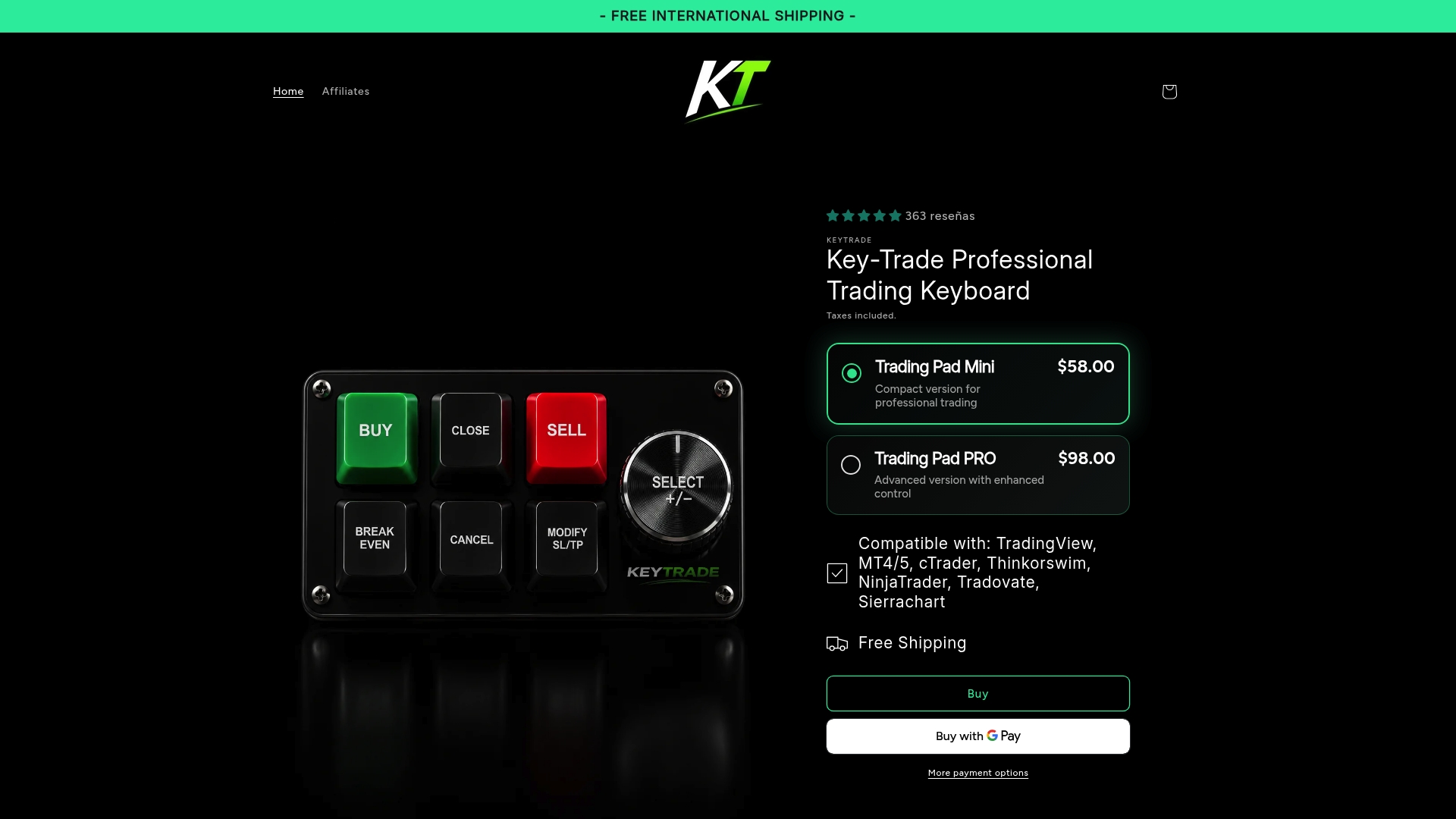
Key-trade’s programmable trading keypads give active traders one-press access to their most critical order actions: flatten position, scale out, move stop to break-even, reverse, and more. Every button is configurable to match your exact workflow, and the device integrates with TradingView, NinjaTrader, Sierra Chart, thinkorswim, cTrader, MetaTrader 4 and 5, and Tradovate through standard hotkey mapping. No coding required. Whether you stay on Jigsaw, move to NinjaTrader, or run both side by side, the keypad works with your setup as it is today.
For prop traders and trading desks, the consistency benefit compounds: every trader on the desk executes the same critical actions the same way, every time. Worldwide shipping, setup guides included.
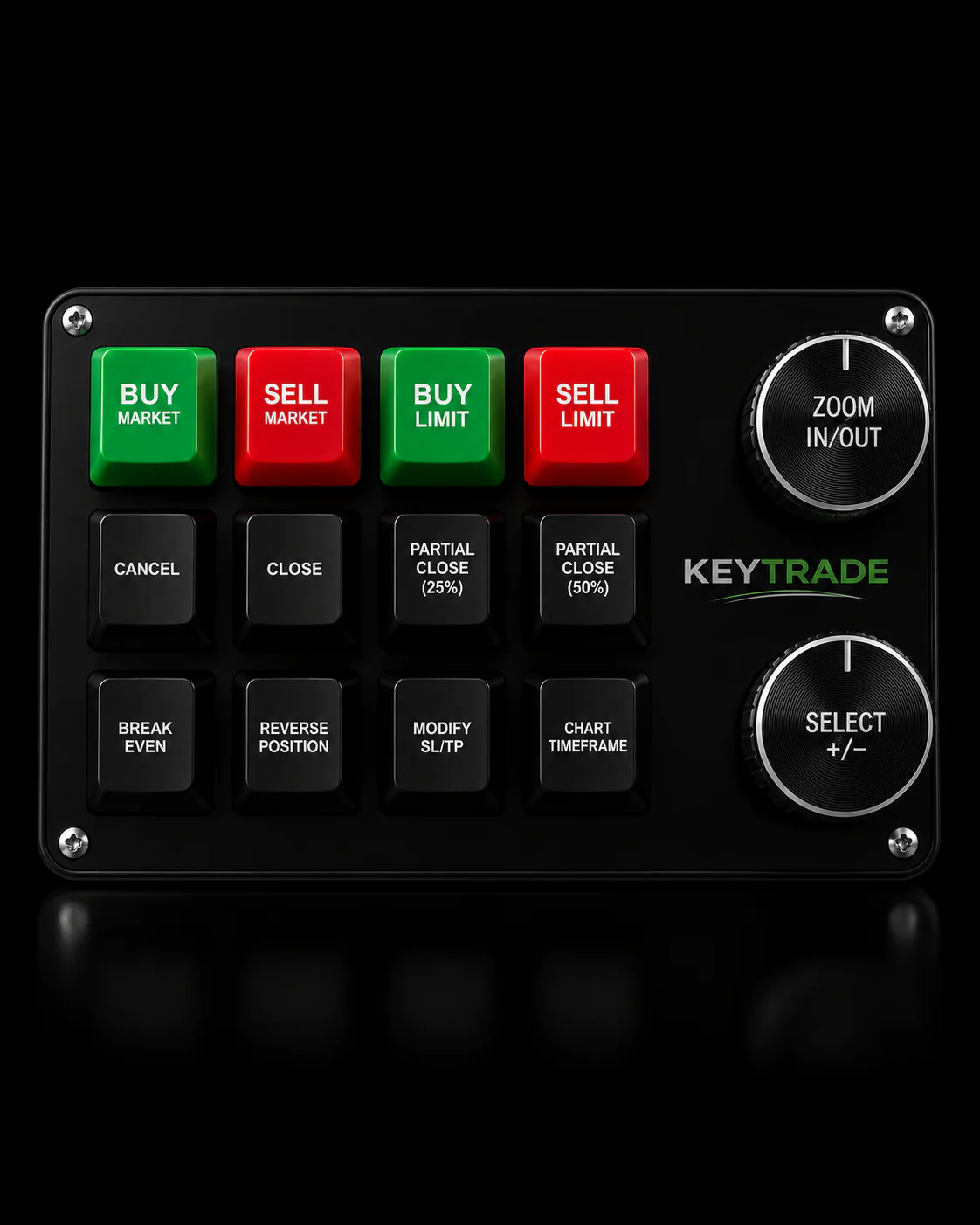
See the full specifications and order directly on the Key-trade trading keyboard product page.
Useful sources
- The Only Day Trading Software & Education That Works - Order Flow Trading - Jigsaw Trading
- Jigsaw Pricing Explained - Jigsaw Trading
- Jigsaw Trading Review (2026): Order Flow & Pricing
- Jigsaw daytradr Review 2026: Pro Order Flow & DOM Platform
- Jigsaw Trading - Pearl of Trades
- JigSaw Trading Alternatives & Competitors - SoftwareSuggest
- JigSaw Trading vs. Quantower - Comparison Chart
- JigsawTrading.com reviews - Trustpilot
FAQ
What is the best free alternative to Jigsaw Trading?
NinjaTrader’s free tier covers charting and simulated trading with no time limit, making it the strongest no-cost starting point for futures traders. TradingView’s free plan works well for multi-asset charting, though its DOM tools are limited.
How much does Jigsaw daytradr cost?
The entry-level Independent package is $579 as a one-time purchase. Live execution features carry an optional $50/month or $500/year subscription on top of that base price.
Is there a cheaper alternative to TradingView for charting?
Sierra Chart starts at a few dollars per month and offers more advanced charting and order-flow tools than TradingView’s paid tiers for futures traders. For equities traders, thinkorswim is free with a Schwab brokerage account.
Can a hardware keypad replace Jigsaw Trading?
No. A hardware keypad like Key-trade’s trading keyboard complements your platform by speeding up order execution; it does not replicate Jigsaw’s DOM, reconstructed tape, or analytics. The two work best together rather than as substitutes.
Which Jigsaw alternative works on Mac?
MotiveWave is the most capable Mac-compatible alternative, offering order-flow tools, advanced charting, and a Java-based API. TradingView also runs on Mac through any browser. Most other serious alternatives, including NinjaTrader and Sierra Chart, are Windows only.
Recommended
- 5 Hardware Trading Alternatives 2026 – Key-Trade Trading Keyboards
- Top 6 tradekey.com Alternatives for 2026 – Key-Trade Trading Keyboards
- Xeroflex.com Alternatives for Active Traders: Hardware vs. Software – Key-Trade Trading Keyboards
- TikTok.com Alternatives for Traders: Where to Publish – Key-Trade Trading Keyboards