

No Coding, No Misfires: cTrader Hotkeys Built for Pro Traders
La forma más rápida y segura de añadir teclas de acceso rápido (hotkeys) reales a cTrader es mediante un teclado programable dedicado o un dispositivo tipo Stream Deck, combinado con un pequeño cBot o un puente de socket, y probado en el modo SIM de cTrader Desktop antes de utilizarlo en una cuenta real. Esa combinación le ofrece una capa de confirmación visual, una ruta corta desde el botón hasta la orden y botones de riesgo dedicados que un atajo de teclado por sí solo no puede igualar. Los fabricantes de hardware crean este tipo de dispositivos, y la lógica de asignación que se detalla a continuación funciona tanto si compra un teclado como si construye el suyo propio.
En resumen (TL;DR):
- El uso de un teclado programable dedicado o un Stream Deck con un cBot local o un puente de socket ofrece la ejecución de hotkeys más rápida y fiable en cTrader, especialmente cuando se utiliza en modo de escritorio.
- La elección del hardware debe ajustarse al estilo de trading: los controladores compactos son ideales para el scalping, mientras que los dispositivos tipo Stream Deck funcionan mejor para los traders que gestionan múltiples posiciones o flujos de trabajo con varios activos.
- Es esencial realizar pruebas en modo SIM con distintos estados de enfoque y en varios dispositivos antes de operar en real para garantizar una baja latencia, un reconocimiento constante y opciones de cancelación robustas.
- Etiquete y coloque los botones físicos con cuidado, usando códigos de colores y preajustes para minimizar la carga cognitiva y evitar operaciones accidentales durante sesiones largas o estresantes.
- Opte por soluciones listas para usar, como el teclado de hotkeys de Key-Trade, para evitar configuraciones complejas, garantizando la compatibilidad multiplataforma y el acceso inmediato a botones de riesgo.
Tabla de contenidos
- ¿Qué tipos de hardware funcionan mejor para las hotkeys de cTrader?
- ¿Cómo se asignan teclas a las acciones de trading en cTrader?
- ¿Qué debe probar antes de operar en real?
- ¿Cómo debe colocar y etiquetar su hardware de trading?
- La ejecución manual con teclado y ratón tiene limitaciones de velocidad y seguridad, y memorizar atajos de software no puede resolver esto por completo. Algunos productos en el mercado son teclados físicos con botones programables, compatibles con varias plataformas como cTrader, MetaTrader 4 y 5, TradingView, NinjaTrader, SierraChart, Thinkorswim y Tradovate, orientados a traders profesionales que utilizan múltiples plataformas.
- Consiga un teclado de hotkeys ya hecho en lugar de construir uno
- Fuentes
- Preguntas frecuentes
¿Qué tipos de hardware funcionan mejor para las hotkeys de cTrader?
No todos los teclados se ajustan a todos los estilos de trading, y elegir el equivocado es la razón por la que muchos traders terminan con un dispositivo acumulando polvo junto al monitor. La elección correcta depende de cuántas acciones discretas necesite tener a mano y cuánto riesgo conlleve cada botón.
- Controladores tipo Stream Deck. Estos ofrecen múltiples páginas visuales y una gran cantidad de botones discretos, lo cual se adapta a los traders que ejecutan flujos de trabajo complejos con múltiples acciones (entradas, escalado, coberturas, varios activos). StreamDeckHotkeys es un ejemplo funcional: mapea los botones de Elgato Stream Deck para comprar, vender, controlar lotaje, SL/TP, punto de equilibrio (break-even) y cierre parcial, pero requiere que cTrader Desktop se ejecute localmente y un puente o cBot que traduzca las pulsaciones de los botones en comandos de la plataforma.
- Controladores de trading compactos. Dispositivos construidos en torno a un puñado de teclas dedicadas de compra/venta y diales físicos, en lugar de una cuadrícula de mosaicos programables. El proyecto TRIGGR demuestra el atractivo: cuatro teclas programables y dos diales para el dimensionamiento de posición y zoom del gráfico, con mucha menos carga cognitiva que buscar a través de páginas de Stream Deck en medio de una operación.
- Ratones y teclados programables. Los botones laterales de un ratón de trading son una buena ruta secundaria, pero no primaria. Asignar un cierre de emergencia o una cancelación global a un botón del ratón le da una segunda opción para realizar la misma acción si su teclado principal falla o se bloquea.
El comportamiento de la plataforma importa tanto como el hardware en sí. cTrader admite la ejecución en la nube de cBots en todas sus aplicaciones, pero la ejecución local solo está disponible en cTrader para Windows y Mac, y esa distinción determina si sus hotkeys se comportan de forma predecible o introducen una latencia no deseada. Si su puente depende de sockets locales o de un cBot que se ejecute localmente, el modo en la nube no es el entorno adecuado. Ejecute cTrader Desktop, no una instancia de navegador o móvil, para cualquier tarea sensible a la latencia.
Los scalpers generalmente prefieren la categoría de controlador compacto: menos botones, compra/venta dedicada, diales para el tamaño del lote. Los traders intradía que ejecutan múltiples configuraciones suelen superar esa opción rápidamente y pasar a páginas tipo Stream Deck. Los traders de cuentas de fondeo suelen situarse en algún punto intermedio, dando prioridad a los pasos de confirmación sobre la cantidad bruta de botones.
¿Cómo se asignan teclas a las acciones de trading en cTrader?
Una plantilla de mapeo solo funciona si coincide con su forma real de operar, así que elija la que más se acerque a su estilo de la siguiente lista y ajuste los detalles.
- Plantilla para scalper. Compra y venta a mercado con una sola pulsación en dos botones aislados, aumento/disminución del tamaño del lote en teclas adyacentes, un par dedicado para cerrar el 50% y el 100%, y un cierre de emergencia asignado a un botón físicamente separado y más grande para que una mano estresada no pueda fallar. StreamDeckHotkeys utiliza exactamente esta lógica en sus atajos publicados, asignando Shift+Q para COMPRAR y Shift+W para VENDER, un patrón que vale la pena copiar porque el modificador evita que una pulsación accidental lance una orden.
- Plantilla para cuentas de fondeo. Añada una capa de confirmación sobre la base del scalper: las acciones de entrada requieren una doble pulsación en un corto intervalo de tiempo, mientras que la gestión de la operación (ajuste de SL/TP, mover al punto de equilibrio) utiliza un prefijo modificador diferente al de abrir una nueva posición. El cierre parcial obtiene su propia fila de preajustes, normalmente 50%, 75%, 90% y 100%, de modo que escalar fuera de una cuenta de fondeo no requiera escribir un tamaño de lote bajo presión.
- Plantilla para swing o gestor de posiciones. Las entradas se ejecutan con tamaños de lote preestablecidos ligados a su modelo de riesgo, los diales manejan el escalado de posiciones y el zoom del gráfico como demuestra TRIGGR, y los ajustes de TP/SL se realizan con una sola pulsación dedicada en lugar de menús de varios pasos. Los diales superan a las pulsaciones repetidas de teclas aquí porque el control continuo se siente más natural que hacer clic en un botón de tamaño cinco veces para entrar gradualmente en una posición.
El hilo común entre las tres: separe los botones que abren riesgo de los que lo cierran, y nunca deje que una sola pulsación accidental abra una nueva posición. Esa separación es lo que realmente le aportan los prefijos modificadores y la confirmación de doble pulsación.
¿Qué debe probar antes de operar en real?
Saltarse las pruebas en SIM es la razón más común por la que una configuración de hotkeys falla en el peor momento posible. Siga esta lista de verificación antes de que un solo botón mapeado toque una cuenta fondeada.
- Confirme que cTrader Desktop se está ejecutando con ejecución local e instale cualquier cBot o puente de socket que requiera su teclado.
- Ejecute todas las acciones mapeadas en modo SIM con el gráfico enfocado, luego de nuevo con el DOM enfocado, y otra vez con la plataforma ejecutándose en segundo plano. Algunos puentes solo se activan correctamente cuando cTrader tiene el enfoque de la ventana, y necesita saber eso antes de que le cueste una operación.
- Mida el lapso entre la pulsación del botón y la confirmación de la orden en la pantalla. Si es inconsistente, el puente o el comportamiento del enfoque debe corregirse antes de confiar en él en real.
- Pruebe la cancelación de emergencia y el cierre total de forma redundante, idealmente en dos dispositivos separados, y anote los pasos de reversión en caso de que el puente se desconecte a mitad de la sesión.
- Bloquee el perfil de su dispositivo una vez finalizado para que un deslizamiento de página o un cambio de modo accidental no remapee silenciosamente su botón de compra a otra cosa en medio de una operación.
Las notas de integración de la comunidad sobre los puentes de cTrader señalan que algunas configuraciones utilizan sockets UDP específicamente por velocidad y confirmación, lo cual vale la pena comprobar si sus tiempos de respuesta se sienten lentos en las pruebas.
Consejo profesional: Realice sus pruebas en SIM durante una sesión volátil, no una tranquila. Un puente que funciona bien en una tarde de martes lenta puede retrasarse o perder entradas cuando cinco símbolos se mueven a la vez, y ese es exactamente el momento en que más lo necesitará.
¿Cómo debe colocar y etiquetar su hardware de trading?
El lugar donde pone el dispositivo importa casi tanto como cómo lo mapea. Mantenga su teclado de ejecución principal en una posición fija y constante al alcance inmediato de su mano dominante, para que la memoria muscular tome el control en lugar de tener que mirar el escritorio. Moverlo entre sesiones es cómo los traders experimentados presionan accidentalmente un botón de cierre que no han tocado en semanas.
Etiquete los botones por función, no por memoria. Use códigos de colores para diferenciar las acciones destructivas (cierre total, cancelación, entrada a mercado) de las acciones de gestión (SL/TP, punto de equilibrio, cierre parcial), y utilice etiquetas impresas o iconos en el dispositivo en lugar de confiar en que recordará qué hace cuál de las seis teclas idénticas tres horas después de iniciada la sesión.

La gestión de la sesión importa más de lo que la mayoría de las configuraciones consideran. Los descansos programados, un modo de dispositivo bloqueado que no puede cambiarse accidentalmente a un perfil diferente y limitar cuántas acciones simultáneas están activas a la vez reducen la carga cognitiva que conduce a errores al final de una larga jornada de trading. La guía profesional sobre periféricos de trading favorece constantemente un conjunto pequeño de botones fiables sobre uno extenso, precisamente porque menos opciones bajo estrés significa menos errores. Reducir los clics repetitivos también conserva la precisión motora fina que su mano pierde durante una sesión de seis horas.
La ejecución manual con teclado y ratón tiene limitaciones de velocidad y seguridad, y la memorización de atajos de software no puede superar esto por completo. Algunos productos en el mercado son teclados físicos con botones programables, compatibles con varias plataformas como cTrader, MetaTrader 4 y 5, TradingView, NinjaTrader, SierraChart, Thinkorswim y Tradovate, orientados a traders profesionales que utilizan múltiples plataformas.
Las consideraciones de diseño incluyen botones de riesgo dedicados en lugar de clics en menús ocultos, software de mapeo diseñado para facilitar la configuración y separación física entre los botones que abren riesgo y los que lo cierran. También se enfatizan el envío a nivel mundial y una incorporación sencilla para garantizar que el hardware sea fácil de usar y accesible.
La experiencia profesional de trading del autor y los datos de rendimiento específicos del dispositivo no se listan públicamente en este momento.
— key-trade
Consiga un teclado de hotkeys ya hecho en lugar de construir uno
Todo lo cubierto anteriormente, desde entradas protegidas por modificadores hasta botones de cierre dedicado y control de lotaje basado en diales, es exactamente lo que el teclado de trading y pad de hotkeys de Key-Trade está diseñado para ofrecer desde el primer momento, sin que usted tenga que soldar un puente o depurar el comportamiento del enfoque a las 2 a.m. antes de una sesión.
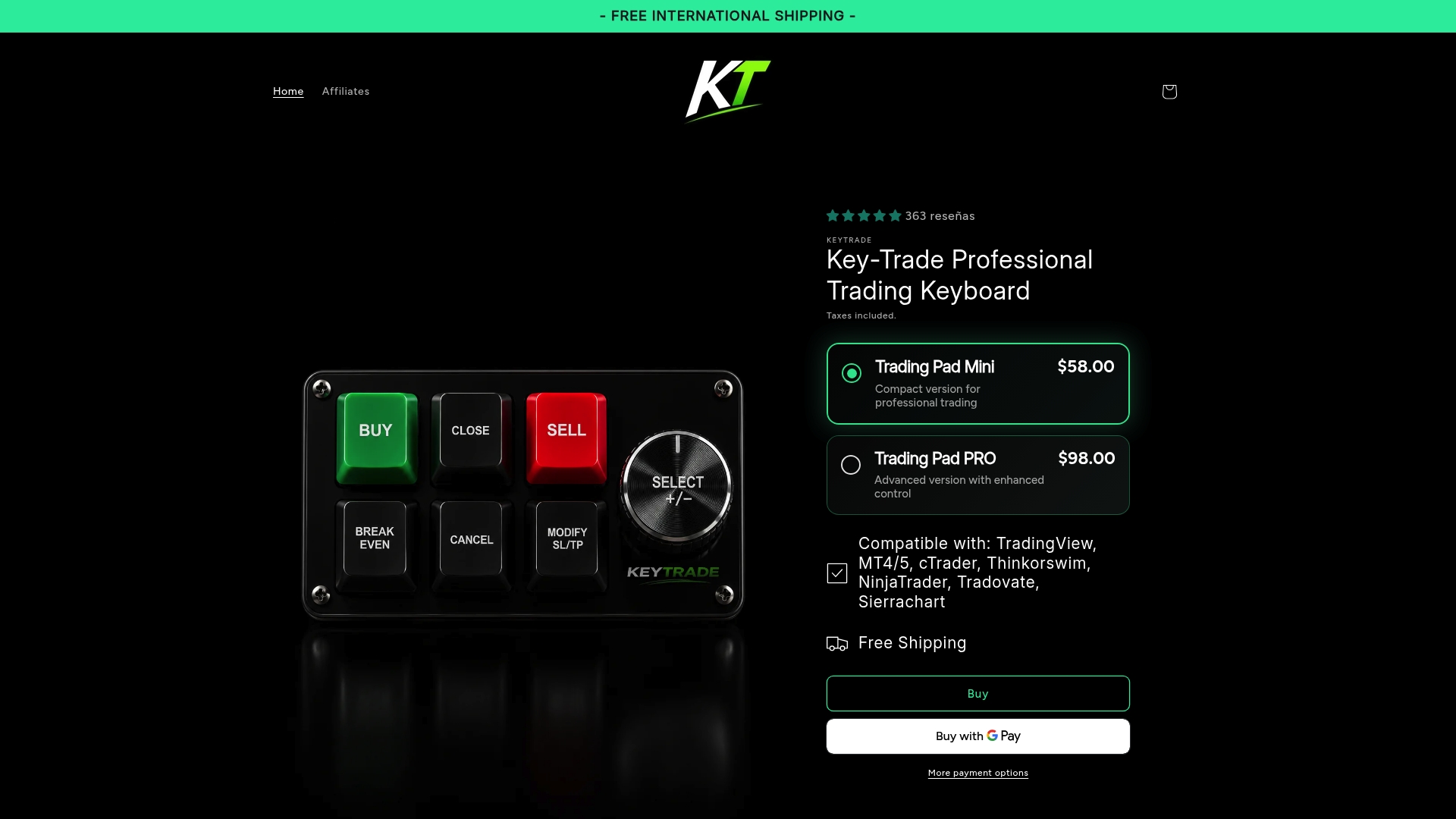
En lugar de ensamblar un Stream Deck, un puente separado y un cBot personalizado, obtiene un dispositivo que ya habla con cTrader, MetaTrader, TradingView, NinjaTrader, SierraChart, Thinkorswim y Tradovate. Eso importa si opera en más de una plataforma o se mueve entre una cuenta personal y una cuenta de fondeo, ya que remapear software en lugar de comprar hardware nuevo ahorra dinero y tiempo de configuración. Si gestiona cierres parciales o ajustes de stop en varias cuentas, emparejar su teclado con una herramienta como la función de cierre y stop de MT4 Copier merece la pena para el lado de gestión de riesgo del flujo de trabajo.
Key-Trade envía a todo el mundo y el proceso de configuración no requiere conocimientos de programación, solo los pasos de mapeo descritos anteriormente en esta guía. Visite la página de productos de Key-Trade para consultar las opciones actuales de dispositivos y obtener un teclado configurado para su forma real de operar.
Fuentes
- StreamDeckHotkeys | Bot para cTrader
- Teclado, ratón y periféricos para estaciones de trading: La configuración que reduce errores de ejecución y sobrevive a sesiones de 6 horas - Academia NexusFi
Preguntas frecuentes
¿Cuál es la forma más rápida de añadir hotkeys a cTrader?
Un teclado de hardware programable o un pad tipo Stream Deck emparejado con un puente local o cBot ofrece la ruta más corta desde la pulsación hasta la orden, siempre que se ejecute junto con cTrader Desktop en lugar de una instancia en la nube o móvil.
¿Funcionan los teclados de hotkeys para cTrader con la ejecución en la nube?
La ejecución local solo es compatible con cTrader para Windows y Mac, por lo que las configuraciones de hotkeys por hardware deben ejecutarse frente a una instancia local de cTrader Desktop para un comportamiento predecible y de baja latencia.
¿Cómo evito que un dispositivo de hotkeys cause operaciones accidentales?
Utilice prefijos modificadores o confirmación de doble pulsación en las acciones de entrada, mantenga los botones destructivos como el de cierre total separados físicamente de los botones de gestión, y pruebe exhaustivamente cada mapeo en modo SIM primero.
¿Puedo usar diales en lugar de botones para el tamaño de la posición?
Sí. Los diales ofrecen un control continuo sobre el tamaño del lote y el zoom del gráfico que generalmente es más fluido y menos propenso a errores que las pulsaciones repetidas de teclas, particularmente al entrar o salir gradualmente de una posición.
¿Key-Trade admite cTrader junto con otras plataformas?
Los teclados de Key-Trade están diseñados para funcionar en cTrader, MetaTrader 4 y 5, TradingView, NinjaTrader, SierraChart, Thinkorswim y Tradovate, lo cual se adapta a traders que no utilizan una sola plataforma exclusivamente.