

20–40 inch Ergonomics: Small Desk Trading Setup with UPS and Keypad
For a small desk, run either a single high-resolution monitor or a stacked dual setup on monitor arms, follow OSHA viewing distance and height guidance, and add a compact keypad and UPS for redundancy. This gets you full chart coverage, correct posture, and a recovery plan if power or internet drops, all without spreading across a wide desk.
TL;DR:
- Using a monitor arm to support a single high-resolution or dual stacked setup helps conserve desk depth and maintains ergonomic placement.
- Maintaining a viewing distance of 20 to 40 inches and ensuring the monitor top is at eye level is critical for comfort during long trading sessions.
- Mounting a compact trading keypad with programmable buttons can improve execution speed without requiring extra screen space.
- Placing essential hardware on a UPS and testing backup internet options reduces the risk of losing connection during trades and enables quick recovery.
- Managing noise and airflow effectively, including quiet keyboards and proper device spacing, prevents distraction and overheating in small trading rooms.
Table of Contents
- Compact multi-monitor layouts that fit shallow desks
- Ergonomics and essential hardware checklist
- Space-saving gear and cable management for small trading desks
- Power, redundancy, and quick-recovery steps for active traders
- How a compact trading keypad fits a small-desk workflow
- Noise management and acoustic considerations in compact setups
- Tips for airflow and cooling in small desk setups to prevent overheating of devices
- Author perspective: choose visibility or speed, how to prioritize next purchases
- A compact alternative for faster order execution
- Sources
- FAQ
Compact multi-monitor layouts that fit shallow desks
The right layout depends on how many functions you actually need to see at once, not on how many monitors will physically fit. A practical trading workstation plan starts by counting functions, market observation, order entry, account status, your trading plan, a journal, and communications, then matching screens to that count instead of defaulting to “more monitors.”
Five layouts cover almost every small-desk scenario:
- Ultrawide single monitor: consolidates several chart panels into one frame with fewer bezels, and often replaces two separate monitors while using less desk depth.
- Dual landscape, slightly angled: keeps one screen for charting and one for order entry and account status, with a slight inward angle reducing neck rotation.
- Vertical portrait plus landscape stacked: pairs a tall portrait screen for news feeds or watchlists with a landscape screen for the main chart.
- Stacked dual monitors on arms: mounts one screen above another on a vertical arm, which saves desk depth on very shallow surfaces where side-by-side monitors would not fit.
- Corner L-shaped layout: uses available corner space to add extra panels without extending the desk’s front footprint.
Traders running a single strategy on one or two instruments tend to do well with an ultrawide or simple dual landscape setup. Those juggling scanning, execution, and news simultaneously often prefer the portrait-landscape combination or a stacked arm setup, since it adds a dedicated zone without widening the desk. Workspace organization within the charting platform itself also matters: grouping watchlists, alerts, and chart layouts logically, as covered in TradingView workspace organization guidance, reduces how many physical screens you need in the first place.
Ergonomics and essential hardware checklist
Screen distance and height matter more for sustained trading sessions than most desk setups account for. OSHA’s workstation guidance recommends a viewing distance of 20 to 40 inches from eyes to screen, with the top of the monitor at or slightly below eye level and the screen’s center sitting 15 to 20 degrees below horizontal eye level. The same guidance puts seated keyboard height between 22 and 30 inches, with sit-stand surfaces adjustable from 22 inches seated up to roughly 36 to 46.5 inches standing.

Desk depth needs to accommodate that 20 to 40 inch range without forcing you to lean forward, and OSHA’s purchasing guidance favors matte desktop surfaces over glossy or glass tops to cut down on glare during long sessions.
A short checklist before you buy or rearrange:
- Measure your actual desk depth and confirm it supports 20 to 40 inches of monitor distance.
- Set monitor height so the top edge sits at or just below eye level.
- Check your chair and desk combination allows 22 to 30 inch seated keyboard height.
- Verify any monitor arm’s weight and VESA capacity against your actual monitor specs before mounting.
- Choose a clamp mount for easy repositioning or a grommet mount for a more permanent, cable-friendly install.
Pro Tip: Measure your desk depth with a monitor arm fully extended, not just the monitor itself, since arm reach often eats more space than people expect.
Space-saving gear and cable management for small trading desks
Freeing desk surface usually matters more than buying a bigger desk. A few swaps make the biggest difference:
- Mount monitors on VESA arms or clamp mounts instead of using wide factory stands, which reclaims several inches of depth per screen.
- Use a docking station or USB-C hub that carries both power and video, cutting down on the tangle of separate adapters.
- Pick a tenkeyless or 60% keyboard and a low-profile mouse to shrink the footprint your hands actually need.
- Route cables through under-desk channels, bundle them with labeled Velcro ties, and run everything through one surge-protected power strip with a long cord.
- Angle small accessories like a trading keypad or phone stand so they stay reachable without blocking your sightline to the main chart.
None of this requires an expensive overhaul. A $20 cable tray and a single hub often do more for usable surface area than any desk upgrade.
Power, redundancy, and quick-recovery steps for active traders
A dropped connection mid-trade is a risk you can plan around. A basic UPS covering your monitor, router, and primary PC buys enough runtime to close or adjust open positions during a short outage, and sizing it to your actual equipment load, rather than guessing, keeps that runtime predictable.
A workable readiness sequence:
- Put your monitor, router, and main computer on a correctly sized UPS.
- Set up a mobile hotspot or LTE/5G router as backup internet and test the failover before you need it.
- Keep a second device, laptop or tablet, preconfigured with your broker app already logged in.
- Run a monthly test: power down the main setup, confirm the backup device connects, and verify you can still place an order.
The SEC’s investor bulletin on day trading notes that traders frequently suffer severe losses early on, often before they have any safety net in place. That’s the practical case for building redundancy before a problem forces your hand.
How a compact trading keypad fits a small-desk workflow
A physical keypad with programmable buttons handles order execution, modification, and closure without adding another screen or window to your desk. That makes it one of the more space-efficient upgrades available once your monitor layout is set.
- Place it beside your keyboard, angled slightly toward your dominant hand to minimize reach.
- Mount it on a small tray if desk surface is especially tight, keeping the keyboard area clear.
- Check that it supports the platform you actually trade on, since compatibility varies by device and software version.
- Route its cable alongside your keyboard cable, using a short braided cord tucked under the desk to avoid clutter.
Key-Trade’s keypad line, for example, is built to integrate with platforms like TradingView, MetaTrader 4 and 5, and Thinkorswim, according to the brand’s own product information, which makes it a relevant option for traders trying to add execution speed without adding screen real estate.
Noise management and acoustic considerations in compact setups
Small rooms amplify noise that a larger office would absorb, and trading setups add their own sources: fan noise from a PC under load, notification sounds from multiple platforms, and keyboard or mechanical switch clatter during fast order entry. In a tight space, all of that compounds.
A few fixes address most of it. Swapping a loud mechanical keyboard for a quieter linear-switch or membrane model cuts down on repetitive clatter during high-frequency trading. Placing your PC tower slightly away from your seated position, or inside a ventilated cabinet, reduces fan noise reaching your ears without blocking airflow. A simple foam desk mat or a rug under a hard floor absorbs some reflected sound in small, hard-walled rooms.
Notification management matters just as much as physical noise. Running alerts through a single platform or consolidating sound cues reduces the constant layering of pings that compact, enclosed rooms tend to echo. If you share the space with other activity in the household, closed-back headphones let you keep audio alerts clear without raising ambient noise for anyone else nearby.
None of this requires acoustic treatment or soundproofing. The goal in a small trading space is simply reducing avoidable noise sources so the ones that matter, a fill notification or a platform alert, stay audible and distinct.

Tips for airflow and cooling in small desk setups to prevent overheating of devices
Compact desks often push equipment closer together, which traps heat that a more open setup would dissipate on its own. A PC tower wedged into a closed cabinet, monitors stacked tightly on an arm, and a laptop running as a backup device all generate heat in a smaller volume of air than a standard desk layout allows.
Start with basic clearance: leave a few inches of open space around any PC tower’s intake and exhaust vents, even in a small footprint. A cabinet with a solid back panel blocks airflow more than an open-sided stand does. If your tower sits on the floor, keep it off carpet or elevate it slightly, since carpet restricts the airflow pulled in from underneath.
Monitor arms that stack screens vertically can trap warm air between the panels, particularly in a closed room with limited air circulation. A small desk fan aimed across the setup, rather than directly at a single device, keeps air moving without creating a focused hot or cold spot.
Check cable bundling too: tightly packed power and data cables under a desk can block the natural airflow a PC or docking station relies on. Loosening bundles slightly and keeping vents clear takes a few minutes and prevents the kind of slow thermal buildup that shortens hardware life or triggers unexpected throttling during a long session.
Author perspective: choose visibility or speed, how to prioritize next purchases
If you’re missing chart space, add a screen. If you’re missing execution speed, add a keypad or programmable macros instead of another monitor. A better monitor arm or a UPS usually buys more functional improvement than a second large display. Measure your desk depth first, then let that number decide the layout, not the other way around.
— key-trade
A compact alternative for faster order execution
A trading keypad clears on-screen clutter that order-entry panels and hotkey menus otherwise eat up, freeing space for the chart layouts covered above. Key-Trade’s keypad line integrates with platforms including TradingView, MetaTrader 4 and 5, and Thinkorswim, according to the brand, giving you programmable buttons for order execution and risk management without expanding your monitor count.
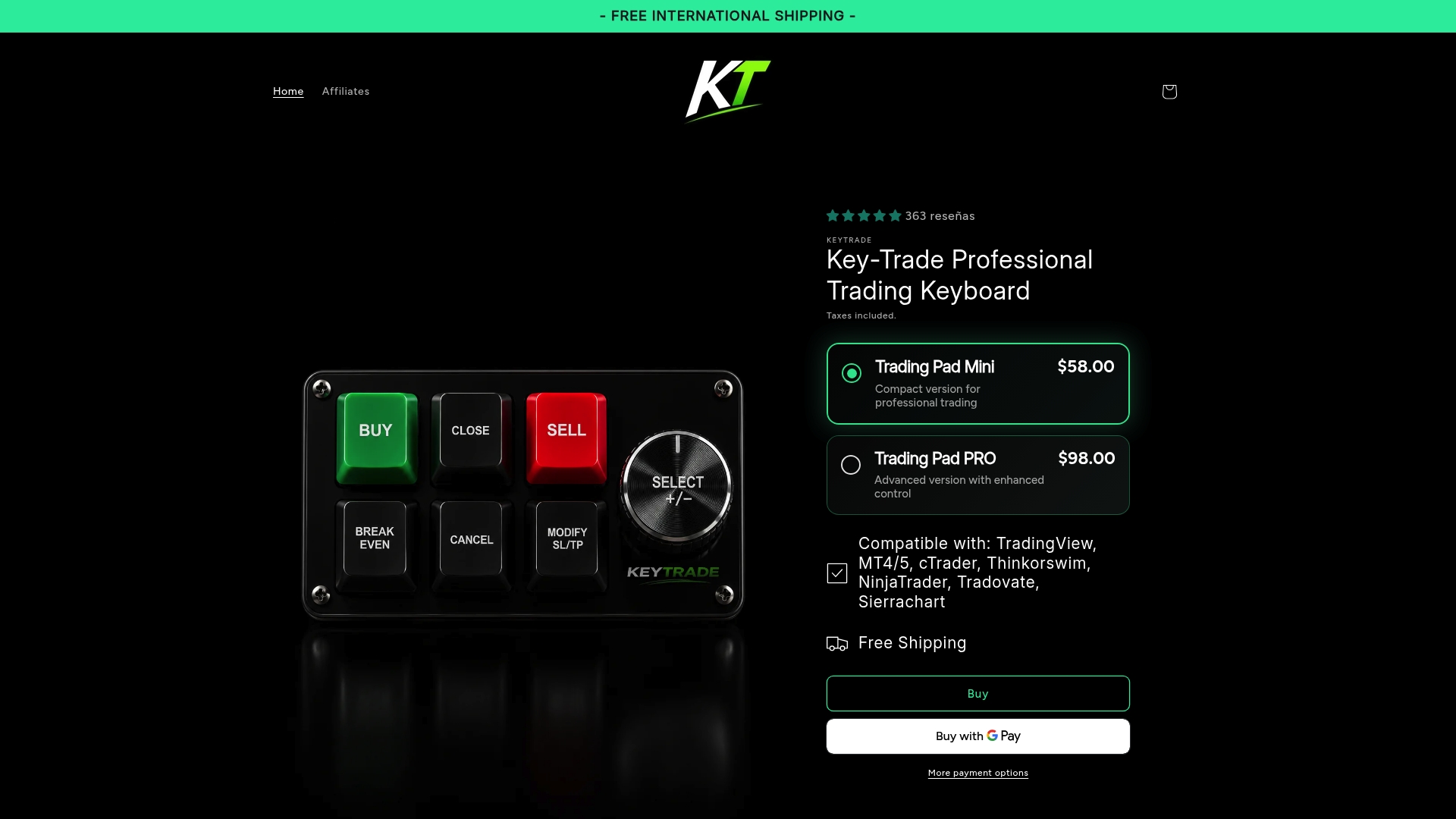
Browse the Key-Trade Professional Trading Keyboard collection for specs and current pricing, or reach out to support if you have questions about fitting one into your specific desk layout.
FAQ
What is the best desk setup for trading?
The best setup matches your screen count to your actual functions, market observation, order entry, and account status, rather than maximizing monitors. For most small desks, that means an ultrawide or stacked dual-monitor arm setup positioned within OSHA’s 20 to 40 inch viewing distance guidance.
What is the 3-5-7 rule in trading?
The 3-5-7 rule is a risk-management guideline some traders use, capping risk per trade around 3%, total exposure around 5%, and requiring a profit target on winning trades to maintain a favorable risk-reward ratio. It is a position-sizing convention rather than a desk or hardware standard.
Can you make $1,000 a day with day trading?
Results vary widely by account size, strategy, and market conditions, and there is no guaranteed daily figure. The SEC’s investor bulletin warns that most individual day traders are unlikely to sustain profits and frequently face severe losses early on, so any daily target should be weighed against that risk.
Is $100 enough for day trading?
A $100 account technically meets the standard $2,000 margin-account minimum only if you avoid margin trading entirely, and even then, position sizing becomes extremely limited. Under the SEC’s 2026 FINRA reforms, the previous $25,000 Pattern Day Trader minimum was removed in favor of a continuous intraday margin standard, but broker-dealers may still set stricter house requirements regardless of account size.