

Standardize Your Breakeven Hotkey for Traders with a $59 Keypad
A breakeven hotkey moves your stop loss to your entry price, or entry plus a small offset, so the trade can no longer lose money once price moves in your favor. Support varies by terminal: NinjaTrader and Sierra Chart offer built-in commands for this, while TradingView generally needs manual adjustment or outside automation. Whatever platform you use, confirm the behavior in a simulated account before you risk live capital.
TL;DR:
- Breakeven hotkeys typically move your stop to your entry price or slightly offset, but support varies with some platforms requiring manual setup or automation outside of default features.
- Platform-specific setup involves assigning hotkeys through configuration menus, testing in simulation, and ensuring the hotkey functions correctly across open windows and different trade scenarios.
- Common pitfalls include using hotkeys globally, detaching stops from parent orders, or allowing pop-ups and focus issues to interfere with execution.
- Using dedicated hardware keypads for breakeven actions can improve consistency and speed, especially across multiple trading platforms and monitors.
- It’s crucial to verify your platform’s specific behavior and support documentation before assigning breakeven hotkeys to avoid unexpected failures or misfires during live trading.
Table of Contents
- How breakeven hotkeys work: mechanics and variants
- Platform support and setup notes across NinjaTrader, Sierra Chart, TradingView, and MetaTrader
- Step-by-step: create and test a breakeven hotkey safely
- Common pitfalls, safety rules, and hotkey hygiene
- How programmable trading keypads integrate with breakeven hotkeys
- Manual hotkeys, hardware, and automation: when to choose each
- A practical option for standardizing your breakeven key
- Where to check exact menu paths and platform behavior
- Sources
- FAQ
How breakeven hotkeys work: mechanics and variants
The core action is simple: the hotkey grabs your current stop and repositions it to your entry price. Most platforms let you add a tick or point offset instead of an exact match, which covers commissions or spread so you do not get stopped at a technical breakeven that is actually a small loss.
There are a few variants worth knowing before you assign one:
- Move-only commands shift the stop without touching your position size.
- Combined actions pair a partial close with a stop move, locking in some profit while protecting the rest.
- Attached-order dependency means the hotkey typically works only when your stop is attached to the parent order; a detached or manually placed stop may not respond.
- Active-window scope limits the hotkey to whichever order-entry or chart window currently has focus.
That last point trips up more traders than any other part of the setup.
Pro Tip: Before trusting a breakeven hotkey in a fast market, place a test order in sim, click into a different window, and fire the hotkey to see whether it still finds the right position.
Platform support and setup notes across NinjaTrader, Sierra Chart, TradingView, and MetaTrader
Coverage differs enough between platforms that it is worth checking your terminal’s own documentation before assuming a feature exists.
- NinjaTrader includes a dedicated Breakeven Position hotkey inside its order-entry hotkey configuration, alongside other custom order actions. NinjaTrader’s own help guide notes that these hotkeys are window-sensitive and only submit to the active order-entry window, so multi-chart setups need careful focus management.
- Sierra Chart does not label anything a “breakeven hotkey” outright, but it supports the same result through a Move to Break Even action tied to the Move to BE Offset field in the chart’s Trade Window. According to Sierra Chart’s support board, this action can be bound to a key combination inside Global Settings under Customize Keyboard Shortcuts.
- TradingView has no dedicated single-key breakeven command. Its shortcut set is built around order entry and chart navigation, so traders either adjust the stop manually after price moves or rely on third-party automation to approximate the same action.
- MetaTrader (MT4/MT5) and similar broker terminals vary by build. Native breakeven hotkeys are uncommon, and most traders either write a script tied to attached stop orders or use their broker’s own terminal extensions to get equivalent behavior.
Before assigning anything, check whether your platform reserves that key combination for another function.
Step-by-step: create and test a breakeven hotkey safely
Setting one up correctly takes a few minutes, and testing it properly takes a bit longer, which is time well spent.
- Open your platform’s Hot Key Manager or keyboard shortcuts menu, usually found under global or trading settings.
- Pick an unused key and modifier combination, then assign it to Move to Break Even or, where that option does not exist, build a custom order action that achieves the same result.
- Set the Move to BE Offset or an equivalent tick offset if you want a small buffer above or below your exact entry, then save it as part of your trade configuration.
- Switch to a simulated account, place a practice trade, and confirm the hotkey moves the correct stop, respects the active-window scope, and does not misfire against a different open position.
- Cancel any pending or duplicate orders before firing the hotkey live, since a stray working order can interfere with the stop move.
Pro Tip: Run the sim test on a busy day with several charts open, not a quiet one, since that is when window-scope mistakes actually happen.
Once the hotkey behaves the same way every time across a handful of test trades, it is reasonable to bring it into a live account.
Common pitfalls, safety rules, and hotkey hygiene
Most breakeven hotkey problems come down to scope, attachment, or timing rather than a broken feature.
- Avoid setting a hotkey to fire globally across any open window; a window-scoped hotkey tied to a specific chart or DOM that only affects the instrument you intend to trade.
- Keep your stop attached to the parent order, since a detached stop often has no reference price for the platform to move.
- Watch for modal dialogs, confirmation pop-ups, or platform-reserved shortcuts that can silently disable your hotkey mid-session.
- Keep a separate emergency “flatten” hotkey on hand, and standardize your mappings across every workstation you trade from.
Consistency matters more than cleverness here. A hotkey layout that changes from one machine to the next is how experienced traders end up hitting the wrong key under pressure.
How programmable trading keypads integrate with breakeven hotkeys
A physical keypad turns the same platform command into a dedicated button instead of a key combination you have to remember mid-trade. Mapping breakeven to its own labeled key, separate from your order-entry keys, cuts down on the split-second hesitation that causes mis-clicks, especially across multi-monitor setups.
- One button can trigger a full macro: partial close plus a stop move to breakeven, executed in a single press.
- Muscle memory builds faster on a fixed physical layout than on a software shortcut that might shift after an update.
- Dedicated hardware reduces reliance on remembering which modifier key does what on which chart window.
Pro Tip: Assign breakeven to the same physical button across every device you trade from, so the action stays automatic even when the platform on screen changes.
Standardizing that one action across your setup is a small change with an outsized effect on execution consistency.

Manual hotkeys, hardware, and automation: when to choose each
Manual hotkeys keep a human in the loop, which matters when a market is moving fast and a rule-based script might act on stale conditions. Full automation suits systematic strategies where the logic is already proven and consistent execution matters more than judgment in the moment. Hardware keypads sit between the two: they keep a person deciding when to act, while removing the friction of typing a shortcut correctly under stress. Whichever route you choose, standardize your layout and keep testing in sim.
— key-trade
A practical option for standardizing your breakeven key
If you would rather map breakeven to a dedicated physical button than manage software shortcuts across multiple platforms, that is exactly what a trading keypad is built for. Some professional trading keypads let you assign breakeven, partial close, and other order actions to fixed buttons that work across multiple supported platforms, often without needing to write code.
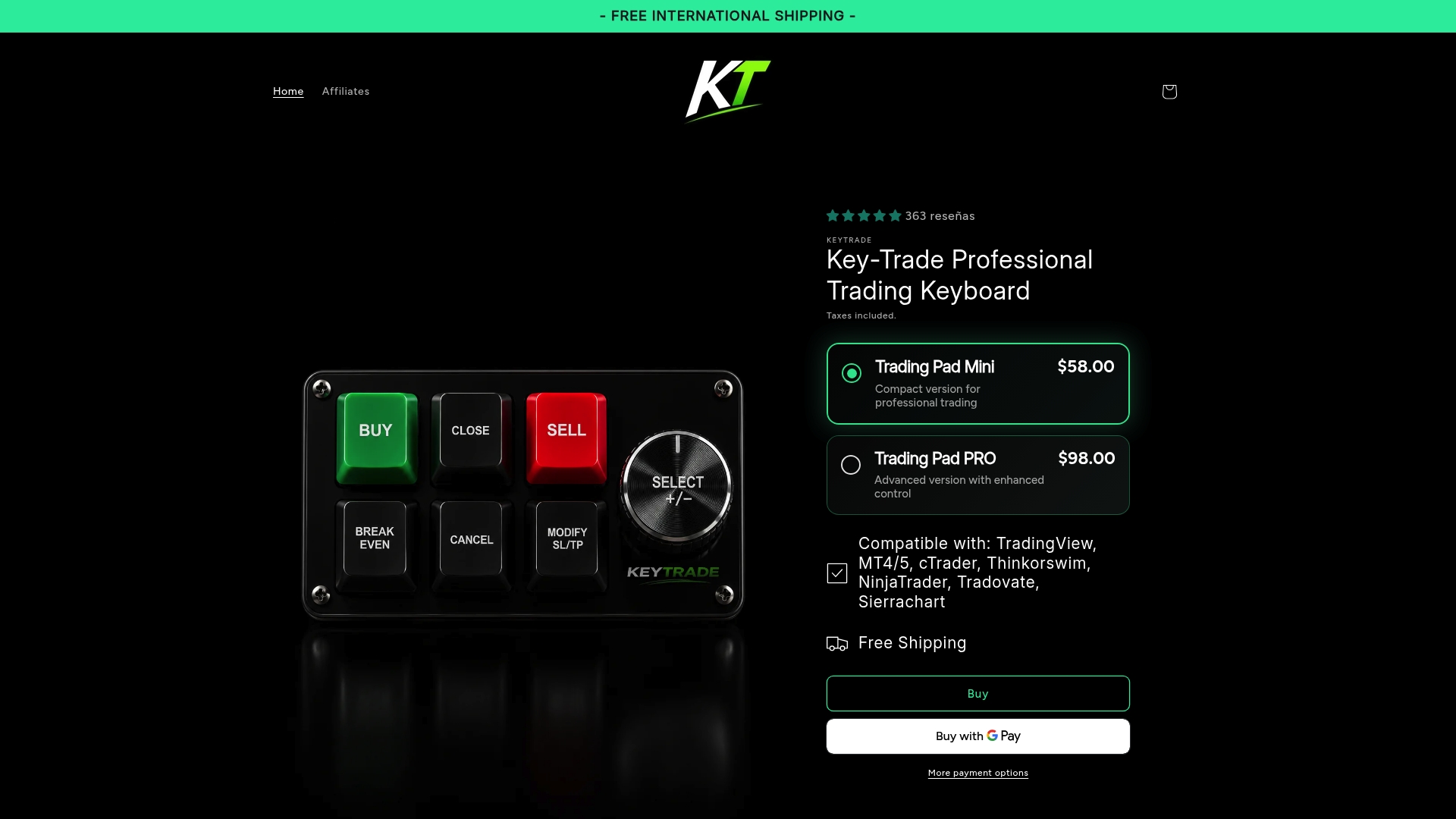
- Browse the Key-Trade Professional Trading Keyboard collection to see current models and pricing, starting from $59 one-off.
- Check the full product details and platform compatibility before ordering.
- Test any new mapping in a simulated account first, exactly as you would with a software hotkey.
Where to check exact menu paths and platform behavior
For the precise steps on your own setup, go straight to the source. NinjaTrader’s hotkey help guide covers the Breakeven Position command and window-focus rules. Sierra Chart traders should reference the Move to Break Even support thread for the BE Offset field. TradingView users can review its shortcut documentation to confirm what is and is not natively supported.
Sources
- Break-Even keyboard shortcut - Support Board - Sierra Chart
- Trading with Hot Keys — NinjaTrader help guides
- TradingView keyboard shortcuts, order panel and chart drawing (2026)
- Trading Platform Hotkeys and Keyboard Shortcuts — NexusFi Academy
FAQ
What are hotkeys for trading?
Trading hotkeys are keyboard shortcuts assigned to order actions like buying, closing, or moving a stop, so you can execute a trade action with one keypress instead of navigating menus. They are common on professional platforms and are often paired with dedicated hardware for faster, more consistent execution.
What is a hotkey?
A hotkey is a key or key combination bound to a specific software command, letting you trigger that action instantly instead of clicking through an interface. In trading platforms, hotkeys are typically configured in a settings menu often called a Hot Key Manager.
Are there hotkeys on TradingView?
TradingView supports keyboard shortcuts for order entry and chart navigation, but it does not include a dedicated native breakeven hotkey. Traders typically move their stop manually or use third-party automation to get the same result.
Does NinjaTrader have hotkeys?
Yes, NinjaTrader includes a built-in Breakeven Position hotkey along with other order-action shortcuts. These hotkeys only affect the active order-entry window, so confirming window focus matters before you use them.
How do I test a breakeven hotkey safely?
Set up the hotkey in your platform’s settings menu, then place practice trades in a simulated account before using it live. Confirm it moves the correct stop, respects the active window, and behaves the same way across several test trades.